Short answer: yes, in most cases. A skilled jeweler can add a halo, a ring of small diamonds around your center stone, either by fitting a new halo head onto your existing band or by moving your diamond into a new halo setting. It’s a popular upgrade for anniversaries, and it makes the center stone look bigger without replacing it.
At a glance
| Option | What happens | Best for |
|---|---|---|
| Add a halo head | Old prongs/head are cut off, a new halo head is soldered on | Keeping your original band |
| Halo “jacket” | A separate halo piece slips over or around the solitaire | A reversible look, no soldering |
| Full remount | Your diamond moves into a brand-new halo ring | Thin, worn or very different bands |
What a halo actually is
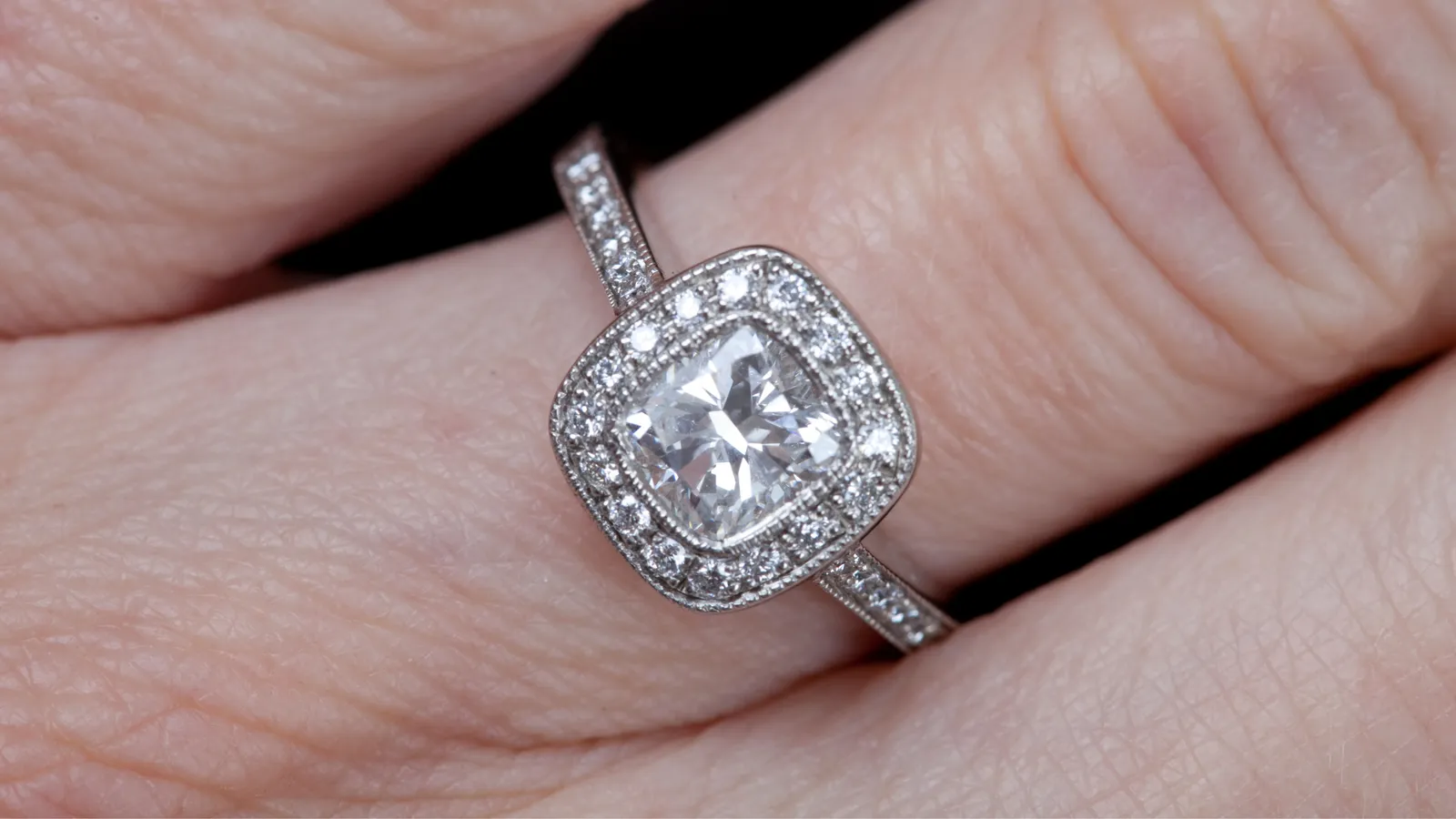
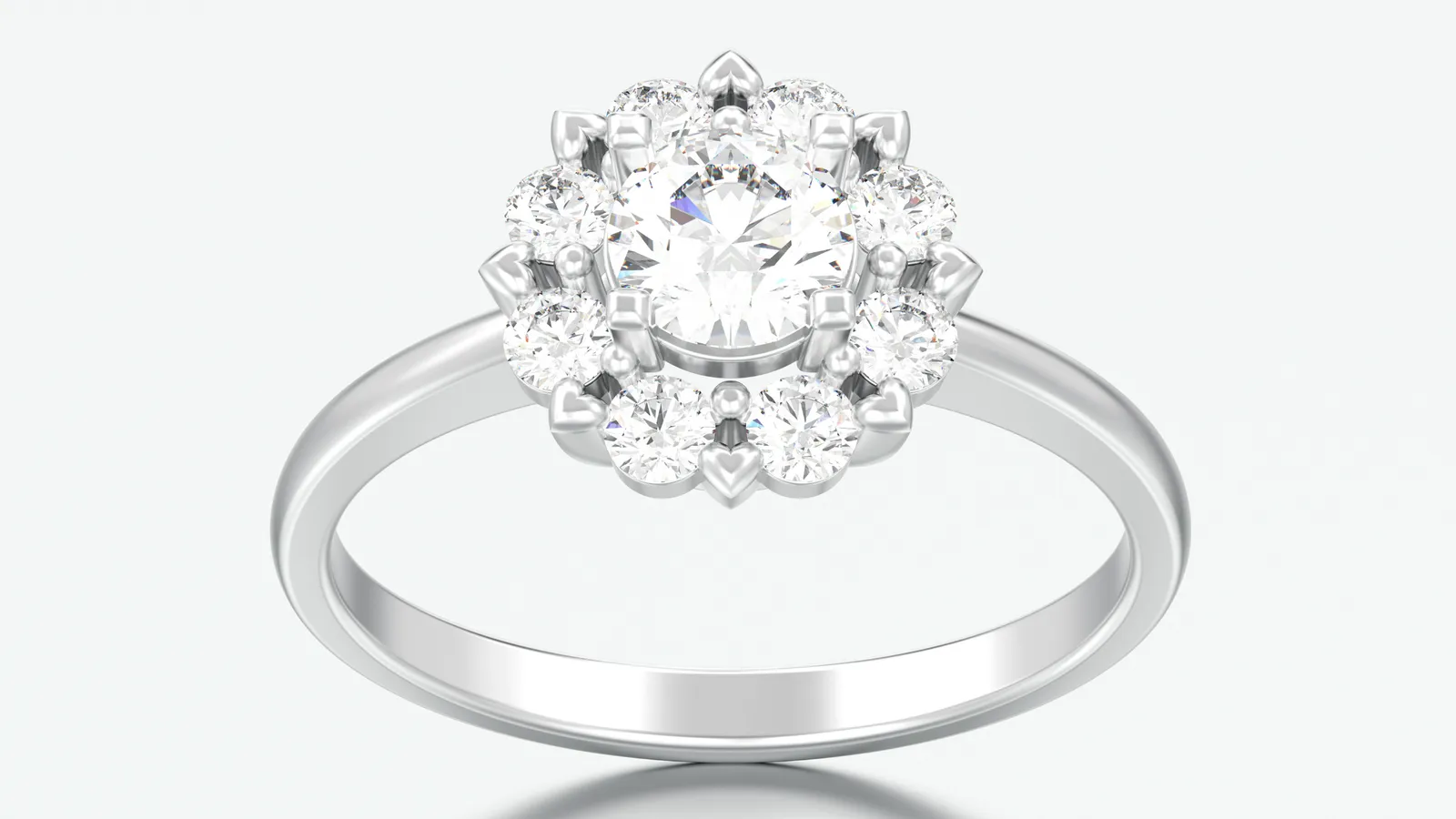
A halo setting surrounds the center stone with a frame of small diamonds (or colored gems), usually set in tiny prongs or pavé. It makes the center look larger, adds sparkle and gives a little protection to the center stone’s edge.
Halos come in several shapes:
- Round, oval or cushion halos that follow the center stone
- Contrasting halos, such as a cushion-shaped halo around a round diamond
- Hidden halos under the center stone, visible only from the side
- Double halos with two rows of stones
How a jeweler adds a halo
Option 1: Replace the head
The “head” is the part that holds the center stone. The jeweler removes your diamond, cuts off the old head and solders a new halo head onto your band. This keeps your original band, which matters if it has sentimental value or an engraving.
Option 2: A halo jacket or enhancer
Some jewelers offer a separate halo piece that fits around a solitaire. It’s simpler and reversible, but it doesn’t always sit as neatly as a custom head.
Option 3: Remount the diamond
If your band is thin, worn or a different metal from the halo you want, moving the stone into a new ring is often cleaner. It costs more but gives you a fully matched ring. Our guide to how long it takes to make a custom ring explains the timeline if you go this route.
Will it work on your ring?
Questions your jeweler will look at:
- Band width and thickness: a very thin shank may not support a heavy halo.
- Metal: the new head should match your band’s metal and color, or the mismatch will show.
- Center stone shape: rounds, ovals, cushions, pears and emerald cuts all take halos well.
- Wedding band fit: a halo is wider than a solitaire, so check your band still sits flush. A curved or notched band may be needed.
- Stone sensitivity: emerald, opal, tanzanite and other delicate gems need careful handling around heat.
What affects the cost
Prices vary a lot by jeweler and region, so get a written quote. The main factors:
- Number, size and quality of the halo stones
- Metal: platinum usually costs more than gold
- Labor: a custom head costs more than a ready-made one
- Matching: closely matching halo color to your center stone can mean pricier melee (tiny diamonds)
As a rough guide, adding a halo is typically far cheaper than upgrading to a bigger center diamond, which is why many people choose it.
Make sure your diamond comes back
Before handing over your ring, photograph it, note the diamond’s measurements (or bring its lab report) and get a written receipt describing the stone. A reputable jeweler will be happy to do this.
Tips for a halo that looks right
- Keep halo stones in proportion. Too large and they compete with the center diamond.
- Match color closely. The halo should be the same color grade or slightly better than the center stone.
- Think about height. A high halo catches on sweaters; a lower profile is easier to live with.
- Consider the shape of your hand. See our guide to choosing a ring for your hand.
Caring for a halo ring
Halos have many small prongs, and small stones can loosen over time.
- Have the prongs checked roughly once a year.
- Clean it regularly; the many crevices trap lotion and soap. Our guide on wearing a diamond ring in the shower covers why soap film dulls diamonds.
- Take it off for gardening, gym sessions and heavy cleaning.
If you’re comparing styles before you commit, our overview of engagement ring settings shows how a halo compares with solitaire, pavé and three-stone designs.
Frequently asked questions
Will adding a halo damage my diamond?
The jeweler normally removes the center stone before any soldering, because heat can harm some diamonds and most colored gems. Ask them to confirm this, and to check the stone before and after.
Can I add a halo to a ring with a colored center stone?
Usually, yes. Sapphires, rubies, emeralds and other gems are often framed with a diamond halo. Softer or heat-sensitive stones need extra care during the work.
Can a halo be removed later?
A halo built into a new head can be swapped back for a plain head, though you’ll pay for the work again. Keep your original head or setting if you think you might want it back.
Should the halo match my center diamond?
Close is better. Halo diamonds that are noticeably whiter or yellower than the center stone make the center look off-color. Ask the jeweler to match color as closely as possible.