Short answer: about 98.8 million carats of rough diamonds worth roughly $9.23 billion were reported produced worldwide in 2025, according to the Kimberley Process. That’s down about 8% in volume and 3% in value from 2024. Russia is the largest producer by volume, Botswana and Angola lead much of the value, and lab-grown diamonds now appear in most US engagement rings.
Key numbers
| Statistic | Figure | Data year | Source |
|---|---|---|---|
| World rough diamond production | 98.8 million carats | 2025 | Kimberley Process |
| Value of that production | About $9.23 billion | 2025 | Kimberley Process |
| Average value per carat | About $93 | 2025 | Kimberley Process |
| Largest producer by volume | Russia, 31.5 million carats (about 32%) | 2025 | Kimberley Process |
| US gemstone imports | About $11 billion | 2025 | USGS |
| Diamonds’ share of US gem imports | About 79% by value | 2025 | USGS |
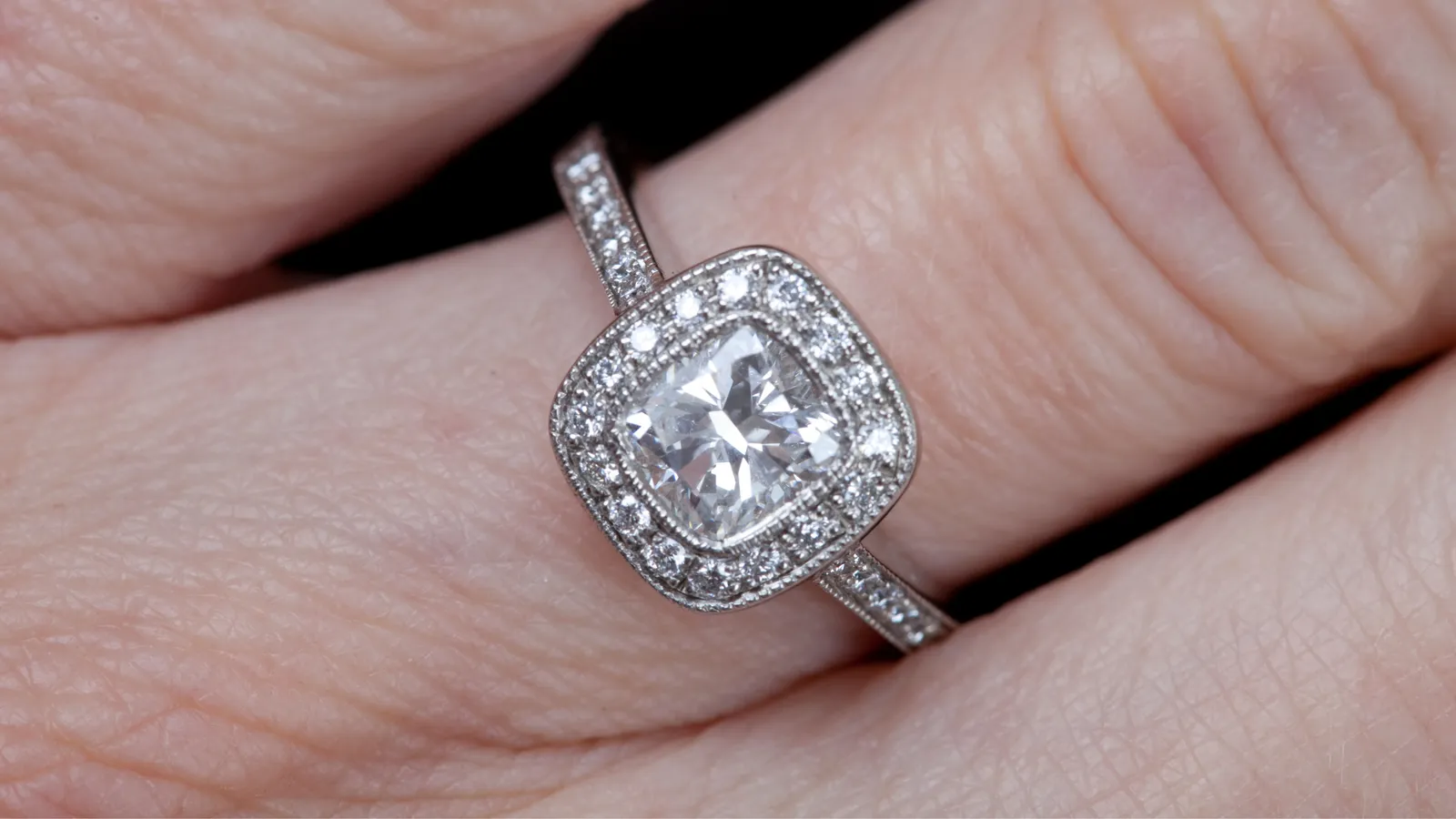
| US engagement rings with lab-grown center stones | 61% | 2025 weddings | The Knot |
About the data
- Kimberley Process (KP) statistics cover rough (uncut) diamond production, imports and exports reported by participating countries. The 2025 summary was published in August 2026. KP figures get revised: the 2024 totals were revised down in October 2026 to 107.9 million carats and $9.53 billion.
- USGS (US Geological Survey) publishes yearly estimates of US gem trade and world gem-quality diamond production. Its 2026 report covers 2025, with some figures marked as estimates.
- The Knot figures come from its annual survey of US couples, as reported by trade press.
World diamond production
| Year | Volume (carats) | Value (US$) | Value per carat |
|---|---|---|---|
| 2024 (revised) | 107.9 million | $9.53 billion | $88.35 |
| 2025 | 98.8 million | $9.23 billion | $93.43 |
Source: Kimberley Process Annual Global Summaries.
Production fell about 8.4% by volume and 3.2% by value from 2024 to 2025, while the average value per carat rose.
The USGS, which counts only gem-quality natural diamonds, estimates world output at about 69 million carats in 2025, essentially unchanged from 2024.
Top diamond-producing countries (2025)
| Country | Carats | Share of world volume | Value (US$) | Share of world value | Value per carat |
|---|---|---|---|---|---|
| Russia | 31.5 million | 31.9% | $2.72 billion | 29.5% | $86 |
| Botswana | 15.5 million | 15.7% | $1.98 billion | 21.4% | $128 |
| Angola | 15.2 million | 15.4% | $1.81 billion | 19.6% | $119 |
| Canada | 14.1 million | 14.3% | $0.89 billion | 9.7% | $63 |
| DR Congo | 8.9 million | 9.0% | $0.04 billion | 0.5% | $5 |
| South Africa | 5.6 million | 5.6% | $0.60 billion | 6.5% | $107 |
| Namibia | 2.1 million | 2.1% | $0.72 billion | 7.8% | $344 |
Source: Kimberley Process 2025 Annual Global Summary. Shares calculated from KP totals.
What stands out:
- Volume isn’t value. The DR Congo produces a lot of carats, but much of it is low-value material, averaging about $5 per carat.
- Namibia and Lesotho produce relatively few carats but very high average values: about $344 and $331 per carat respectively.
For how diamonds form in the first place, see how are diamonds formed?
The US diamond market
According to the USGS (2025 data):
- US imports of gemstones were valued at about $11 billion, a 44% decrease from $19.6 billion in 2024.
- Diamonds made up about 79% of the value of US gem imports.
- Between 2021 and 2024, US diamond imports by value came mainly from India (46%), Israel (27%), Belgium (11%) and South Africa (4%).
- The United States remained one of the world’s leading markets for polished diamonds.
- US sanctions, alongside EU and G7 measures, continued to ban imports of Russian gem diamonds, including those cut in other countries.
Why the natural diamond market slowed
The USGS describes a downturn in the natural diamond market that began in early 2023 and hit hardest in stones of one carat or less. It lists three main causes:
- Weaker demand for luxury goods, linked to global inflation.
- Excess inventory built up in the trading and cutting “midstream.”
- The growing popularity of less expensive lab-grown diamonds.
Fewer jewelry sales led to less trading of polished diamonds, which reduced rough sales and prices for miners. See why are diamonds so expensive? for how pricing works.
Lab-grown diamonds by the numbers
- 61% of engagement rings bought by US couples married in 2025 had a lab-grown center stone, a 239% increase since 2020 (The Knot 2026 study, via Rapaport).
- In Q1 2025, an unbranded 1-carat round lab-grown diamond averaged about $845, compared with about $3,895 for a similar natural diamond, according to analyst Paul Zimnisky (reported by CNBC).
- The USGS reports that US synthetic gemstone production fell 35% in 2025, largely because a leading US lab-grown diamond producer in Oregon stopped operating in July 2025.
For more, see synthetic diamonds vs natural diamonds and engagement ring statistics.
Numbers we didn’t include
Figures such as “X% of engagement rings are diamonds” or global retail jewelry market sizes circulate widely but often can’t be traced to a primary source and year. We’ve left them out rather than repeat unverified numbers.
Frequently asked questions
How many diamonds are mined each year?
About 98.8 million carats of rough diamonds were reported produced worldwide in 2025, worth about $9.23 billion, according to Kimberley Process statistics.
Which country produces the most diamonds?
Russia, with about 31.5 million carats in 2025 (roughly 32% of world volume). Botswana ranked second by value, at about $1.98 billion.
Are lab-grown diamonds taking over?
In US engagement rings, yes: 61% of rings for 2025 weddings had a lab-grown center stone, according to The Knot.
Why is the diamond market down?
The USGS cites weaker luxury demand linked to inflation, excess inventory in the trade and the growing popularity of cheaper lab-grown diamonds.
Sources
- Kimberley Process: Annual Global Summary, 2025 Production, Imports, Exports (published Aug 2026)
- Kimberley Process: Annual Global Summary, 2024 Production, Imports, Exports (revised, Oct 2026)
- USGS Mineral Commodity Summaries 2026: Gemstones (2025 data)
- Rapaport: Lab-Grown “Taking Over” Engagement-Ring Spending – The Knot (Feb 2026; 2025 weddings)
- CNBC via NBC New York: More couples are choosing lab-grown diamonds (Mar 2025; Q1 2025 price data from Paul Zimnisky)