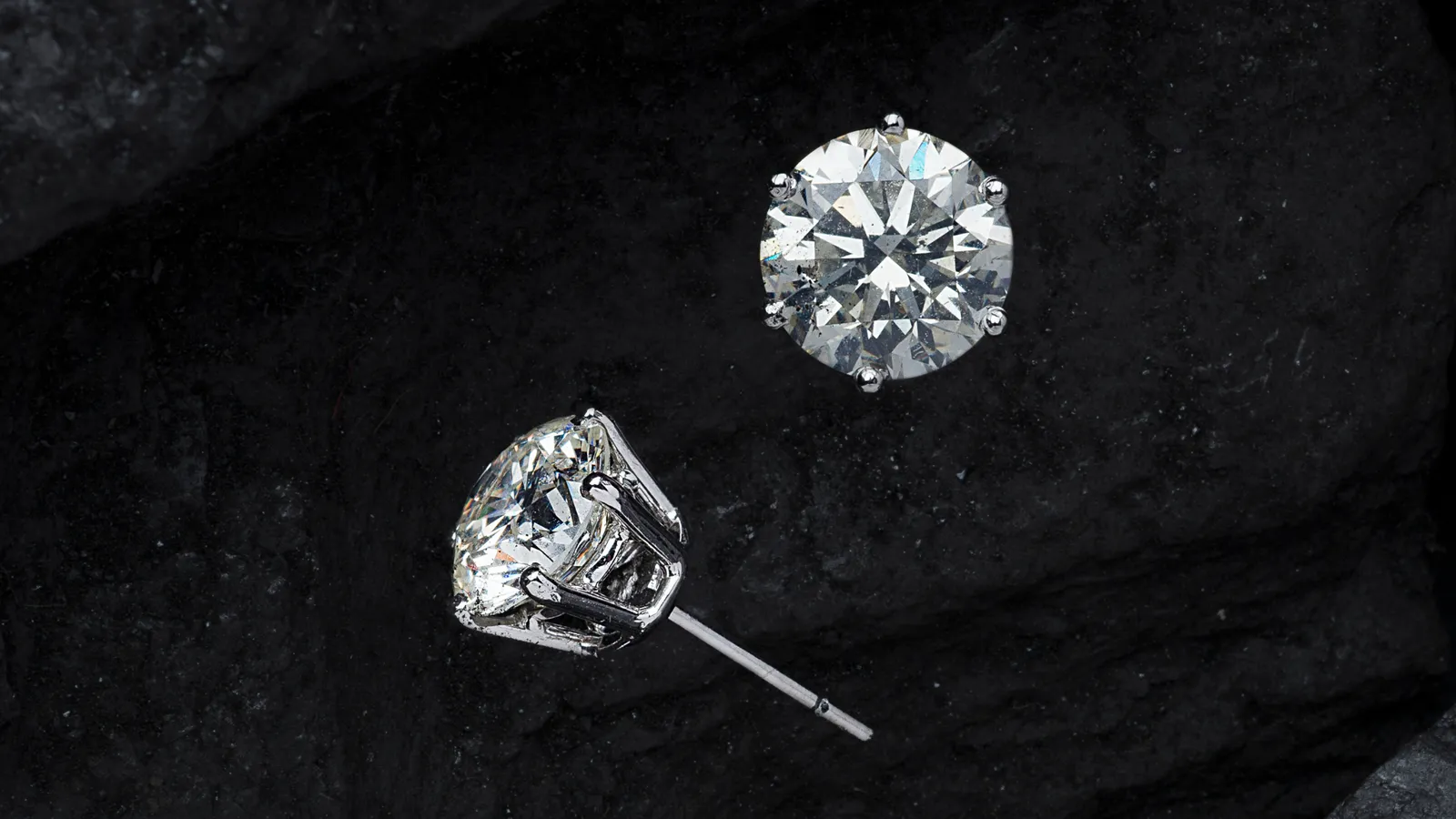
Short answer: no. Plenty of diamond earrings, including many studs, come with ordinary push backs (also called friction or butterfly backs). Screw backs are common on higher-value diamond studs because they’re more secure, but you’ll also find locking backs, lever backs, hinged hoops and other closures. Whether your earrings can take screw backs depends on the post: it has to be threaded.
At a glance
| Back type | How it works | Security | Common on |
|---|---|---|---|
| Push back (friction/butterfly) | Slides onto a smooth post and grips it | Fair; loosens over time | Most studs |
| Screw back | Twists onto a threaded post | High | Higher-value diamond studs, children’s earrings |
| Locking back | Push-on back that clicks or locks | High | Diamond studs (various brand designs) |
| Large disc or comfort back | Push back with a wide disc for support | Fair to good | Heavier studs |
| Lever back | Hinged lever closes against the hook | High | Drop and dangle earrings |
| Hinged hoop | Post clicks into a catch | Good | Huggies and hoops |
Why screw backs are popular for diamond studs
- Security. Because the back twists on, it can’t simply slide off if the earring catches on a sweater or phone.
- Peace of mind. For expensive studs, losing one earring is a real cost.
- Even pressure. Once tightened, the back stays at the same position on the post.
Downsides of screw backs
- Fiddlier to put on and take off, especially for people with limited dexterity.
- Threads can wear or cross-thread if forced.
- Overtightening can press the earring into your earlobe and feel uncomfortable.
- The thread can trap grime, so they need occasional cleaning.
Push backs: the most common type
Most stud earrings, including many diamond studs, use push backs. They’re easy to use and inexpensive to replace. The catch is that the little loops that grip the post loosen with time. Squeeze-testing them is a habit worth having: if a back slides on with almost no resistance, replace it.
Trouble getting them off? See how to take off earrings with butterfly backs.
How to tell which back you have
- Look at the post. A spiral groove running along it means it’s threaded for screw backs.
- Check for a notch. A smooth post with one or two grooves near the end is designed for push backs; the back sits in the groove.
- Look at the back itself. A screw back has a threaded tube in the center. A push back has two curled loops.
- Check the paperwork or ask the jeweler who sold them.
Don’t force a screw back onto a smooth post
It won’t hold and can damage both pieces. If you want screw backs, a jeweler can usually swap the posts for threaded ones.
Upgrading your earring backs
If your studs have push backs and you’re worried about losing them:
- Replace worn backs with new ones matching the metal.
- Try locking backs designed for standard posts, if your jeweler stocks them.
- Ask about threaded posts. A jeweler can often replace the posts so you can use screw backs.
- Use disc backs for heavier studs that droop.
Caring for diamond earrings
- Clean posts and backs regularly; lotion and skin oils build up in the threads. Our guide to how to clean earrings walks you through it.
- Take earrings off before sleeping, swimming and sports.
- Have prongs checked yearly, especially on larger studs.
Want to know more about earring styles? See the different kinds of earrings.
Frequently asked questions
Can I put screw backs on any earrings?
No. Screw backs only work on posts with a threaded groove. A jeweler can sometimes replace a smooth post with a threaded one.
Are screw backs safe for new piercings?
Follow your piercer’s advice. Fresh piercings are usually done with specific starter jewelry, and you shouldn’t change earrings until the piercing has healed.
How do I know if my earrings have screw backs?
Look at the post. A threaded post has a spiral groove you can feel with a fingernail. A smooth post, or one with a single notch, takes a push back.
How often should I replace push backs?
Replace them whenever they feel loose. Push backs lose grip over time, and a new pair is inexpensive insurance for valuable studs.