Short answer: start with the metal, because it decides how the ring looks, wears and whether it can be resized. Then choose a width that suits your hand (most men land between about 5 and 8 mm), try a comfort-fit inside, and think honestly about your job and hobbies. A simple band you’re comfortable wearing every day beats a striking one that stays in a drawer.
At a glance: men’s band metals
| Metal | Look | Scratch resistance | Resizable? | Notes |
|---|---|---|---|---|
| Yellow/rose gold (14K, 18K) | Warm, classic | Moderate | Yes | 14K is tougher than 18K |
| White gold | Bright white (rhodium plated) | Moderate | Yes | Needs re-plating over time |
| Platinum | Naturally white, heavy | Scratches, but metal is displaced not lost | Yes | Develops a soft patina |
| Palladium | White, lighter than platinum | Moderate | Yes, by some jewelers | Fewer jewelers work with it |
| Titanium | Gray, very light | Good | Generally no | Hypoallergenic |
| Tungsten carbide | Gray or black, heavy | Excellent | No | Can crack if hit hard |
| Cobalt | Bright white | Very good | No | Often cobalt-chrome alloy |
| Ceramic | Often black | Very good | No | Can shatter if dropped |
| Sterling silver | Bright white | Low | Yes | Tarnishes; soft for daily wear |
Step 1: Choose the metal
Precious metals: gold, platinum, palladium
These are the traditional choice. They’re easy to resize, repair and refinish, which matters if your finger size changes over the years.
- Gold: 14K is harder and less expensive than 18K. Choose yellow, white or rose. White gold usually gets a rhodium plating that wears and needs refreshing; see why white gold turns yellow.
- Platinum: heavy, naturally white and very durable. It scratches, but those scratches move metal rather than remove it, and over time it develops a matte patina some people love.
Alternative metals: titanium, tungsten, cobalt, ceramic
These are popular for their modern look, durability and lower price. The trade-off is that most can’t be resized.
- Titanium: extremely light and comfortable, a good fit for people who aren’t used to wearing rings.
- Tungsten carbide: very hard and scratch-resistant with a satisfying weight. It’s brittle, so a hard knock can crack it.
- Cobalt: bright white and scratch-resistant, similar in look to white gold.
- Ceramic: light and usually black. See what a black wedding band means.
Know this about tungsten and ceramic
They can’t be resized, and standard ring cutters struggle with them. Emergency medicine guides describe cracking tungsten carbide rings off with locking pliers instead. If your hands swell, or your weight tends to change, a resizable metal is the safer pick.
Step 2: Pick a width
| Width | Feel |
|---|---|
| 4–5 mm | Slim, subtle, very comfortable |
| 6 mm | The most common middle ground |
| 7–8 mm | Bold, suits larger hands |
| 9 mm+ | Statement; can feel bulky |
Try a few widths on. Wider bands feel tighter than narrow ones in the same size.
Step 3: Get the fit right
- Comfort fit vs standard fit. A comfort-fit band is rounded on the inside and slides over the knuckle more easily. A standard-fit or half-round band is flat inside and uses less metal.
- Size at the right time. Fingers are larger in warm weather and later in the day. Get sized more than once if you can.
- Size for the exact band. Size and width affect each other, so size in the style you plan to buy.
Step 4: Choose a profile and finish
Profile (shape):
- Domed: classic and comfortable
- Flat: clean and modern
- Beveled edges: a flat center with angled edges; see beveled rings
Finish:
- High polish: shiny, but shows scratches quickly
- Brushed or satin: hides everyday wear better
- Hammered or textured: hides scratches and adds character
Step 5: Consider details
- Inlays: wood, carbon fiber, meteorite or contrasting metal. Some inlays need gentle care.
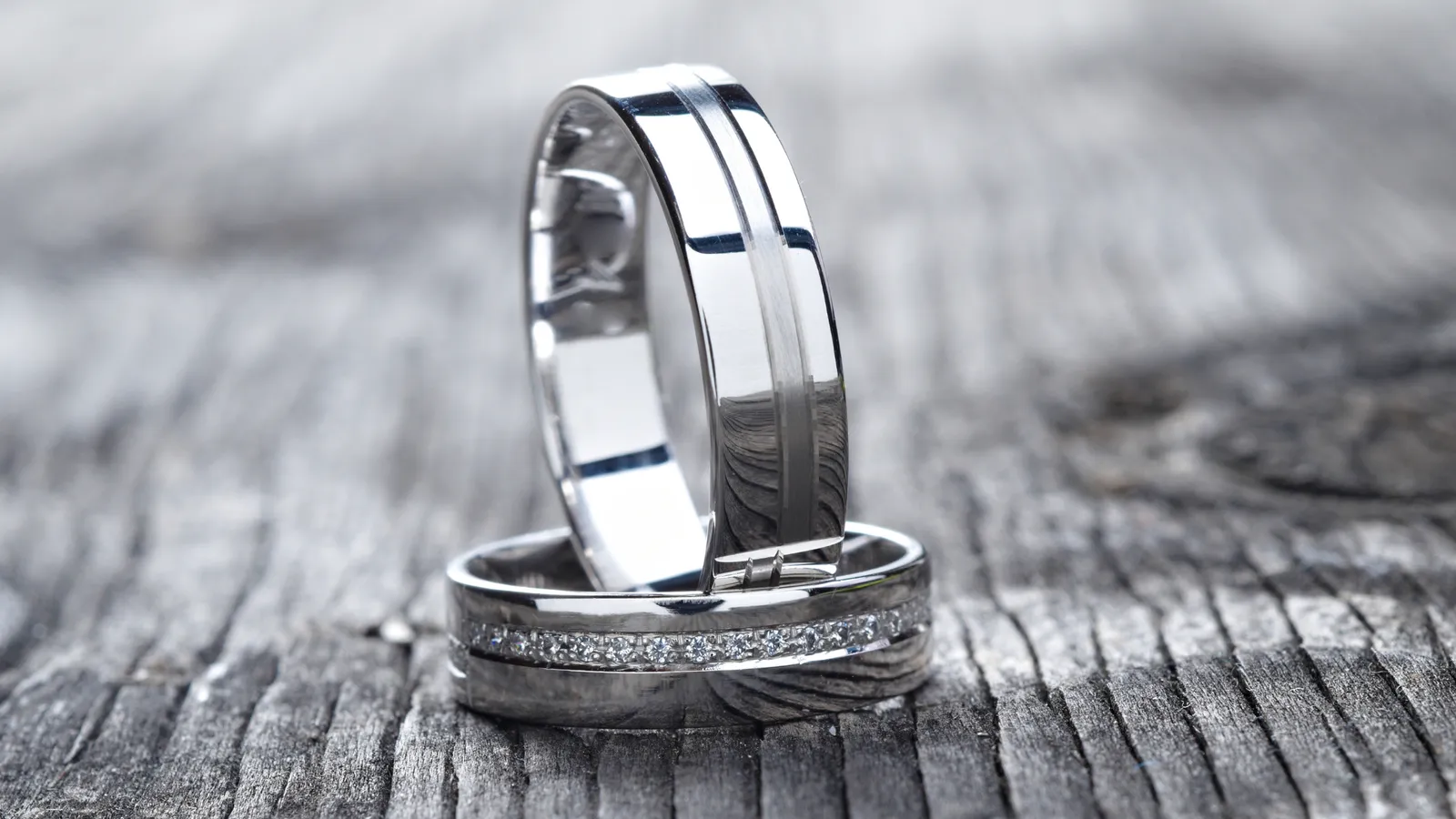
- Diamonds: flush-set diamonds sit level with the metal and won’t snag. Diamond is the hardest natural material (10 on the Mohs scale), but settings still need occasional checks.
- Engraving: a date, initials or a message inside the band is a classic personal touch.
Step 6: Match your lifestyle
- Hands-on work (trades, mechanics, gym): consider silicone for work hours, or a resizable metal with a brushed finish.
- Electrical work: metal rings conduct electricity, so many electricians take them off or wear silicone on the job.
- Office or occasional wear: almost any metal works.
- Metal allergies: titanium, platinum and nickel-free gold are common choices for sensitive skin.
Step 7: Set a budget
Prices range widely, from inexpensive alternative-metal bands to heavy platinum or diamond-set designs. Gold and platinum prices also change with the metal markets. Decide your range first, then compare bands with similar metal, width and weight.
Who picks the men’s band?
There’s no rule. Many men choose their own, some couples shop together, and some partners pick it as a surprise. If it’s a surprise, plan on a sizing adjustment, or pick a resizable metal.
Frequently asked questions
What is the most durable metal for a men’s wedding band?
Tungsten carbide is the most scratch-resistant common option, but it can crack if hit hard and can’t be resized. Platinum and 14K gold scratch more but can be repaired, resized and polished for life.
What width should a men’s wedding band be?
Many men choose between about 5 and 8 mm. Larger hands and fingers usually suit wider bands, while narrower bands feel lighter and more comfortable for people who rarely wear rings.
Does a men’s band have to match the engagement ring?
No. Matching metals is a nice touch, but plenty of couples choose different metals and styles. Pick what you’ll be happy wearing every day.
Can a tungsten ring be removed in an emergency?
Standard ring cutters struggle with tungsten carbide, but emergency staff can usually crack it off with locking pliers. It’s still worth knowing before you choose one.