Short answer: start gentle. Wash brass jewelry in warm water with a drop of mild dish soap, brush it with a soft toothbrush, then rinse and dry it completely. For tarnish on solid brass, use a non-abrasive brass polish or a quick paste of lemon juice and baking soda, then rinse well. Skip acids and polish on plated, lacquered or stone-set pieces.
At a glance
| Situation | Best method |
|---|---|
| Light grime, fingerprints | Mild soap and warm water |
| Dull, darkened solid brass | Non-abrasive brass polish or a mild acid paste |
| Brass-plated jewelry | Soap and water only |
| Lacquered (sealed) brass | Soap and water only; don’t polish |
| Stones, pearls or enamel | Wipe the metal only; keep liquids off the stones |
| Green or blue crusty spots | Clean gently; persistent spots need a jeweler |
What is brass jewelry?
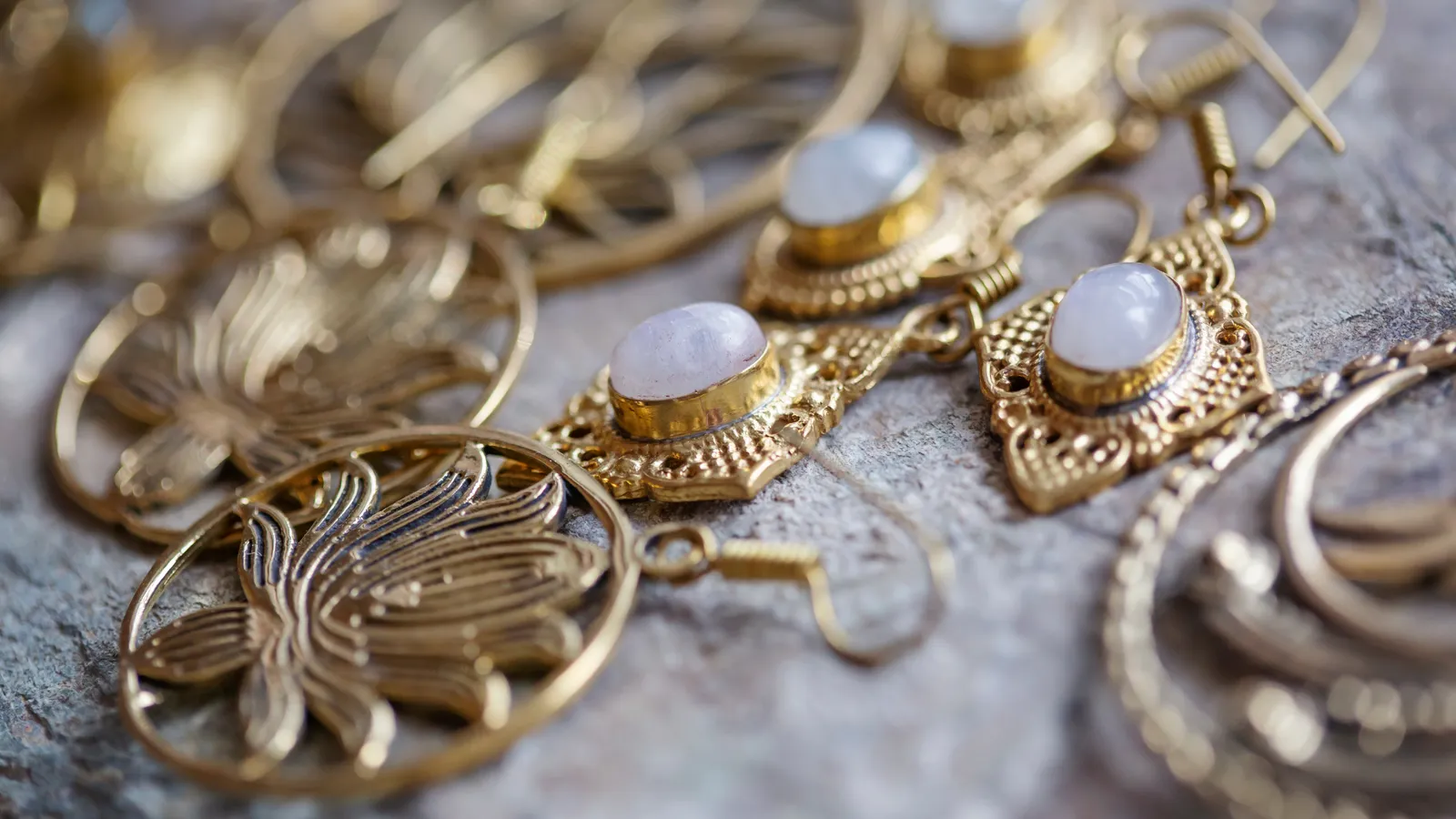
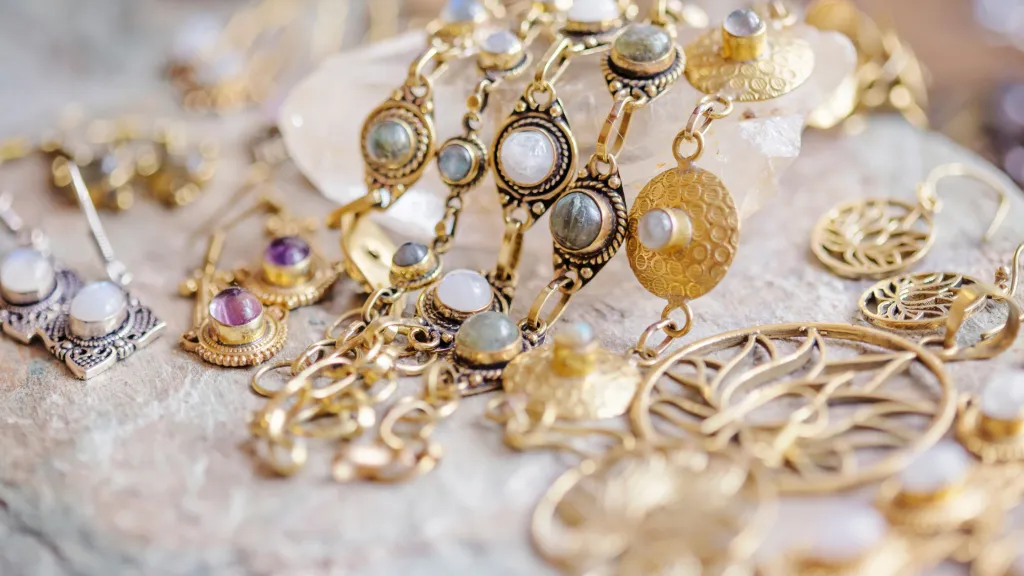
Brass is an alloy of copper and zinc. It has a warm gold color, costs far less than gold and is easy to shape, which is why it’s popular for statement earrings, cuffs and rings.
Over time copper alloys darken. The Canadian Conservation Institute (CCI) explains that tarnish on copper alloys is usually dark, while green or blue-green deposits point to more active corrosion.
Before you start: check what you have
- Solid or plated? Brass isn’t magnetic. If a magnet sticks, the piece is probably plated steel, and harsh cleaning will strip the plating.
- Lacquered? Some brass jewelry is sealed with a clear coat to keep it bright. If it looks evenly shiny with no darkening, it may be lacquered. Polishing or acids will damage the coating.
- Stones or glue? Many fashion pieces have glued-in stones. Soaking can loosen the glue.
Method 1: Soap and water (start here)
You need: warm water, mild dish soap, a soft toothbrush, a lint-free cloth.
- Mix a few drops of soap into a bowl of warm water.
- Dip the piece briefly (skip soaking if it has glued stones).
- Brush gently, paying attention to crevices.
- Rinse in clean water.
- Dry thoroughly. Water left in crevices encourages new tarnish.
This is all plated and lacquered pieces should ever get.
Method 2: Mild acid paste (solid, unlacquered brass only)
Mild acids dissolve tarnish. Common household options:
- Lemon juice and baking soda: mix into a paste.
- White vinegar, salt and flour: mix into a paste.
- Ketchup: the vinegar and tomato acids work the same way.
How to use it:
- Rub a thin layer onto the brass with a soft cloth.
- Leave it for a few minutes, not longer.
- Rinse very thoroughly; acid left behind keeps working.
- Dry completely and buff with a soft cloth.
Don’t use acids on
Plated jewelry, lacquered brass, pearls, opals, turquoise, enamel, or any piece with glued stones. Acid can strip plating, etch soft stones and dissolve glue.
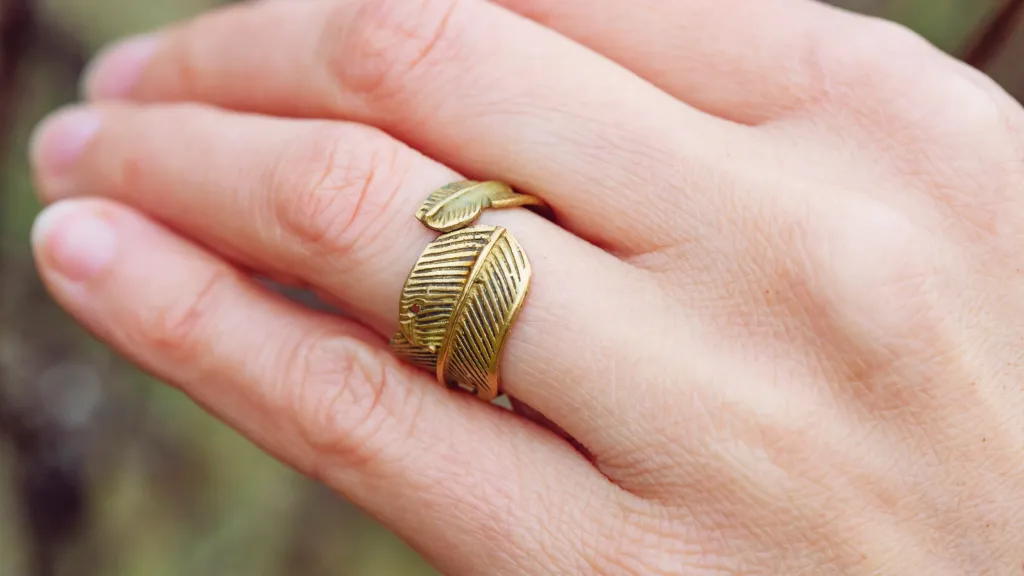
Method 3: Commercial brass polish
A polish made for brass is the most predictable option for heavily tarnished solid brass. Choose a non-abrasive one, test it on the back first and follow the label. The CCI warns that some automotive and stainless-steel cleaners contain very hard particles that scratch softer copper alloys, so avoid those.
Things to avoid
- Abrasives: steel wool, scouring pads, toothpaste and harsh powders scratch brass.
- Bleach and ammonia: these can discolor and damage copper alloys.
- Ultrasonic cleaners: they can loosen stones and damage plating.
- Long soaks: water and acids get into joints and behind stones.
How often should you clean brass jewelry?
- Wipe after wearing, especially if you’ve been sweating or wearing lotion.
- Wash with soap every few weeks for pieces you wear often.
- Polish only when the tarnish bothers you. Each polish removes a tiny bit of metal.
How to keep brass from tarnishing and turning skin green
- Store it dry and airtight. A zip bag with a silica gel packet works well.
- Put it on last. Apply perfume, lotion and hairspray first.
- Take it off for water. Showering, swimming and washing up all speed tarnish.
- Seal it. A thin coat of clear jewelry lacquer or nail polish on the parts that touch skin cuts down green marks. Nebraska Medicine explains the green comes from copper reacting with sweat and skin products, and it washes off with soap.
- Consider protective wax. The CCI’s brass care note uses a protective paste wax on brass objects; a very thin, well-buffed coat can slow tarnish on solid brass jewelry too.
If you get itching or a rash rather than just a green mark, that may be a reaction to another metal like nickel; see a doctor if it doesn’t settle. For alternatives, read about the best jewelry for sensitive skin. Cleaning copper pieces? See how to clean copper jewelry.
Frequently asked questions
Why does brass jewelry turn my finger green?
Brass contains copper, which reacts with sweat, lotion and soap to form a green residue. It isn't harmful and washes off. A coat of clear jewelry lacquer or nail polish on the inside helps, but see a doctor if you get itching or a rash.
Can I use ketchup or lemon on brass jewelry?
On plain solid brass, a mild acid like lemon juice or ketchup can lift tarnish. Rinse it off thoroughly and quickly. Don't use acids on plated pieces, stones, pearls, enamel or lacquered finishes.
How do I know if my jewelry is solid brass?
Brass isn't magnetic. If a magnet sticks, it's probably brass-plated steel. Plated pieces may also show a different color where the surface has worn.
Should I polish brass to a high shine?
Only if you like that look. Many people prefer the warm, darker patina of older brass. Polishing removes a little metal each time, so do it occasionally rather than constantly.