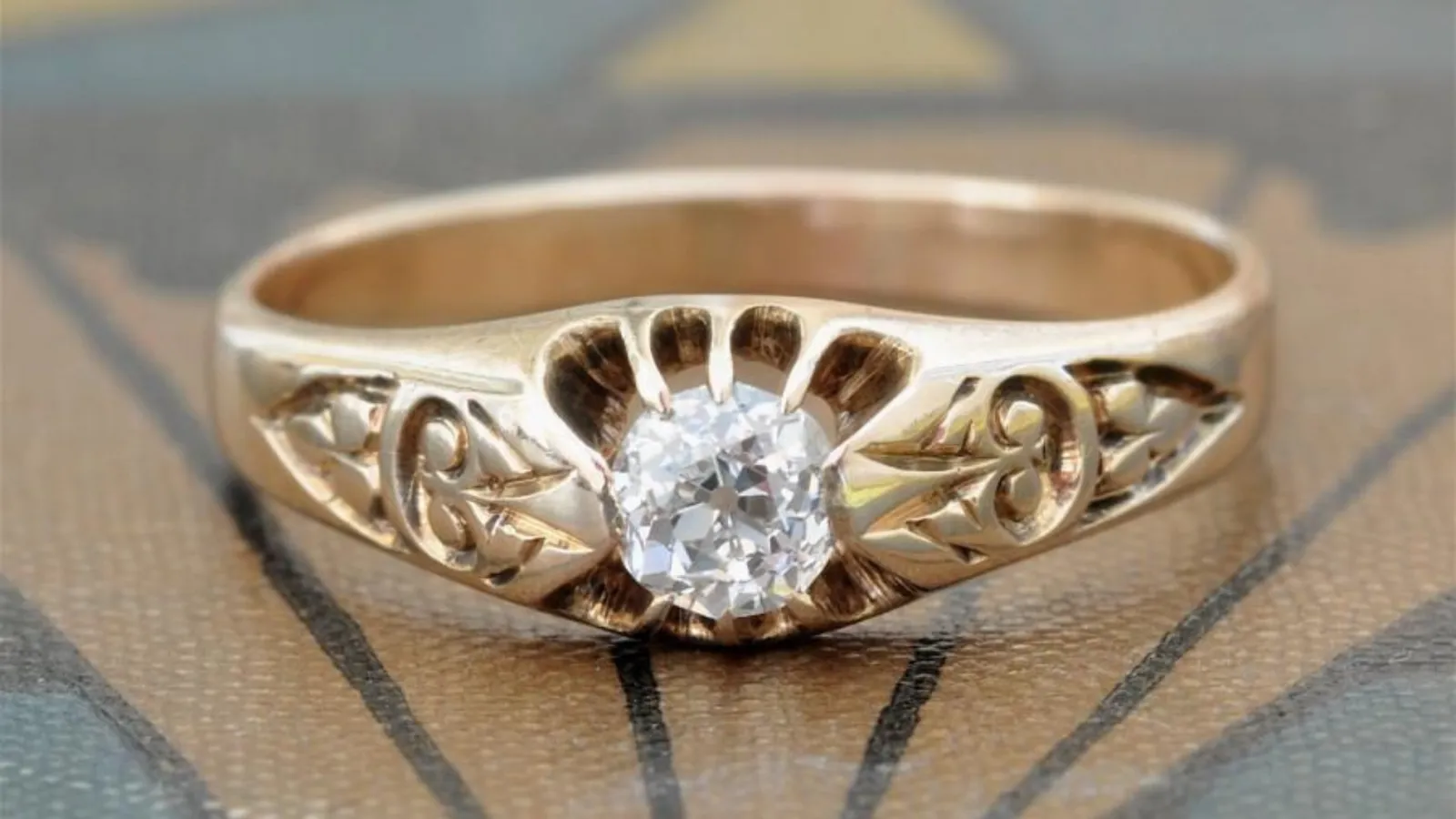
Short answer: engagement rings in the 1800s were smaller, more decorative and more varied than today’s. Common styles included gold snake rings, clusters of small rose cut or old mine cut diamonds, colored gems and pearls set alongside diamonds, and gold bands with hand-engraved patterns. The single large diamond solitaire only started to catch on late in the century.
At a glance
| Feature | Typical in the 1800s |
|---|---|
| Metal | Yellow gold (often 9K–22K); silver-topped settings for diamonds |
| Diamond cuts | Rose cut, old mine cut, later old European cut |
| Popular gems | Diamonds, pearls, colored gemstones |
| Motifs | Snakes, flowers, hearts, stars, bows |
| Settings | Clusters, closed-back collets, decorative engraving |
| Big change | 1866 South African diamond discovery; solitaires late in the century |
The Victorian era in brief
Most 1800s rings you’ll see are called Victorian, after Queen Victoria, who reigned from 1837 to 1901. Her romance with Prince Albert had a big influence on sentimental jewelry of the time.
Rings from the early 1800s fall into the late Georgian period, and many styles carried over between the two.
Popular 1800s engagement ring styles
Snake rings
When Albert proposed in 1839, he gave Victoria a gold ring shaped like a snake. National Geographic notes that the snake was a popular symbol of eternal love at the time. Snake rings, often with gemstone eyes or set heads, became fashionable.
Cluster rings
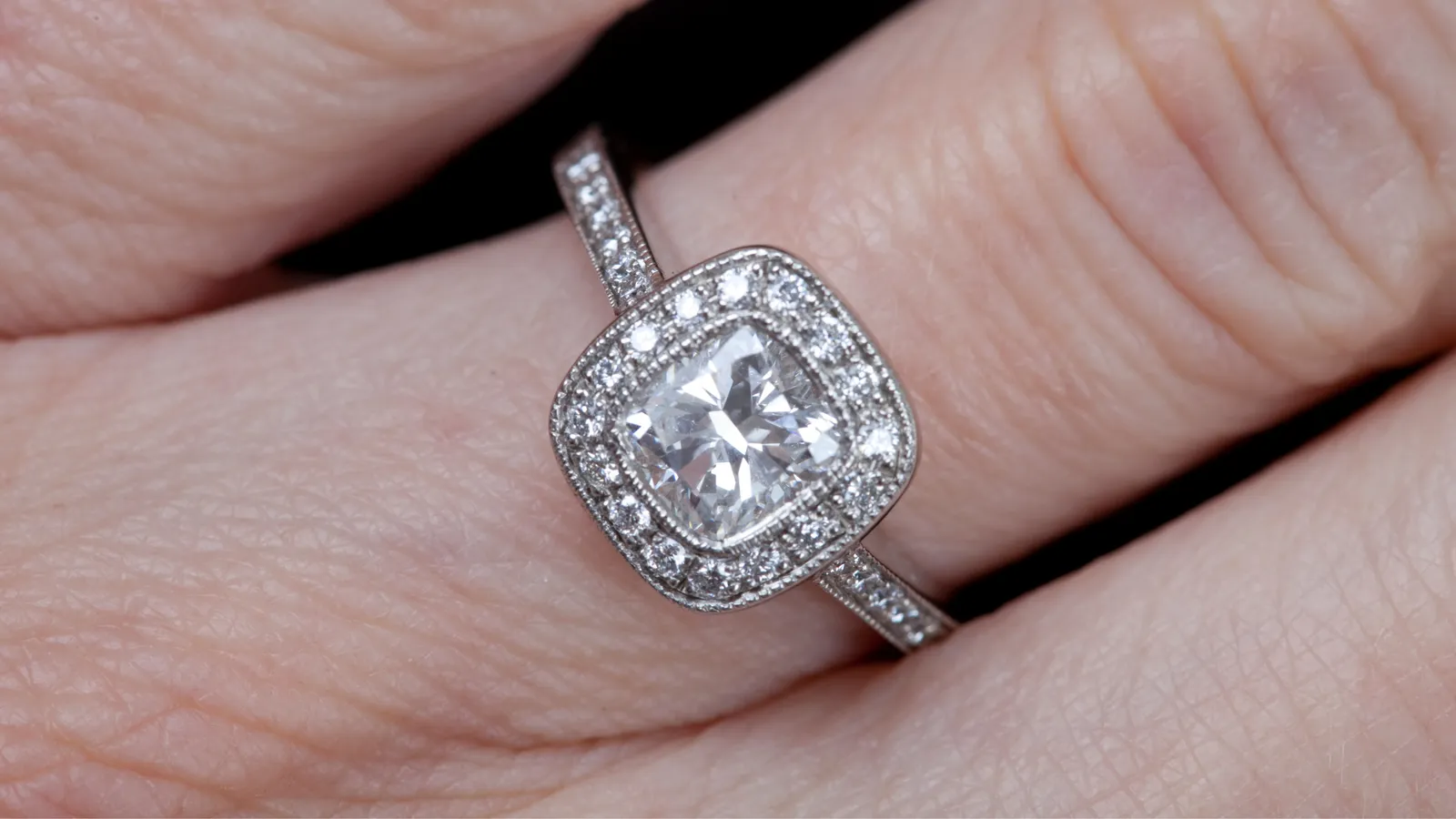
With large diamonds rare and expensive, jewelers grouped small diamonds into flower-like clusters or rows. This gave a bigger, brighter look without a single big stone.
Gemstone and pearl rings
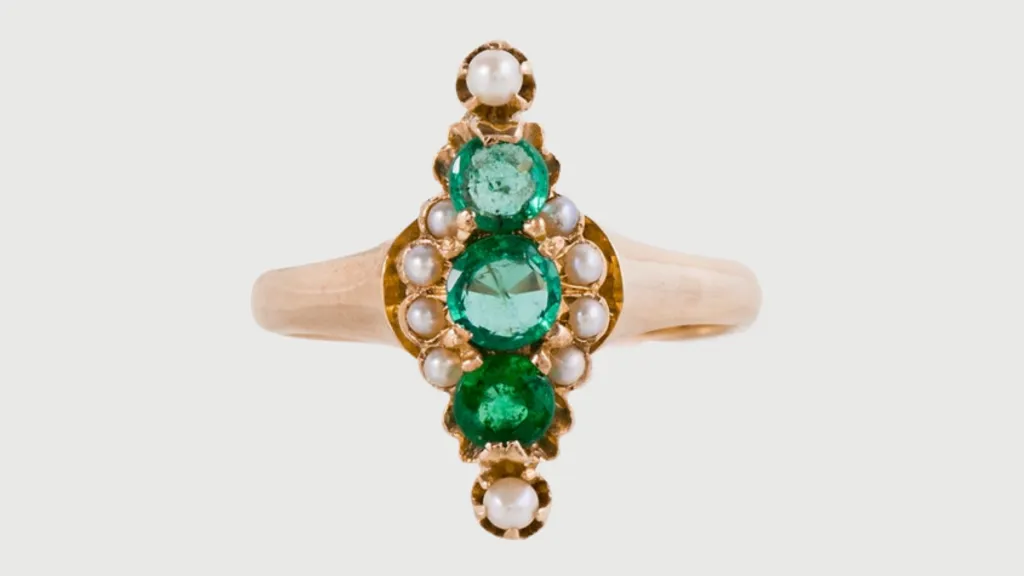
1stDibs notes that many Victorian rings paired small diamonds with colored gemstones. Pearls were also widely used, and sentimental pieces often mixed several stones.
Acrostic rings used a row of gems whose first letters spelled a word. GIA mentions these as a Georgian and Victorian way to hide a secret message in a ring.
Moonstone and softer stones
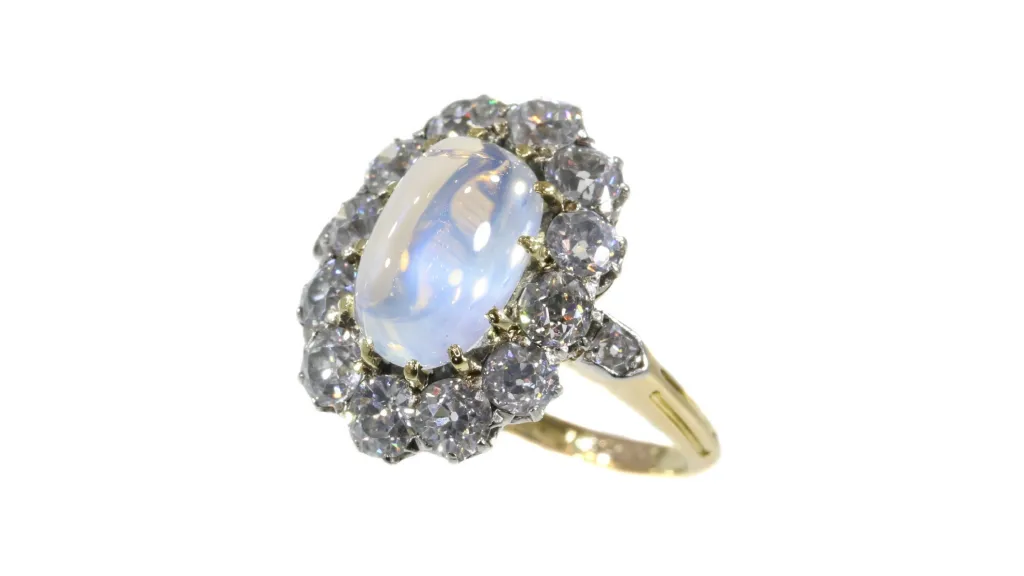
Milky, glowing stones fit the romantic mood of 19th-century jewelry. Rings like this one, with a moonstone framed by a cluster of old cut diamonds, show how a soft center stone and small diamonds combine. Many antique and antique-style rings feature moonstones, opals and pearls. Keep in mind these stones are softer than diamonds and need gentle wear.
Posy rings
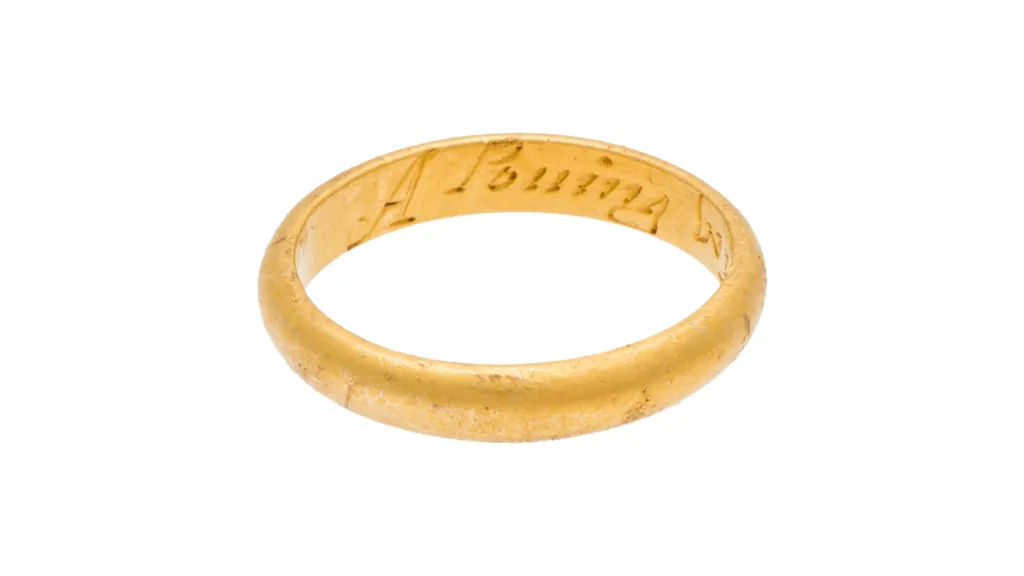
Posy rings are plain gold bands engraved with a short message. They’re much older than the 1800s: the Victoria and Albert Museum says engraved love rings were called “posies” by 1430. They remained a sentimental choice, and engraving inside a band is still popular today.
Diamonds in the 1800s
How diamonds were cut
Diamonds were cut by hand, so they look different from modern stones:
- Rose cut: flat bottom and a domed top covered in triangular facets. It gives a soft, candlelit glow rather than sharp sparkle. See what is a rose cut diamond.
- Old mine cut: cushion-like outline, small table, tall crown and a large culet. It’s the ancestor of today’s cushion cut. See what is an old mine cut diamond.
- Old European cut: a rounder cut that appeared later in the century, a forerunner of the modern round brilliant. See what is an old European cut diamond.
How settings looked
- Closed-back collets wrapped the stone in metal, with prongs on top.
- Silver over gold was used for diamond settings so the stones looked whiter, according to 1stDibs.
- Repoussé and chasing (patterns hammered into the metal) decorated many bands.
The 1866 turning point
1stDibs dates a big shift to the discovery of a major diamond source in South Africa in 1866. Diamonds became more available, and cutting improved. It also notes that in 1886 Tiffany & Co. introduced its six-prong setting, which raised the diamond up to catch more light and helped popularize the solitaire.
The diamond solitaire as the standard engagement ring, though, is largely a 20th-century development driven by marketing.
How 1800s rings compare with modern rings
| 1800s rings | Modern rings | |
|---|---|---|
| Main stone | Often several small stones or a colored gem | Usually one larger diamond |
| Cut | Hand-cut rose, old mine, old European | Machine-assisted round brilliant and fancy shapes |
| Sparkle | Soft, chunky flashes | Bright, crisp sparkle |
| Metal | Mostly yellow gold | White gold, platinum, yellow and rose gold |
| Decoration | Engraving, symbolic motifs | Often clean and minimal |
Can you buy an engagement ring from the 1800s?
Yes. Genuine Victorian rings are sold by antique jewelers, auction houses and online marketplaces such as 1stDibs and Etsy. Prices vary widely with the stones, condition and maker.
Before you buy:
- Ask for the era and evidence, such as hallmarks, construction details and the cut of the stones.
- Get a return period and an independent appraisal.
- Check the condition of prongs and the band. Thin, worn antique shanks may need repair before daily wear.
- Understand the stones. Softer gems like pearls, opals and moonstones need more care than diamonds.
If you’d rather have the look without the age, many jewelers make new rings with old-cut-style diamonds and vintage-inspired settings. And if your ring is more of a promise than a proposal, see what to say when giving a promise ring.
Frequently asked questions
Did people have diamond engagement rings in the 1800s?
Some did, especially wealthier couples, but colored gems, pearls and plain or engraved gold were also common. Diamonds became much more widely available after the major South African discoveries of the late 1860s.
What was Queen Victoria’s engagement ring?
Prince Albert gave her a gold ring shaped like a snake, a symbol of eternal love at the time. It helped make snake rings fashionable.
What is an old mine cut diamond?
An early, hand-cut diamond with a cushion-like outline, a small table, a tall crown and a large flat bottom facet (culet). It was the main diamond cut of the 1800s.
How can I tell if a ring is really from the 1800s?
Look for hand-cut diamonds, signs of handmade work and period hallmarks, then ask a qualified appraiser or antique jewelry specialist to confirm it.