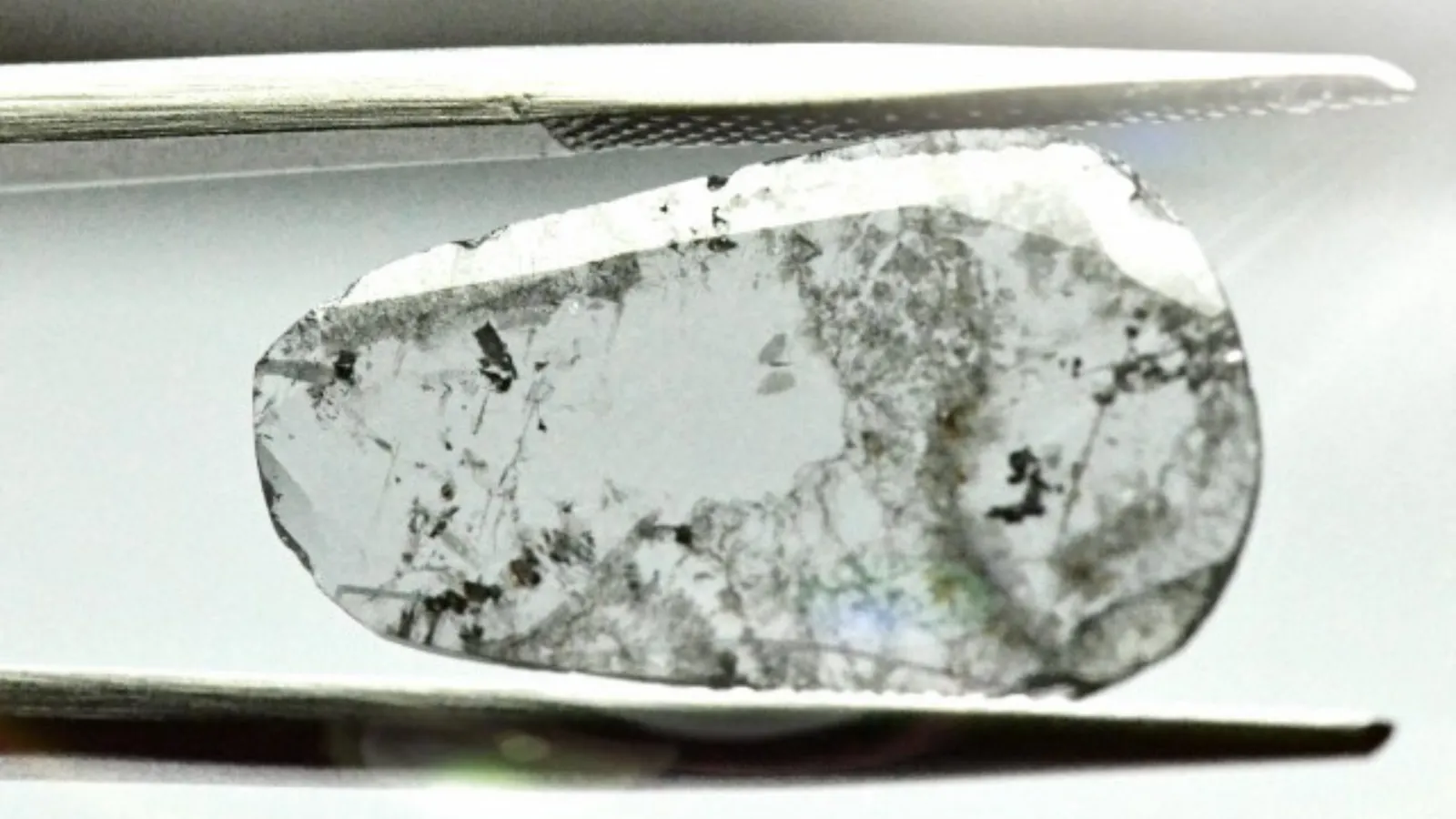
Short answer: a diamond slice is a thin, flat cross-section cut from a rough diamond crystal, a bit like a slice of agate. Instead of being faceted for sparkle, it’s polished flat so you can look into it and see its inclusions, which often form natural patterns. Slices are popular in organic, artisan jewelry because every one is different and they usually cost less per carat than faceted diamonds.
At a glance
| Diamond slice | |
|---|---|
| What it is | A thin, flat cross-section of diamond |
| Look | Glassy, translucent, often with visible patterns and inclusions |
| Sparkle | Low; some have faceted edges for a little flash |
| Durability | Lower than a standard cut; more prone to chipping |
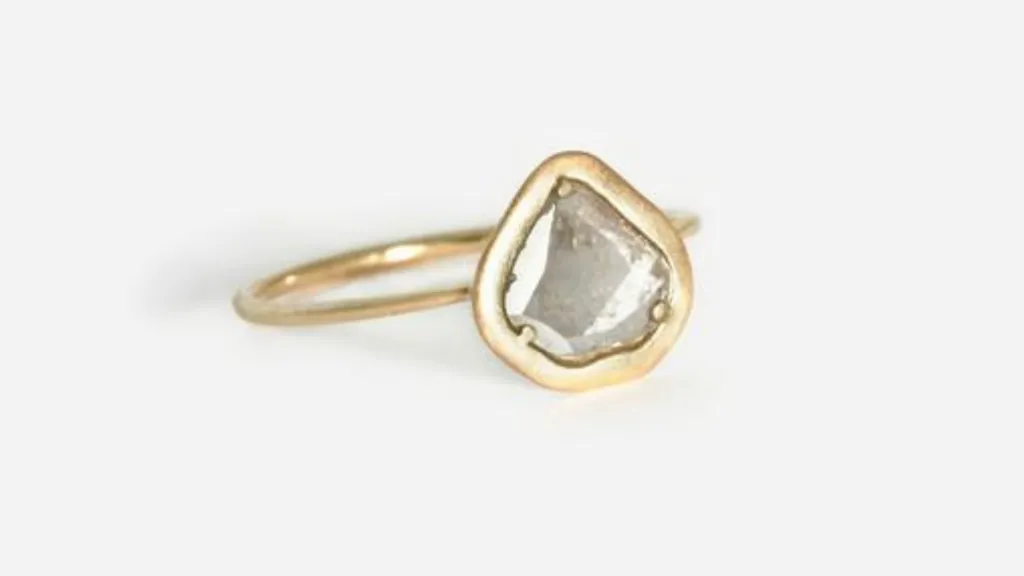
| Best setting | Bezel or a protective rim |
How diamond slices are made
A rough diamond crystal is cut into thin sheets, then the flat faces are polished. Some slices are left as a simple flat plate; others get a row of small facets around the edge. The outline usually follows the natural shape of the rough, so you see free-form shapes rather than neat rounds and ovals.
Slices are often cut from diamond that’s heavily included, material that wouldn’t make a valuable faceted stone. In a slice, those inclusions become the design.
What diamond slices look like
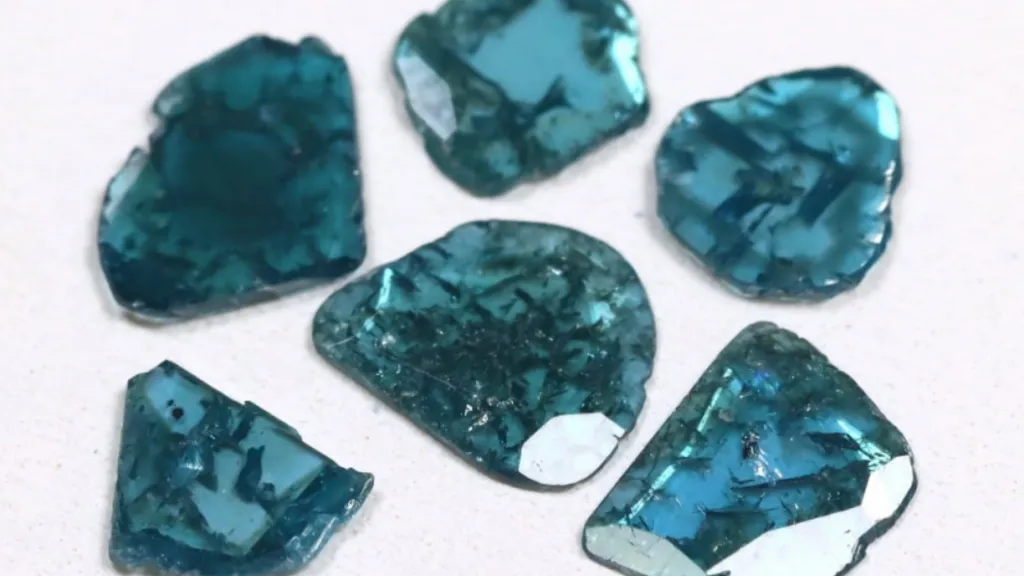
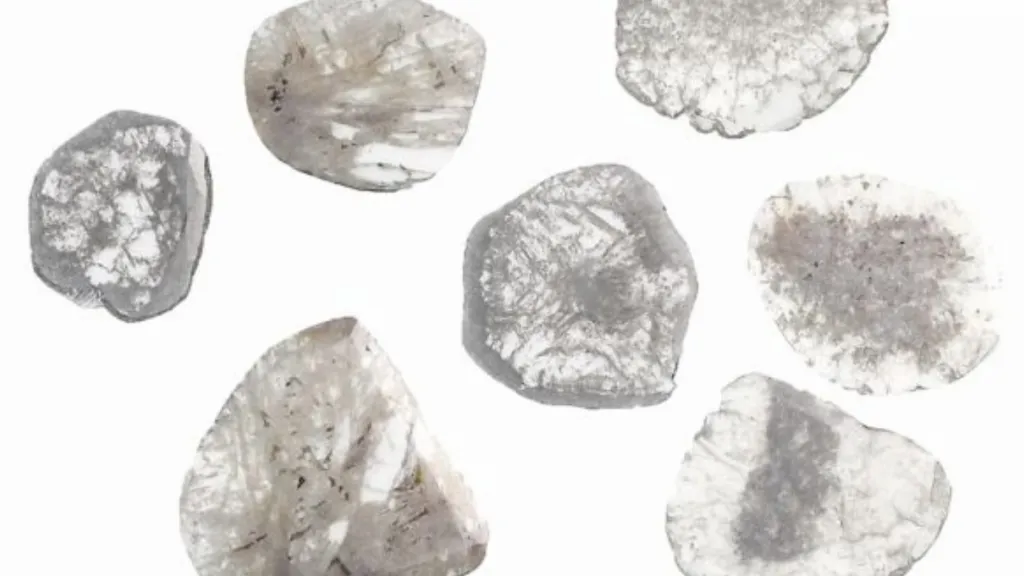
- Colorless to grey slices are the most common, ranging from clear and icy to smoky and speckled.
- Inclusion patterns can look like clouds, galaxies or landscapes. Many buyers pick a slice for its pattern alone.
- Colored slices (blue, black, yellow, brown) are available too. Ask whether the color is natural or treated.
Diamond slice vs. polki vs. rose cut
These three often get lumped together because they’re all flatter, “old-world” alternatives to the brilliant cut.
| Diamond slice | Polki | Rose cut | |
|---|---|---|---|
| Shape | Thin, flat plate | Flat or uncut, lightly worked surface | Flat base, domed top of triangular facets |
| Faceting | None or edge facets only | Minimal | Domed facets on top |
| Look | See-through, shows inclusions | Raw, natural | Soft, candlelight sparkle |
| Tradition | Modern artisan jewelry | Traditional Indian jewelry | Antique European jewelry |
GIA notes that many polki diamonds are highly included, which is part of their character, much like slices. If you like the soft flash of a domed top, read about rose cut diamonds.
Are diamond slices durable?
Diamond is very hard, but hardness isn’t the same as toughness. A thin plate with lots of internal fractures can chip or crack from a hard knock. To protect a slice:
- Choose a bezel setting (a metal rim around the whole edge) or a setting with a protective border.
- Avoid very thin slices in rings you’ll wear every day.
- Take it off for gym work, gardening and anything that could knock it against a hard surface.
For clarity terms and why inclusions can affect strength, see what diamond inclusions are.
Pros and cons of diamond slices
Pros
- Every slice is one of a kind
- Large surface area for the money
- Organic, modern look that stands out from typical engagement rings
Cons
- Little sparkle
- More fragile than faceted diamonds
- No standard grading, so comparing prices is harder
Tips for buying a diamond slice
- Look at the slice itself, not just a stock photo. Pattern is everything.
- Hold it to the light. Check for cracks that reach the edge.
- Ask about origin and treatment: natural or lab-grown, natural or treated color.
- Ask how it’s set and whether the jeweler will reset it if it loosens.
Frequently asked questions
Are diamond slices real diamonds?
Yes. A slice is real diamond, just cut thin and flat instead of into a faceted gem. Lab-grown slices also exist, so ask which you’re buying.
Do diamond slices sparkle?
Not like a brilliant cut. Slices look glassy or icy and show their inclusions. Some have small facets around the edge that add a little flash.
Can you wear a diamond slice ring every day?
You can, with care. Because slices are thin and often included, they’re more prone to chipping than a regular diamond. A protective bezel setting helps.
Are diamond slices cheaper than regular diamonds?
Usually, per carat. They use material that wouldn’t make a high-grade faceted stone. Price still varies a lot with size, shape, color and how striking the pattern is.