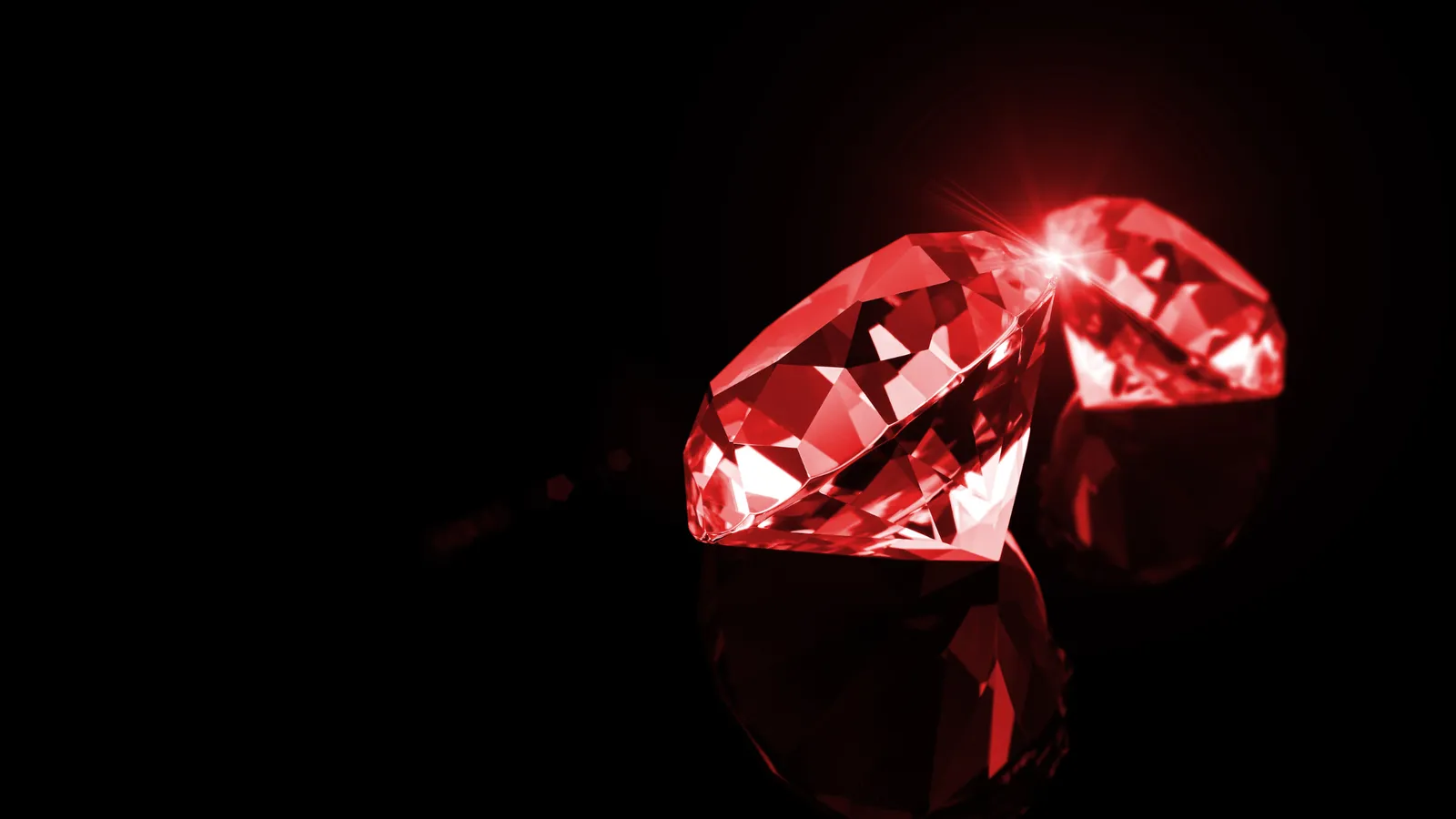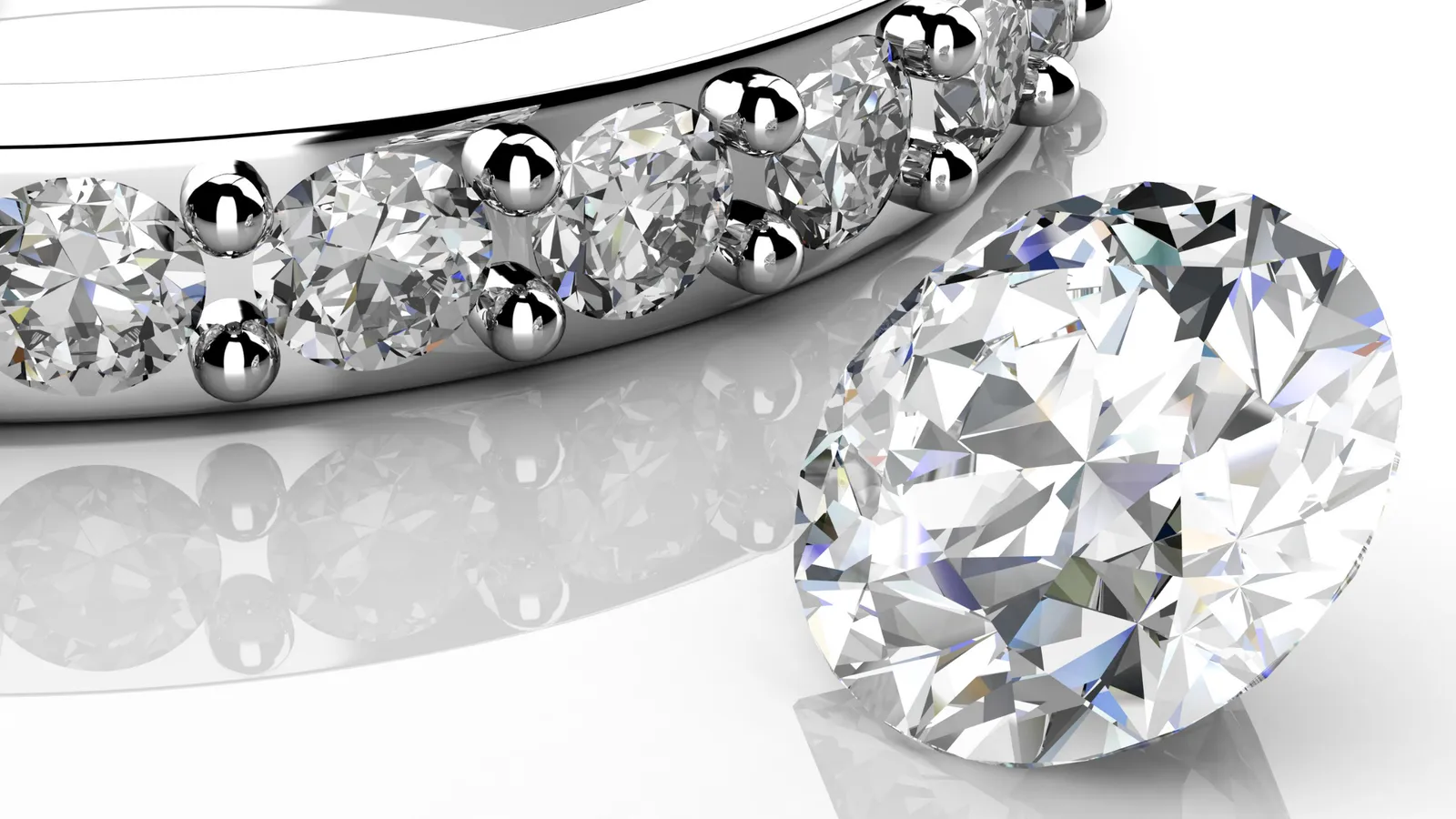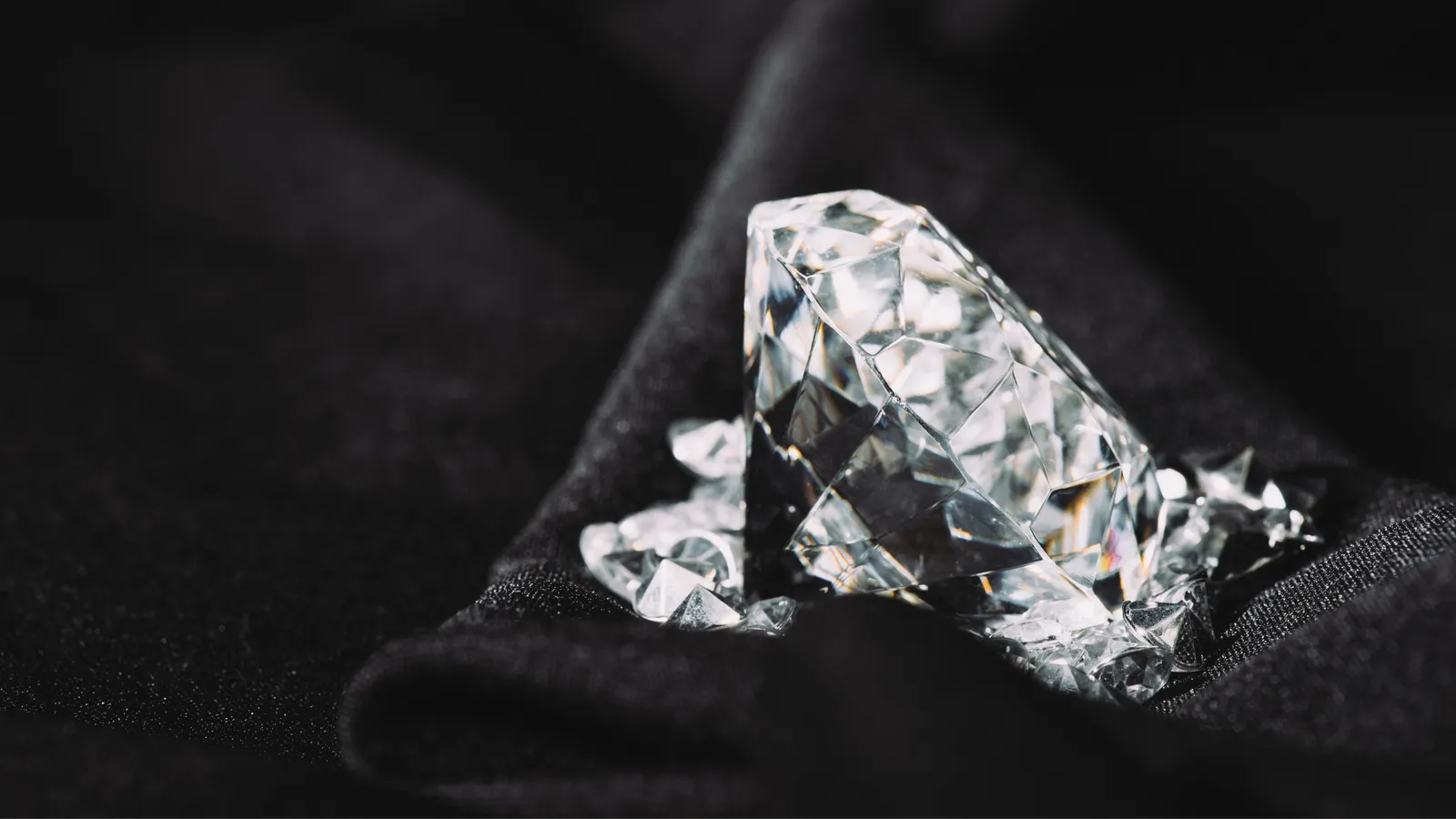
Short answer: scintillation is a diamond’s sparkle: the flashes of light that switch on and off as the diamond, the light or your eye moves, plus the pattern of light and dark areas across its face. GIA defines it as the sparkle a diamond produces and the pattern of light and dark areas caused by reflections within the diamond. Good scintillation comes from a well-cut stone with an even, balanced pattern.
Scintillation in one table
| What it is | Sparkle plus the light-and-dark pattern |
| Two parts | Flashes (sparkle) and pattern (contrast) |
| Main driver | Cut: facet angles, size and symmetry |
| Best seen in | Moving diamond, multiple light sources |
| Related terms | Brilliance (brightness) and fire (color) |
The two parts of scintillation
Sparkle
Every facet acts like a tiny mirror. As you tilt the diamond, each one catches and throws back light for a moment, then goes dark. Those quick flashes are sparkle. You only see them with movement, which is why diamonds look so lively on a moving hand.
Pattern
When you look at a diamond face-up, you see a mosaic of bright and dark areas. The dark bits are reflections of your own head and surroundings. A balanced pattern has bright and dark areas spread evenly, which gives contrast and makes the sparkle stand out. GIA’s cut research found that this changing light-and-dark pattern matters as much as the flashes themselves.
What affects scintillation?
Cut quality
GIA includes scintillation in its cut grade for round diamonds. Proportions and symmetry decide whether flashes are spread evenly across the stone or clumped in one area. Uneven facets can create a lopsided pattern or a dull patch.
Facet size and style
| Facet style | Type of sparkle |
|---|---|
| Round brilliant | Balanced mix of bold and fine flashes |
| Radiant, cushion “crushed ice” | Many tiny pinpoint flashes |
| Step cuts (emerald, Asscher) | Fewer, broad flashes like a hall of mirrors |
| Older cuts (old mine, old European) | Large, chunky flashes |
Bigger facets give bigger, slower flashes. Many smaller facets give a busier glitter. Neither is wrong; it comes down to taste. See what is a crushed ice diamond and what is an old European cut diamond.
Lighting
GIA explains that lighting changes what you see:
- Spot lighting (small, bright sources like halogen spots or the sun) creates strong flashes and fire.
- Diffuse lighting (overcast daylight, office light) shows little fire, but the scintillation pattern stays clearly visible.
- A mix of both usually looks the most attractive.
That’s why diamonds can look dazzling in a jewelry store and calmer at home.
Cleanliness
Grease on the facets blurs the mirrors. A dirty diamond has a flat, lifeless pattern until it’s cleaned.
When the pattern goes wrong
Watch for large fixed dark areas
- Bow-tie: a dark band across the middle of ovals, pears and marquises. A faint one is normal; a strong one is distracting. See what causes the bow-tie effect.
- Dark center: often a sign of a stone cut too deep.
- Washed-out look: few dark areas and weak contrast, common in very shallow stones.
Which cut has the best scintillation?
A well-cut round brilliant is generally considered the most balanced, because its 57 or 58 facets are designed for an even mix of brightness, fire and sparkle. Among fancy shapes, cushions, ovals and radiants can also scintillate strongly when well cut. See what are facets on a diamond for how the facet layout works.
How to judge scintillation when buying
- Rock the diamond slowly under store lights and near a window. Look for flashes across the whole face, not just one area.
- Look for an even pattern of bright and dark, without a big fixed shadow.
- Compare stones side by side at the same size and price.
- Ask for a video if buying online. Still photos can’t show scintillation.
For rounds, a GIA Excellent cut grade is a good shortcut. Our 4Cs guide explains how cut grades work.
Frequently asked questions
Is scintillation the same as brilliance?
No. Brilliance is how much white light comes back overall. Scintillation is the flashing on and off, and the balance of bright and dark areas, as the diamond or the light moves.
Is a dark area in a diamond always bad?
No. Some dark areas create the contrast that makes sparkle visible. Problems start when a large dark zone stays put, like the bow-tie shadow in some ovals and pears.
Does a bigger diamond have more scintillation?
Larger facets produce larger, more noticeable flashes. A big stone isn’t automatically better, though; the cut decides whether the sparkle pattern is balanced.
Why does my diamond sparkle less at home?
Store lighting uses many small, bright spotlights that make diamonds flash. Soft indoor light shows a calmer pattern. Also check that the diamond is clean.