Short answer: yes, labradorite can get wet. Water doesn’t dissolve or discolor it, and warm soapy water is the safest way to clean it. But it’s a feldspar, softer than quartz and prone to splitting along flat planes, so avoid heat, acids, harsh cleaners and ultrasonic or steam machines, and don’t leave it soaking for long.
At a glance
| Question | Answer |
|---|---|
| Mineral family | Feldspar |
| Hardness | About 6–6.5 on the Mohs scale |
| Wash in warm soapy water? | Yes |
| Long soaks? | Not recommended |
| Salt water, chlorine? | Brief contact only; rinse afterward |
| Ultrasonic, steam, heat? | Avoid |
| Acidic or bleach cleaners? | Avoid |
What is labradorite?
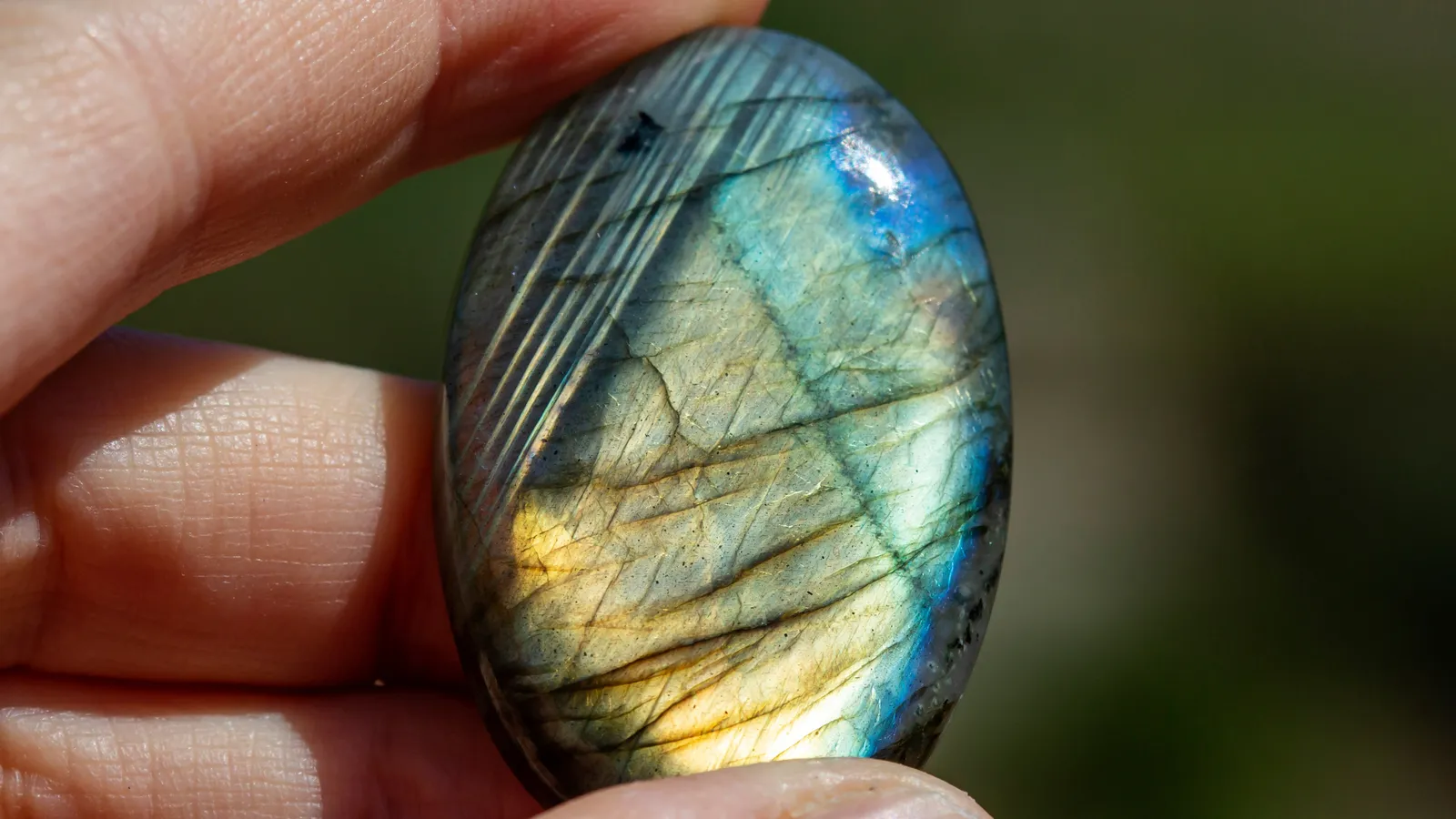
Labradorite is a feldspar mineral known for labradorescence: flashes of color, most often blue, that glide across a gray or dark body as you tilt it. GIA explains that the effect comes from light interacting with thin layers inside the stone. Some pieces also show green, gold, orange or violet.
A few things matter for care:
- Hardness: about 6–6.5, a bit softer than quartz.
- Cleavage: feldspars can split along flat internal planes if knocked hard.
- Treatments: most labradorite is untreated, but cracked material is sometimes filled or oiled, which makes gentle cleaning even more important.
What water does (and doesn’t) do
Plain water won’t harm labradorite. The concerns are elsewhere:
- Long soaks can let water work into existing cracks or loosen fillers and glue.
- Temperature swings, like hot water followed by cold, stress a stone with cleavage.
- Chemicals in the water, like chlorine, salt or cleaning products, are harder on the stone and its setting than water itself.
How to clean labradorite
GIA’s cleaning advice for feldspars (written for sunstone, labradorite’s close cousin) is simple: warm soapy water is safe, while ultrasonic and steam cleaners should be avoided.
- Fill a bowl with lukewarm water and a drop of mild dish soap.
- Dip the piece briefly and wipe the stone with a soft cloth or soft brush.
- Rinse in clean, lukewarm water.
- Dry right away with a soft, lint-free cloth.
Keep labradorite away from
- Bleach and acidic cleaners. GIA notes feldspars are rapidly attacked by hydrochloric acid, so bleach-containing products are a no.
- Ultrasonic and steam cleaners
- Hot water, saunas and hot tubs
- Hard knocks against counters, door frames and gym equipment
Wearing labradorite day to day
- Rings: choose a bezel or protective setting, and take it off for workouts, gardening and cleaning.
- Pendants and earrings: these see far fewer knocks, so they’re great everyday options.
- Showers and pools: take it off. Soap film dulls the flash, and chlorine and salt are hard on metals.
- Storage: keep it in a soft pouch, away from harder gems that can scratch it.
Will water make labradorite lose its flash?
No. Water doesn’t affect the internal layers that cause labradorescence. If your stone looks dull, it’s most likely coated with oils or soap residue. A gentle wash usually brings the color back.
Similar stones
Sodalite and opalite need similar gentle care. Read can sodalite go in water and can opalite go in water, or browse more grey gemstones.
Frequently asked questions
Can I shower with a labradorite ring?
An occasional splash won’t harm it, but soap film dulls the flash and repeated knocks in the shower can chip it. It’s best to take it off.
Can labradorite go in salt water?
A short swim won’t ruin it, but salt and sand are abrasive. Rinse it in fresh water and dry it afterward, and don’t soak it in salt water.
Why has my labradorite lost its flash?
Usually it’s just dirty. Skin oil and soap film block light from reaching the internal layers. A gentle wash in warm soapy water typically brings the flash back.
Is labradorite good for everyday rings?
It can work with care. At about 6–6.5 hardness with cleavage, it’s better in protective bezel settings and should come off for sports, gym sessions and housework.