Short answer: rinse the ring quickly in warm water with a drop of mild soap, pat it dry, then dry it completely (a hair dryer on low works well). Finish with a very thin coat of the oil or wax your ring’s maker recommends. Meteorite is mostly iron and nickel, so moisture and chemicals cause rust; keeping it dry matters more than any cleaner.
At a glance
| Do | Don’t |
|---|---|
| Clean briefly with mild soap and water | Soak it for long periods |
| Dry it fully, including inside the band | Let it air-dry wet |
| Apply a thin coat of care oil or ring wax | Use bleach, chlorine or acidic cleaners |
| Take it off for showers, pools and dishes | Use ultrasonic or steam cleaners |
| Send deep rust back to the maker | Scrub the inlay with abrasives |
What is a meteorite ring made of?
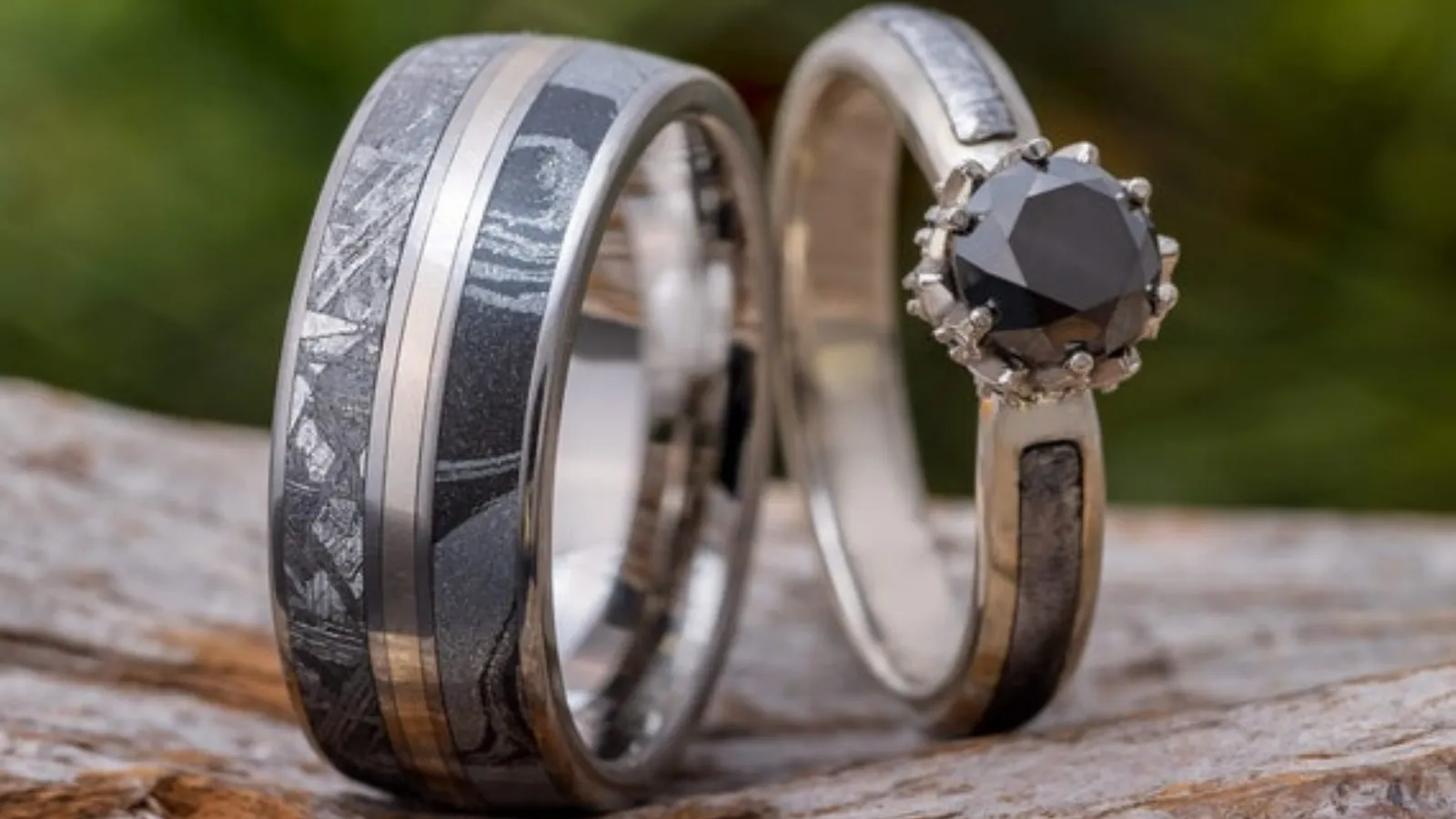
Most meteorite jewelry uses slices of iron meteorites, which are made of iron-nickel alloys. The most common in jewelry is the Gibeon meteorite from Namibia, which the American Museum of Natural History displays as an example of the pattern below.
That pattern is called the Widmanstätten pattern: crossing bands of two iron-nickel minerals that grew very slowly as the metal cooled inside an asteroid. Jewelers reveal it by polishing a slice and etching it with a mild acid. The AMNH notes that iron never crystallizes this way on Earth’s surface.
Usually the meteorite is an inlay set into a band of titanium, cobalt chrome, zirconium, gold or tungsten. The band won’t rust, but the meteorite can.
Why meteorite rings rust
Iron rusts when it meets water and oxygen. Things that speed it up:
- Water trapped against the inlay after hand-washing or showering
- Sweat and salt water
- Chlorine from pools and hot tubs
- Household cleaners, sanitizers and acids
Ring makers often seal the inlay, but sealants wear over time, especially on the top of the ring.
How to clean a meteorite ring, step by step
- Rinse quickly. Hold the ring under warm running water for a few seconds.
- Wash gently. Use a drop of mild, unscented dish soap on your fingertips or a very soft brush. Keep it brief; don’t soak it.
- Rinse again. Remove all the soap, which can leave a film that holds moisture.
- Dry thoroughly. Pat it with a lint-free cloth, then use a hair dryer on low or cool for a minute, including inside the band. This step is what prevents rust.
- Protect it. Rub in a tiny amount of the care oil or wax your maker recommends, then buff off the excess with a clean cloth.
How often: a light wipe and oil every few weeks for daily wear, and a full clean whenever the ring looks dull or grimy. Jewelry by Johan, a meteorite ring maker, suggests oiling every one to four weeks depending on your climate and skin.
Follow your maker’s instructions first
Makers seal and finish meteorite differently, and some cleaners that are fine for one ring can damage another. Some makers specifically warn against alcohol-based cleaners and solvents. If your ring came with a care card or kit, use that.
How to deal with small rust spots
Rust usually shows up as dark, reddish or brown dots, often near the edge of the inlay.
- Light spots: clean and dry the ring as above, then re-oil it. Some faint spots fade with regular oiling.
- Spots that keep coming back or spreading: stop and contact the ring’s maker. Many offer cleaning and re-etching, which restores the pattern safely.
- Avoid DIY acids and abrasives. Etching chemicals and polishing compounds can remove the pattern or damage the band.
Everyday habits that prevent rust
- Take the ring off before showering, swimming, washing dishes and using hand sanitizer.
- Dry your hands thoroughly if you wear it while washing them.
- Store it in a dry place, ideally with a silica gel packet, not in a steamy bathroom.
- Wear it often. Light friction and your skin’s natural oils can help, as long as the ring stays dry.
Pros and cons of meteorite jewelry
Pros
- Genuinely from space, with a pattern no Earth metal makes
- Every slice is unique
- Pairs well with modern band metals
Cons
- Needs regular drying and oiling
- Can rust if neglected
- Usually can’t be resized like gold
If you like the look but want something lower-maintenance, read about stardust rings, or browse tips on choosing a men’s wedding band.
Frequently asked questions
Can I wear my meteorite ring in the shower?
Better not. Meteorite is mostly iron, and repeated soaking, soap film and slow drying are what lead to rust. Take it off for showers, swimming, dishes and hand-washing when you can.
What are the dark spots on my meteorite ring?
Usually early rust. Small spots can often be cleaned and oiled at home, but deep or spreading rust is a job for the maker, who can clean and re-etch the inlay.
Can a jeweler resize a meteorite ring?
Often not in the usual way. Many meteorite rings are inlays in titanium, cobalt or tungsten bands that can't be cut and soldered. Check with the maker; many offer size exchanges instead.
Is the Widmanstätten pattern painted on?
No. It's the natural crystal structure of the iron-nickel metal, revealed when a polished slice is etched with a mild acid. Earth-made iron doesn't form it.