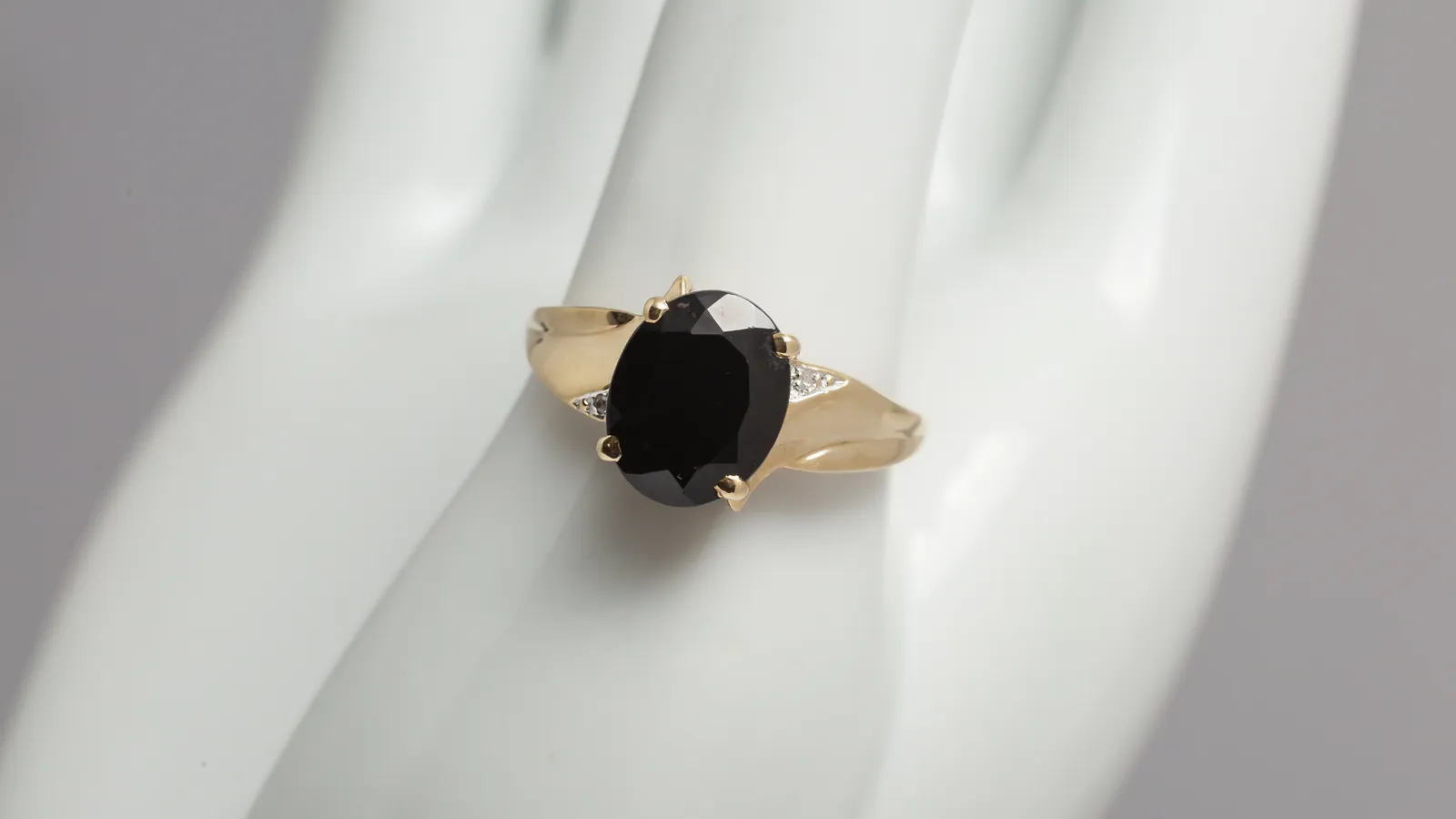
Short answer: real black onyx feels cool and solid, has a smooth, even polish, shows no air bubbles or mold seams, and resists scratching. Most black onyx sold today is chalcedony that has been dyed black, and that’s normal in the trade. What you want to avoid is glass or plastic sold as onyx, and a jeweler can confirm the difference in minutes.
At a glance
| Check | Real onyx (chalcedony) | Glass | Plastic or resin |
|---|---|---|---|
| Feel | Cool, warms slowly | Cool | Warm right away |
| Weight | Solid for its size | Similar | Noticeably light |
| Bubbles | None | Sometimes | Sometimes |
| Mold lines | None | Possible | Common |
| Scratches | Resists everyday scratches | Scratches more easily | Scratches very easily |
| Price | Affordable but not throwaway | Very cheap | Very cheap |
First: what “real” black onyx means
Onyx is a type of chalcedony, a microcrystalline form of quartz. Strictly speaking, onyx has straight, parallel bands. Natural chalcedony that’s solid jet black all the way through is rare.
That’s why most jewelry sold as “black onyx” is chalcedony that has been dyed. The International Gem Society says the practice is so common that you should assume a black onyx has been treated unless a lab report says otherwise. Trade publication JCK points out that, strictly, solid black material should be called black chalcedony, but “black onyx” is the name everyone uses.
So when you ask “is my black onyx real?”, the practical question is: is it natural chalcedony, or is it glass, plastic or another stone?
6 ways to check black onyx at home
1. The touch test
Hold the stone against your lip or the inside of your wrist. Natural stone feels cool and takes a little while to warm up. Plastic feels close to room temperature from the start. Glass also feels cool, so this test rules out plastic but not glass.
2. The weight test
Compare it with a similar-sized stone you know is real. Plastic and resin feel noticeably lighter than stone. Glass feels about the same, so again, this mostly catches plastic.
3. Look for bubbles
Use a jeweler’s loupe or your phone’s camera zoom. Tiny round air bubbles are a classic sign of glass or resin. Natural onyx doesn’t contain gas bubbles.
4. Check for mold lines and dents
Molded glass and plastic beads often have a faint seam line or small dimples where the material was poured. Carved and polished onyx has crisp, even surfaces and drill holes that look ground rather than molded.
5. Look at the polish and luster
Polished onyx has a smooth, glassy to slightly waxy shine. Plastic looks softer and duller, and tends to show fine scuffs. Glass can look too shiny and may show small conchoidal (shell-shaped) chips at the edges.
6. Consider the price
Black onyx is an affordable gem, but a strand or ring priced like a cheap fashion accessory may well be glass. Unusually low prices are a reason to look closer.
Skip the scratch test
Scratching your jewelry against glass or a knife can damage the stone and its setting, and the results are hard to read. The same goes for heat tests. If the piece matters to you, let a jeweler test it.
Onyx vs other black stones
Several black materials look like onyx once they’re polished:
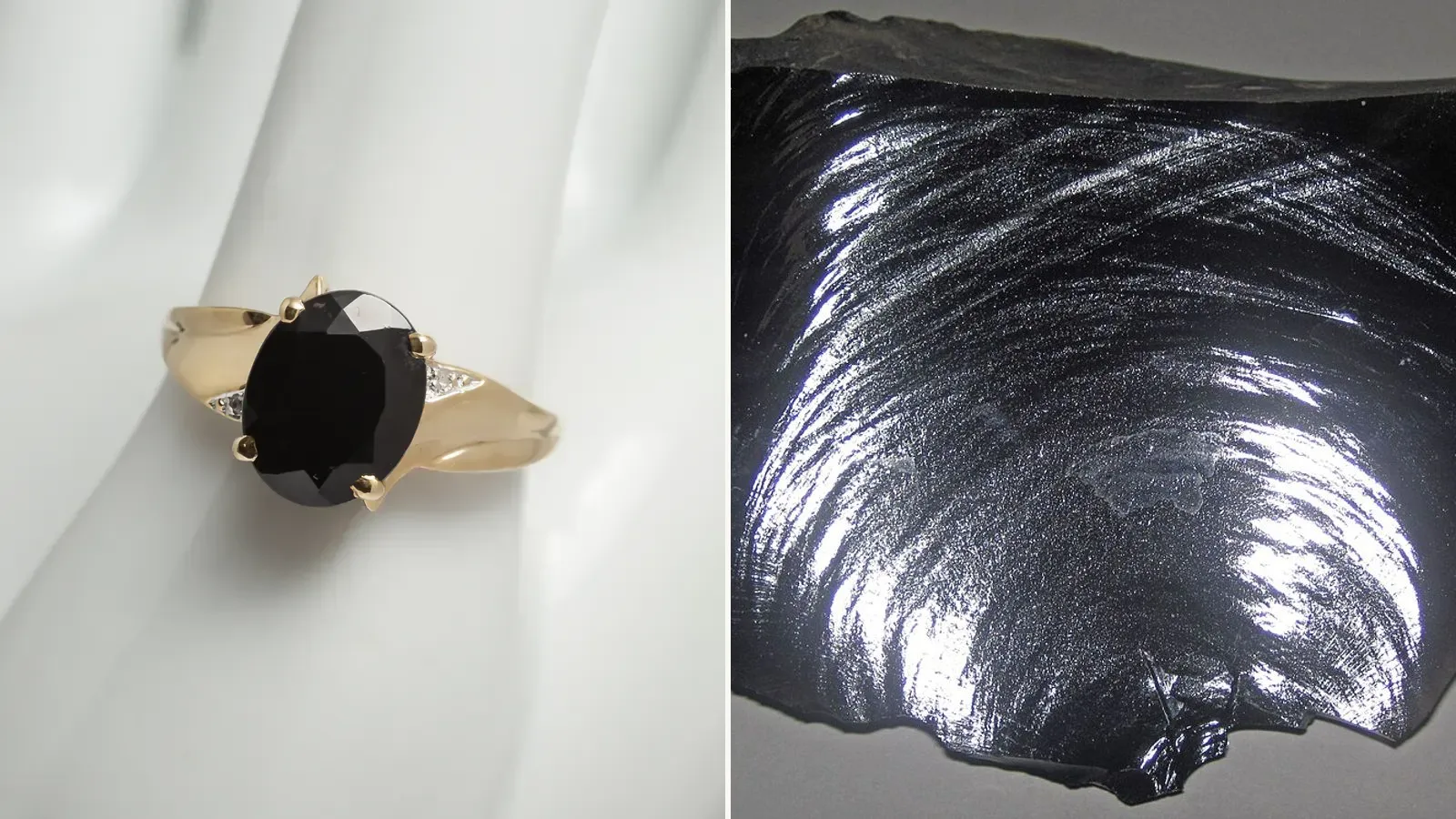
- Obsidian: natural volcanic glass. Often shows a faint sheen or gray streaks and chips with sharp curved fractures. See onyx vs obsidian.
- Black agate: also chalcedony, and often sold interchangeably with onyx.
- Jet: fossilized wood. Very light and warm to the touch, a bit like plastic.
- Hematite: metallic gray-black and very heavy for its size.
How a jeweler can confirm it
A gemologist can identify chalcedony quickly with standard tools, measuring how it bends light (refractive index) and how dense it is (specific gravity) and checking it under magnification. For an expensive or antique piece, a lab report gives you a written answer, including whether the color is treated.
How to care for black onyx
- Clean it with lukewarm water, a little mild soap and a soft cloth.
- Avoid harsh chemicals, which can affect the dye over time.
- Store it away from harder stones that could scratch it.
Want to check other stones? See how to tell if jade is real and how to tell if turquoise is real.
Frequently asked questions
Is dyed black onyx fake?
No. Dyed black chalcedony is the standard material sold as black onyx. It’s a real natural stone with a permanent color treatment. The issue is glass or plastic being sold as onyx.
Does real black onyx scratch easily?
Not easily. Chalcedony is about 6.5–7 on the Mohs scale, so everyday wear won’t scratch it much. Plastic imitations scratch very easily, and glass is somewhat softer.
Is black onyx the same as obsidian?
No. Onyx is a form of chalcedony (quartz), while obsidian is natural volcanic glass. They can look similar when polished black.
Can I test black onyx with a lighter or hot needle?
Don’t. Heat can damage the stone, its setting and the dye, and it doesn’t give a reliable answer. A jeweler can test it without harming it.