Short answer: yes. Aventurine is a variety of quartz, and quartz doesn’t dissolve, soften or swell in water. Rinsing it, washing it in warm soapy water or wearing it in the rain won’t hurt it. Just avoid long soaks for dyed stones or glued jewelry, skip hot water and harsh chemicals, and dry it well afterward.
At a glance
| Question | Answer |
|---|---|
| Mineral | Quartz (or quartzite) with mica flakes |
| Hardness | About 6.5–7 on the Mohs scale |
| Rinse or wash in water? | Yes |
| Soak overnight? | Fine for untreated stones; avoid for dyed or glued pieces |
| Salt water? | Short contact only; rinse afterward |
| Hot water, steam, ultrasonic? | Avoid |
What is aventurine?
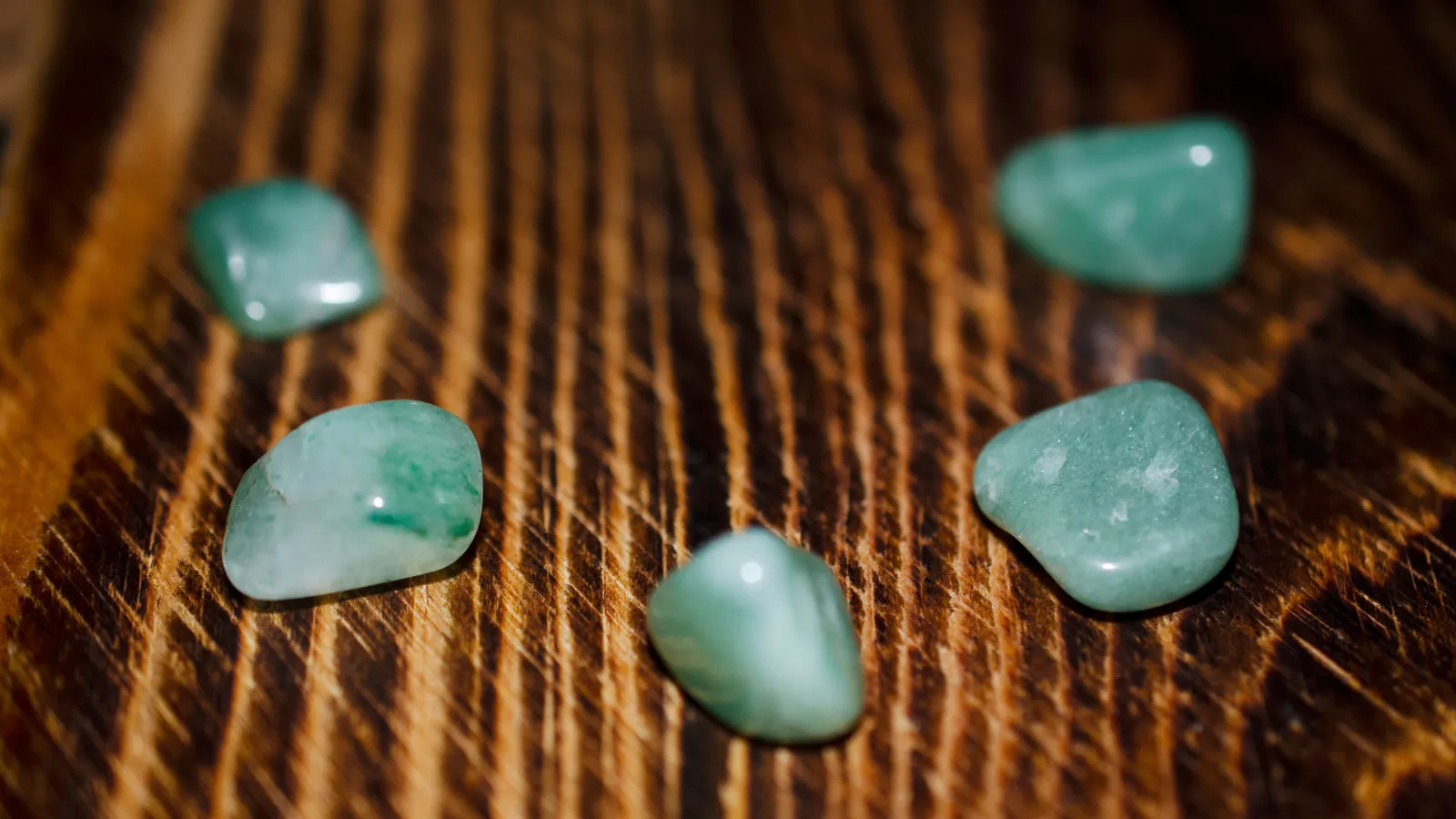
Aventurine is a translucent quartz (or quartzite) packed with tiny, flat mineral flakes. When light hits those flakes, they glitter. That sparkle has its own name: aventurescence.
- Green aventurine, the most common, gets its color from fuchsite, a green mica that contains chromium.
- Other colors such as orange, red, pink, blue and gray come from other inclusions, like hematite or lepidolite.
- Hardness is usually given as 6.5–7. Lots of mica flakes can make a stone a bit softer at the surface.
Why water doesn’t harm aventurine
Quartz is one of the most stable minerals in everyday life. It doesn’t react with water, and it isn’t porous enough to soak it up like turquoise or opal can. A clean, untreated aventurine stone can sit in plain water without changing.
The things that can cause trouble are around the stone, not the stone itself:
- Dye. Some low-sparkle aventurine or plain quartz is dyed a brighter color. Long soaks can draw dye out.
- Glue and stringing. Many beaded bracelets and pendants use glue, elastic or cord that weakens with repeated soaking.
- Plated metal. Cheap plated findings tarnish or peel faster when they get wet often.
- Cracks. Water itself won’t widen them, but sudden temperature changes might.
How to clean aventurine
- Fill a bowl with lukewarm water and a few drops of mild dish soap.
- Wash the stone with your fingers or a soft brush.
- Rinse in clean, lukewarm water.
- Pat dry with a soft cloth and let it air dry fully before storing.
GIA’s care advice for rose quartz, another quartz variety, follows the same pattern: warm soapy water is safe, while ultrasonic and steam cleaners are best avoided. That’s a sensible default for aventurine too, especially if you don’t know whether it’s dyed.
Skip these
- Boiling or very hot water, and sudden hot-to-cold changes
- Bleach, ammonia, acids and jewelry dips
- Ultrasonic and steam cleaners
- Abrasive powders and scouring pads
Is your aventurine real or dyed?
A few warning signs suggest dye or an imitation:
- Neon or unnatural colors, especially bright blue or purple.
- Color concentrated in cracks, which is where dye collects.
- Bright, even copper-colored glitter in clear glass. That’s usually goldstone, a man-made glass with metal flakes, not aventurine.
If you suspect dye, clean it with a damp cloth only and don’t soak it.
Everyday care tips
- Store it separately. At 6.5–7 hardness, aventurine can be scratched by harder stones like sapphire and can scratch softer ones.
- Take rings off for hard work. Quartz can chip if knocked against stone or metal.
- Check settings now and then. Loose prongs cause more lost stones than any cleaning mistake.
Other gems and water
Curious about other stones? See whether amethyst can go in water (another quartz), how citrine handles water, and why selenite should stay dry.
Frequently asked questions
Can I make aventurine water or a gem elixir?
Aventurine won’t dissolve or lose color in plain water, so it can sit in a glass of water without harm. Use a clean, untreated stone, and skip dyed stones, glued pieces or anything strung on cord.
Can I wear an aventurine bracelet in the shower?
The stone can handle it, but the cord, glue or plated metal in many bead bracelets can’t. Take it off to protect the stringing and the finish.
Will salt water damage aventurine?
A brief swim won’t hurt the quartz, but salt can dry into tiny cracks and wear metal settings. Rinse it in fresh water and dry it afterward, and avoid long salt soaks.
Does aventurine fade in sunlight?
Natural green aventurine is generally stable. Brightly dyed stones may fade with long exposure to strong sun, so store them out of direct light.