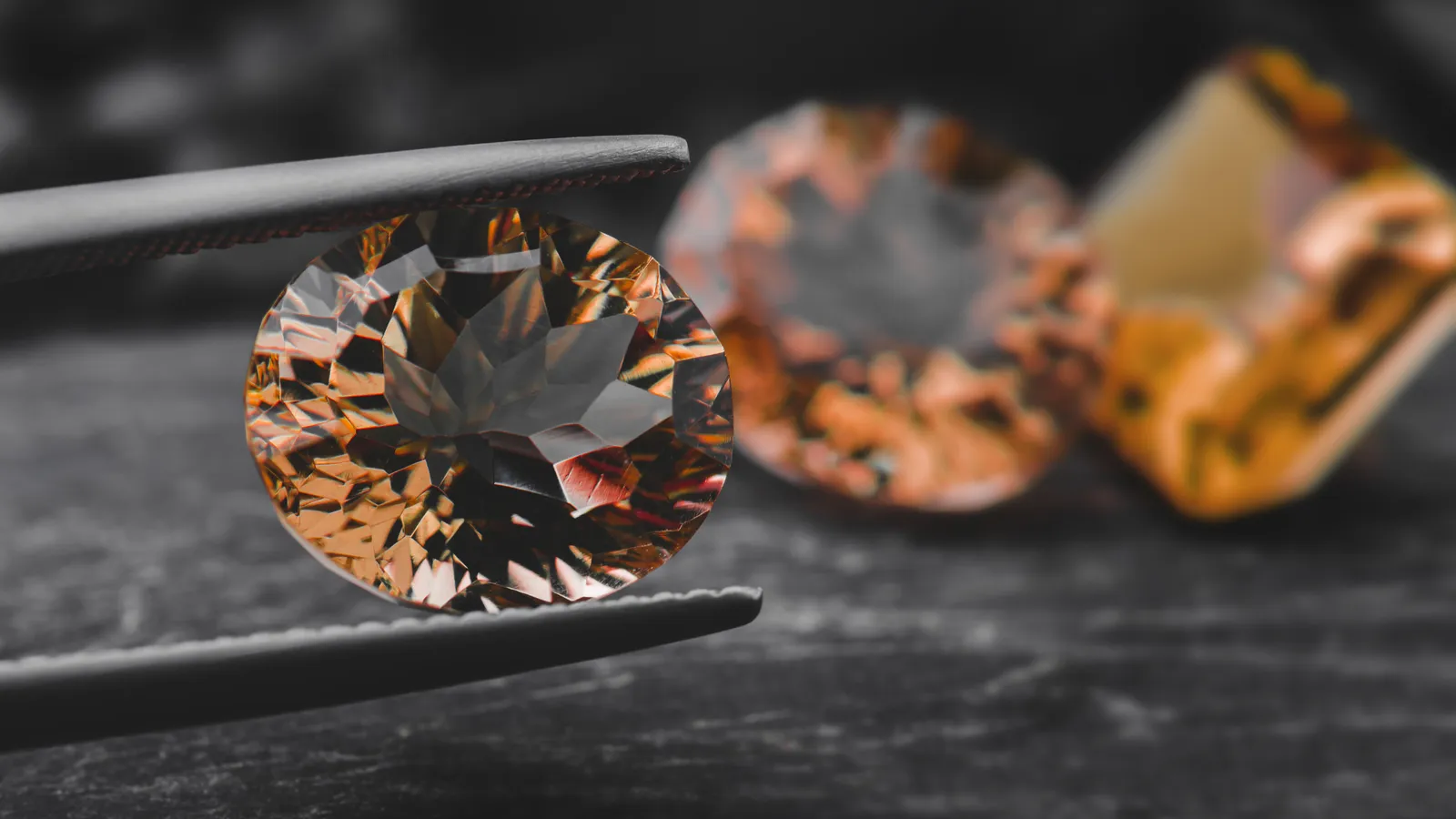
Short answer: the best orange gemstones for jewelry are orange sapphire (including the rare pinkish-orange padparadscha), orange spinel, spessartite garnet, imperial topaz and citrine. For rings you’ll wear every day, choose stones of 7 or more on the Mohs hardness scale. Softer orange gems like amber are better in pendants and earrings.
Orange gemstones at a glance
| Gemstone | Mohs hardness | Everyday ring? | Typical price level |
|---|---|---|---|
| Orange diamond | 10 | Yes | Very high |
| Orange / padparadscha sapphire | 9 | Yes | High to very high |
| Orange spinel | 8 | Yes | Moderate to high |
| Imperial topaz | 8 | Yes, with care (can cleave) | Moderate to high |
| Spessartite garnet | 6.5–7.5 | Yes, with care | Moderate |
| Orange tourmaline | 7–7.5 | Yes | Moderate |
| Orange zircon | 6–7.5 | With care | Low to moderate |
| Citrine | 7 | Yes | Low |
| Carnelian | 6.5–7 | Yes | Low |
| Amber | 2–2.5 | No | Low to moderate |
Prices vary widely with color, size and origin; treat these as rough tiers.
The Mohs scale ranks scratch resistance from 1 (talc) to 10 (diamond). Everyday dust contains quartz at 7, so stones below 7 slowly lose their polish.
1. Orange diamonds
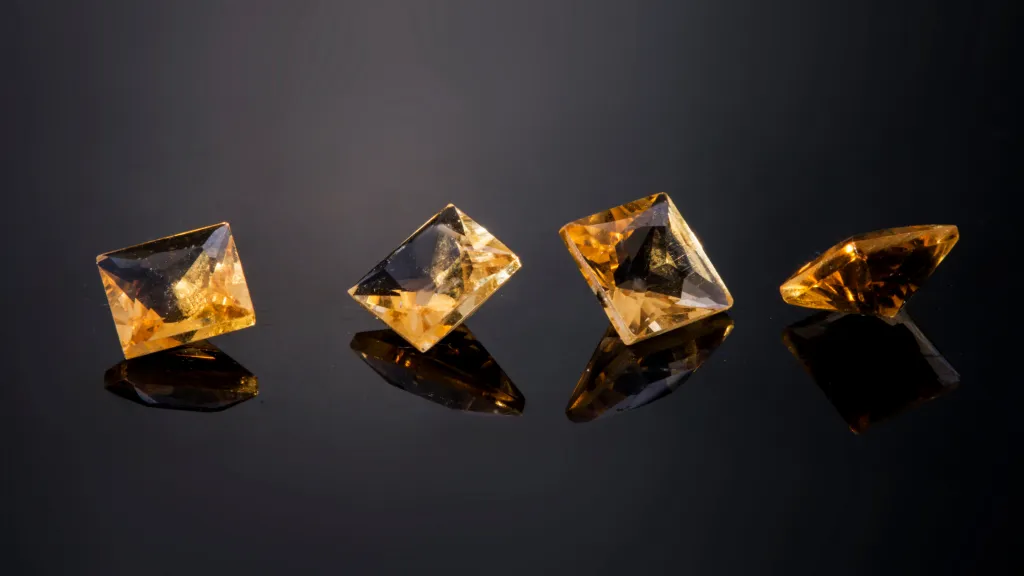
Natural orange diamonds are among the rarer colored diamonds. Many on the market are brownish or yellowish orange; pure, vivid orange commands a big premium. Learn more in where colored diamonds come from and candy-colored diamonds.
Best for: statement engagement rings, if budget allows.
2. Orange and padparadscha sapphire
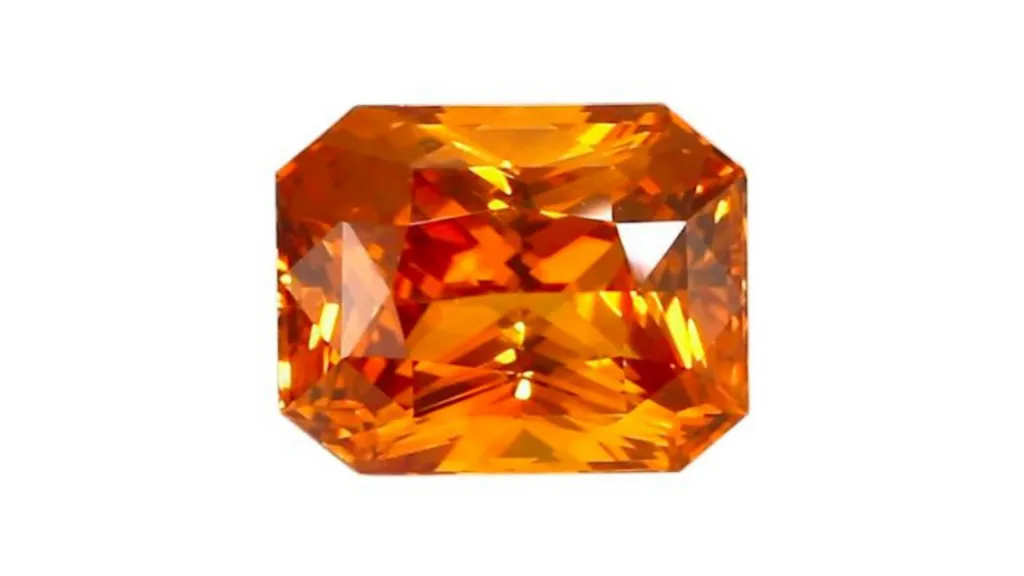
Sapphire is corundum, which GIA rates 9 on the Mohs scale, so it’s one of the toughest choices for daily wear. GIA describes padparadscha as a rare, valuable pinkish-orange sapphire, named from the Sinhalese for lotus blossom. Straight orange sapphires are more affordable.
Best for: engagement rings and everyday rings.
3. Orange spinel
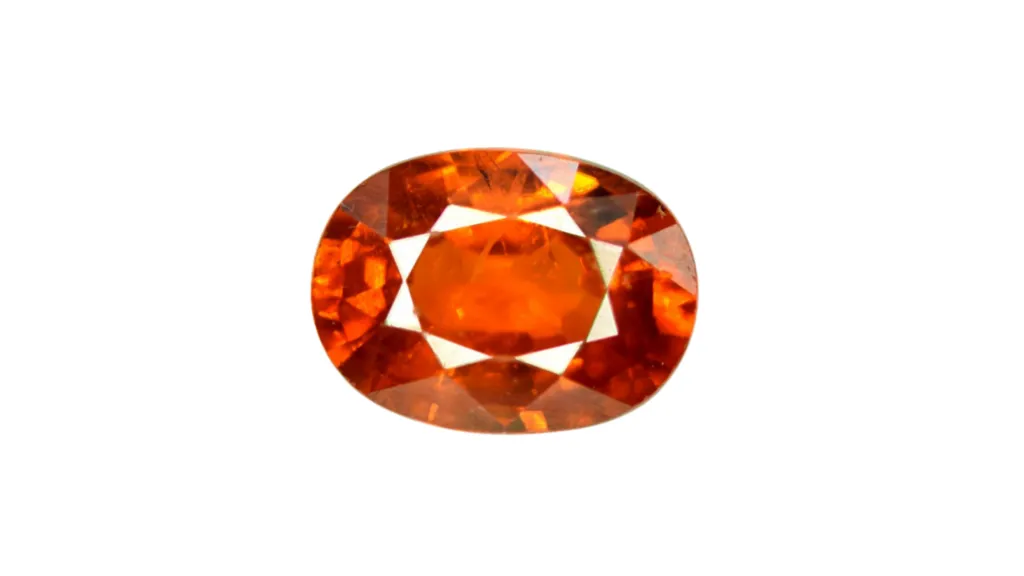
GIA lists orange among spinel’s natural colors and rates spinel 8 on the Mohs scale. Spinel is bright, durable and often less expensive than sapphire of a similar color.
Best for: rings and any jewelry where you want sparkle and durability.
4. Imperial topaz
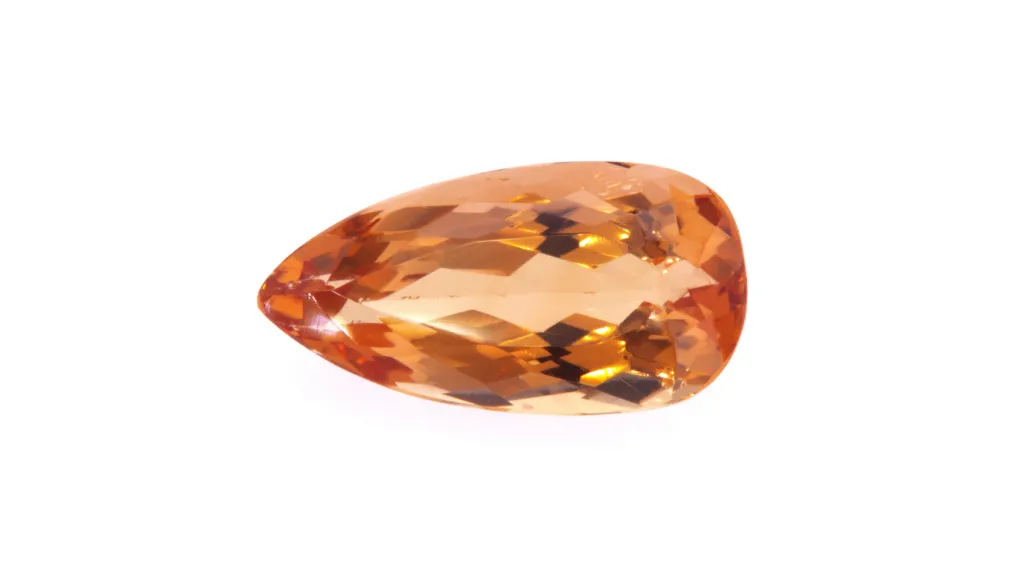
Imperial topaz is the trade name for topaz in golden orange to pinkish orange shades. GIA notes the Portuguese royal court celebrated its discovery in 1768. Topaz is hard (8) but can split along one direction if struck sharply, so protective settings help.
Best for: rings with protective settings, pendants and earrings.
5. Orange tourmaline
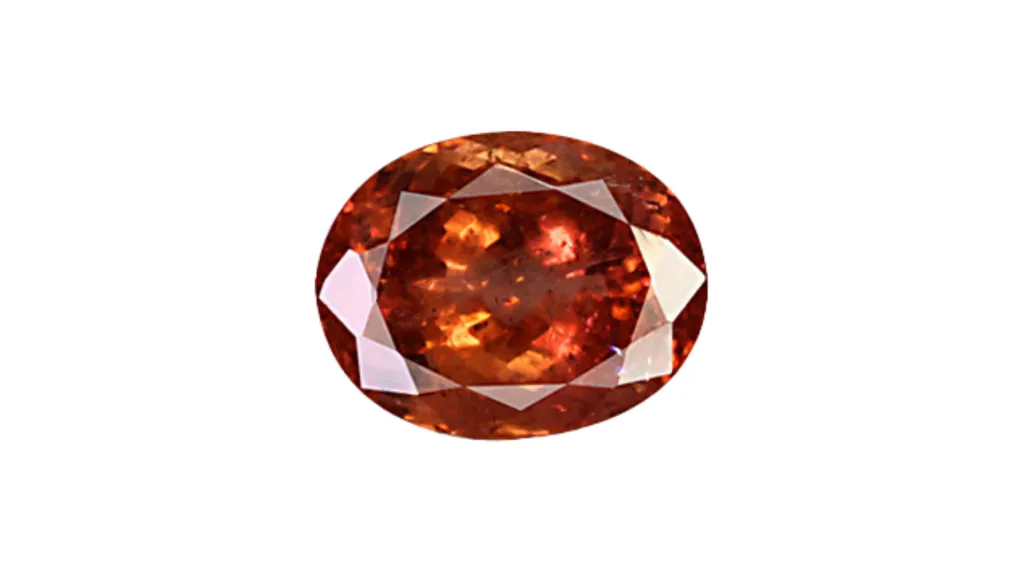
Tourmaline comes in more colors than almost any other gem, and orange shades range from peachy to deep amber. At 7–7.5, it works for most jewelry.
Best for: fashion rings, pendants and earrings.
6. Orange zircon
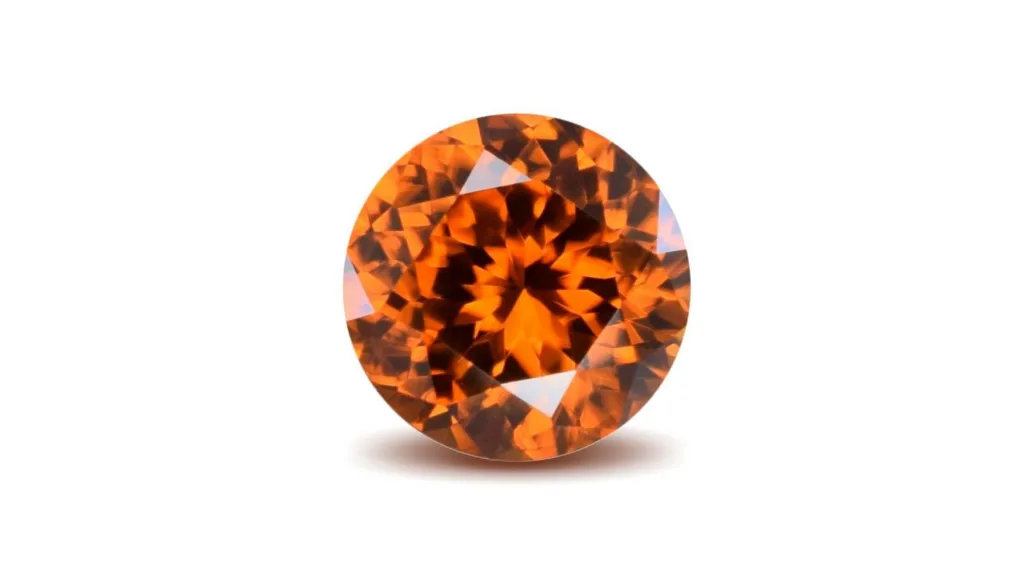
Natural zircon (not cubic zirconia, which is a man-made simulant) has strong sparkle and fire. Its facet edges can chip with knocks, so it’s better in pendants and earrings than in a daily ring.
Best for: earrings and pendants.
7. Amber
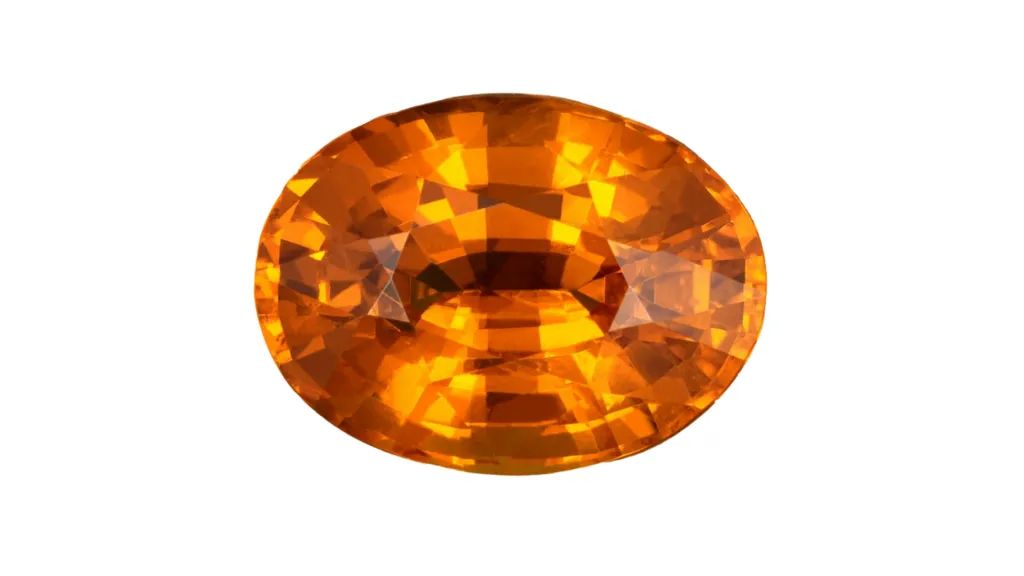
Amber isn’t a mineral. GIA describes it as fossilized tree resin, sometimes with ancient insects or plant matter trapped inside. It’s very soft (2–2.5) and light, so it’s comfortable in big pieces but scratches easily.
Best for: pendants, beads and earrings. Avoid rings and keep it away from perfume and heat.
8. Spessartite garnet
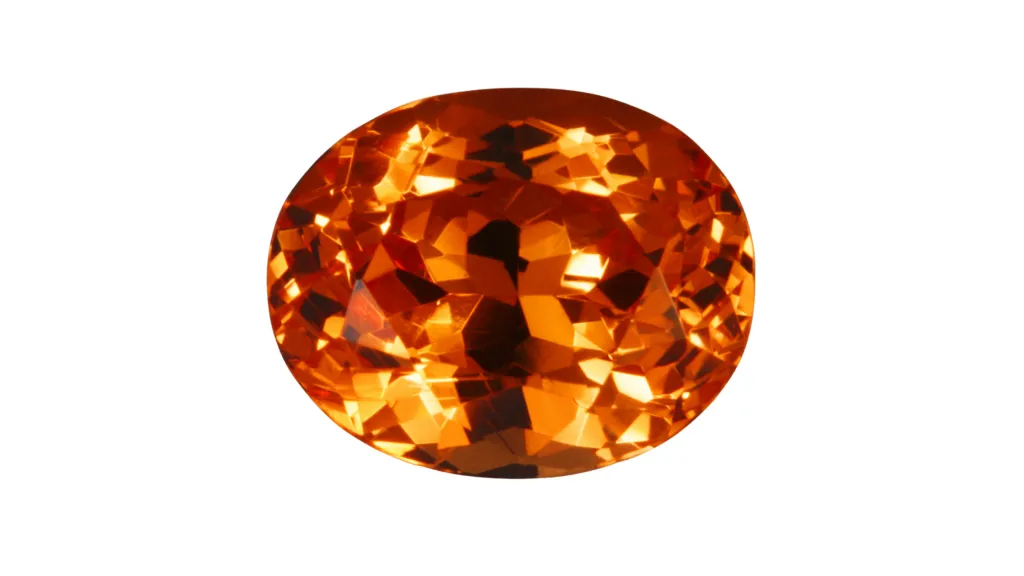
Spessartite (GIA uses the spelling spessartine) is the manganese-rich member of the garnet family, and it produces some of the most vivid oranges of any gem. Garnets rate 6.5–7.5.
Best for: rings, pendants and earrings.
9. Citrine
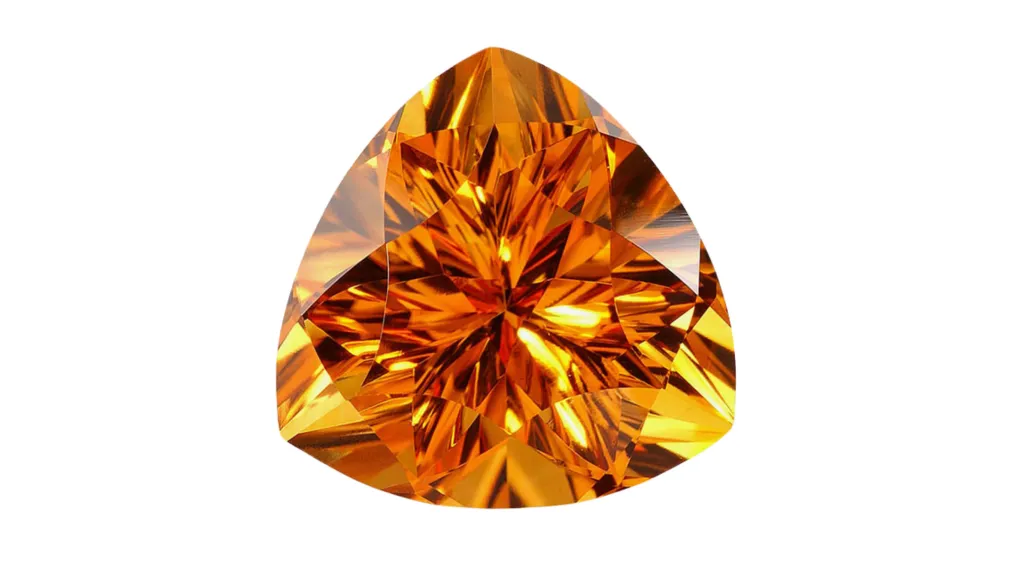
Citrine is yellow to orange quartz. GIA notes that natural citrine is rare and that most citrine on the market is heat-treated amethyst. It’s affordable, easy to find in large sizes and durable enough for everyday wear. More in our guide to what citrine is.
Best for: budget-friendly rings and statement pieces.
10. Carnelian
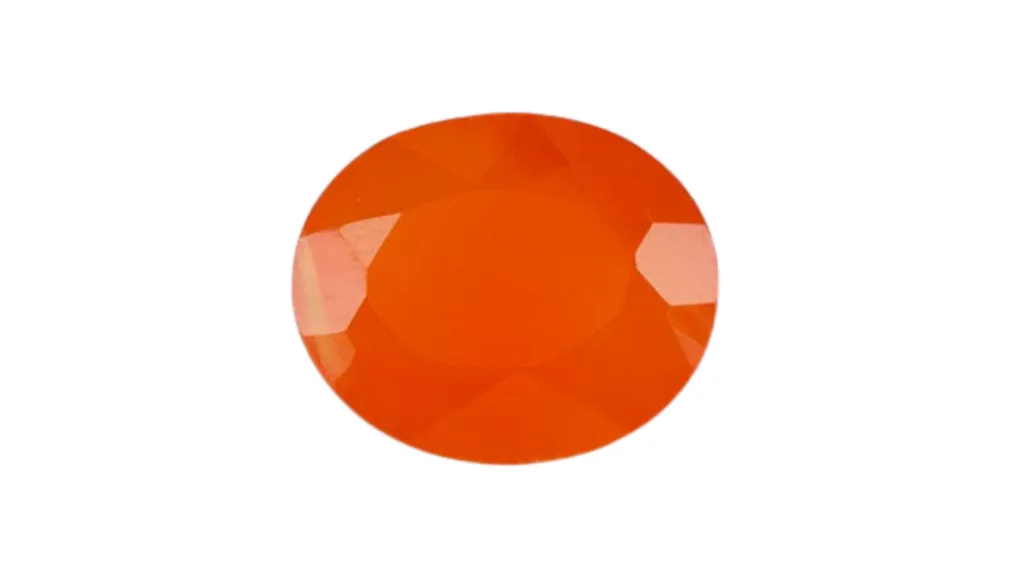
Carnelian is an orange to reddish-orange variety of chalcedony, a type of quartz made of microscopic crystals. It’s translucent rather than sparkly and usually cut as cabochons (smooth domes) or beads.
Best for: signet rings, beads and pendants.
How to choose an orange gemstone
- Decide where you’ll wear it. Rings take the most knocks; choose 7+ on the Mohs scale.
- Look at the color in daylight. Many orange gems look browner under warm indoor light.
- Ask about treatments. Heat treatment is common for sapphire, zircon and citrine and is generally stable, but sellers should disclose it.
- Match the metal. Yellow and rose gold warm orange stones up; white metals make them look brighter and cooler.
Want more colors? See our lists of purple gemstones and grey gemstones.
Frequently asked questions
What is the most expensive orange gemstone?
Natural orange diamonds and fine padparadscha sapphires sit at the top. Both are rare, and prices depend heavily on color intensity and size.
What is the best orange gemstone for an engagement ring?
Orange sapphire (including padparadscha) or orange spinel. Both are hard enough for daily wear, at 9 and 8 on the Mohs scale.
Is citrine orange or yellow?
Both. GIA describes citrine as yellow to orange to orangy red. Deeper orange stones are often called Madeira citrine.
Which orange gemstones should I avoid in rings?
Amber is very soft (Mohs 2 to 2.5) and scratches easily. Keep it for pendants and earrings, and treat zircon with some care because its facet edges can chip.