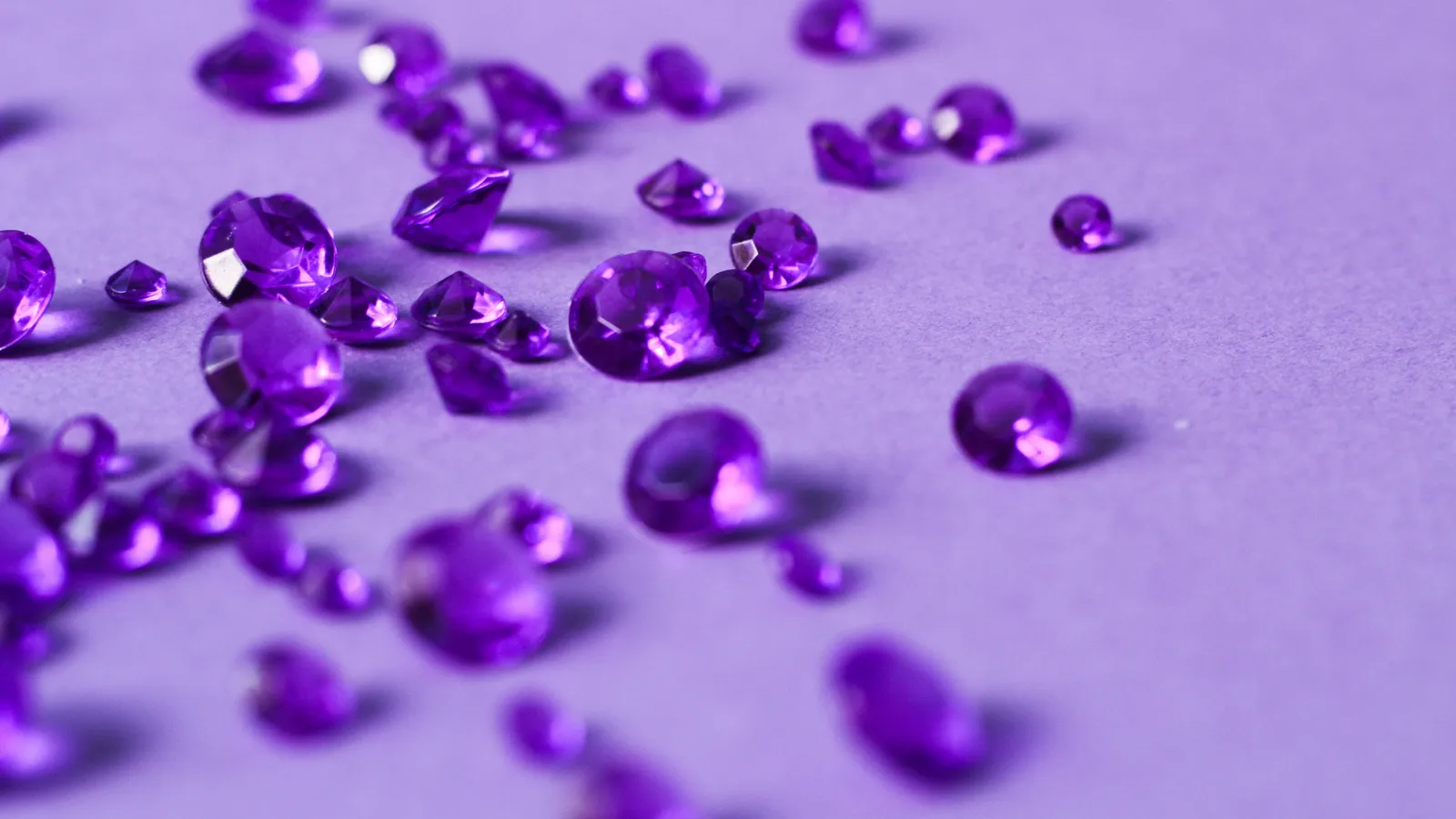
Short answer: amethyst is the classic purple gemstone: affordable, widely available and durable enough for most jewelry. For an engagement ring, purple sapphire and purple spinel are tougher choices. Other beautiful options include iolite, kunzite, lavender jade and purple chalcedony, each with its own shade and care needs.
Purple gemstones at a glance
| Gemstone | Mohs hardness | Everyday ring? | Typical price level |
|---|---|---|---|
| Purple diamond | 10 | Yes | Extremely high |
| Purple sapphire | 9 | Yes | Moderate to high |
| Purple spinel | 8 | Yes | Moderate to high |
| Iolite | 7–7.5 | Yes, with care | Low to moderate |
| Amethyst | 7 | Yes | Low |
| Kunzite | 6.5–7 | With care | Moderate |
| Lavender jadeite | 6.5–7 | Yes (very tough) | Varies widely |
| Purple chalcedony / agate | 6.5–7 | Yes | Low |
| Purple jasper | 6.5–7 | Yes | Low |
Prices vary widely with color, size and quality; treat these as rough tiers.
1. Purple diamonds
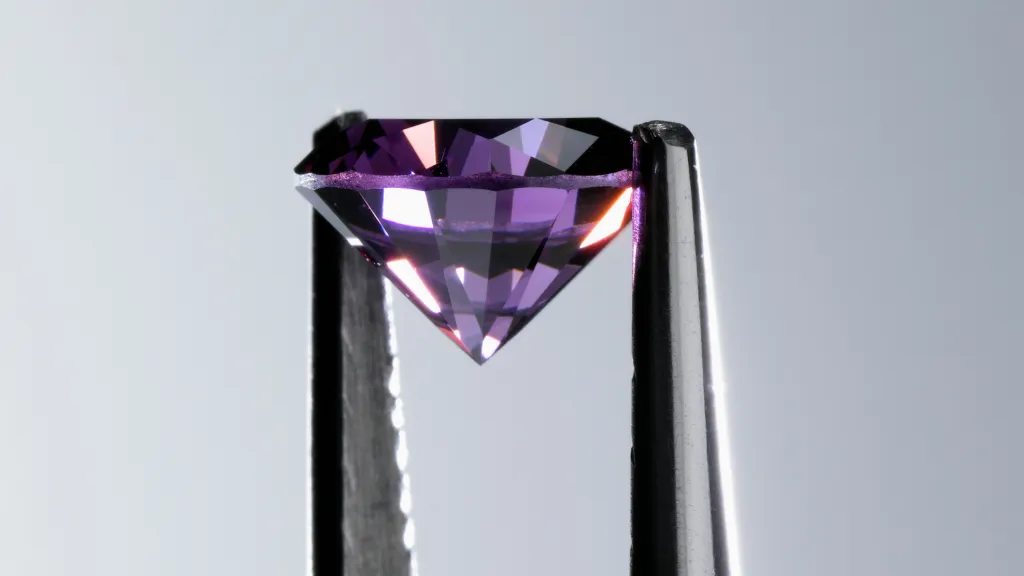
Natural purple diamonds are among the rarest colored diamonds, and strongly colored ones sell for extraordinary prices. Many are pinkish purple or purplish pink. Learn more in where colored diamonds come from.
2. Amethyst
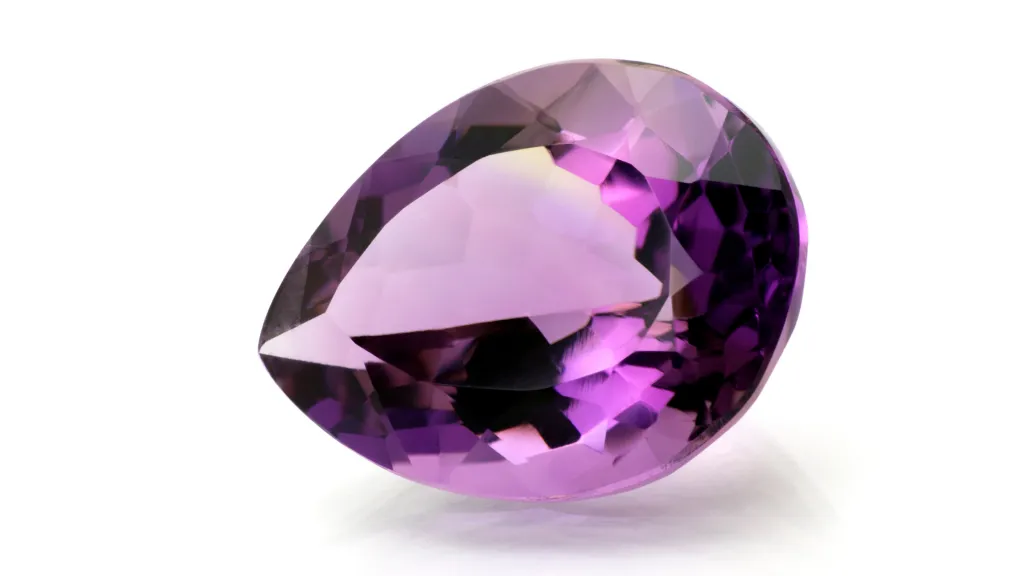
Amethyst is purple quartz and the February birthstone. GIA notes it was once as expensive as ruby and emerald, until large deposits were found in Brazil in the 19th century. Its name comes from the ancient Greek amethystos, “not drunk,” from the old belief that it prevented intoxication.
At 7 on the Mohs scale, it’s fine for most jewelry. Before buying, see how to tell if amethyst is real and whether amethyst can go in water.
3. Purple spinel
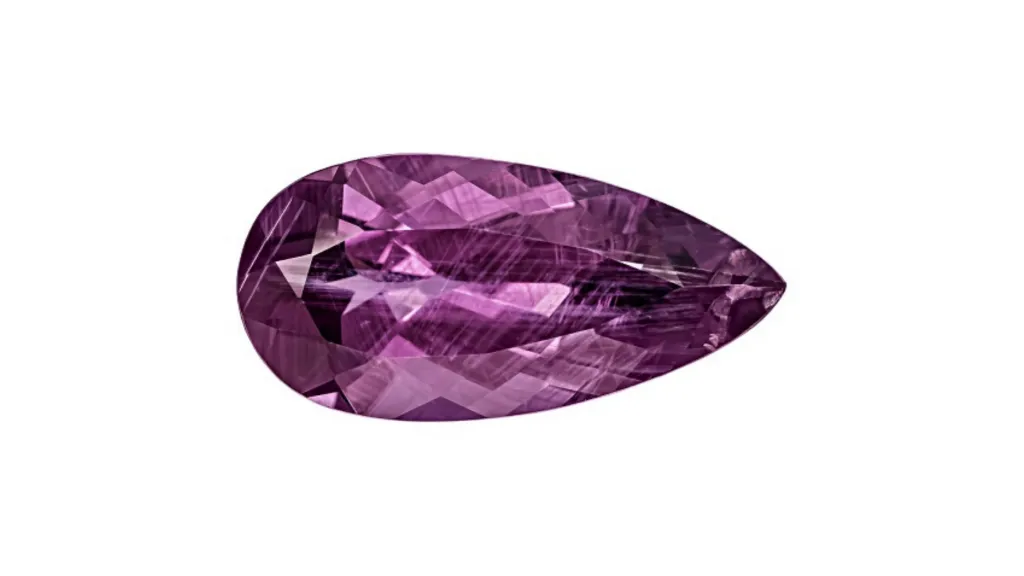
GIA lists purple among spinel’s natural colors and rates it 8 on the Mohs scale. Spinel has bright sparkle and is often more affordable than sapphire of a similar shade, making it a smart engagement ring choice.
4. Purple sapphire
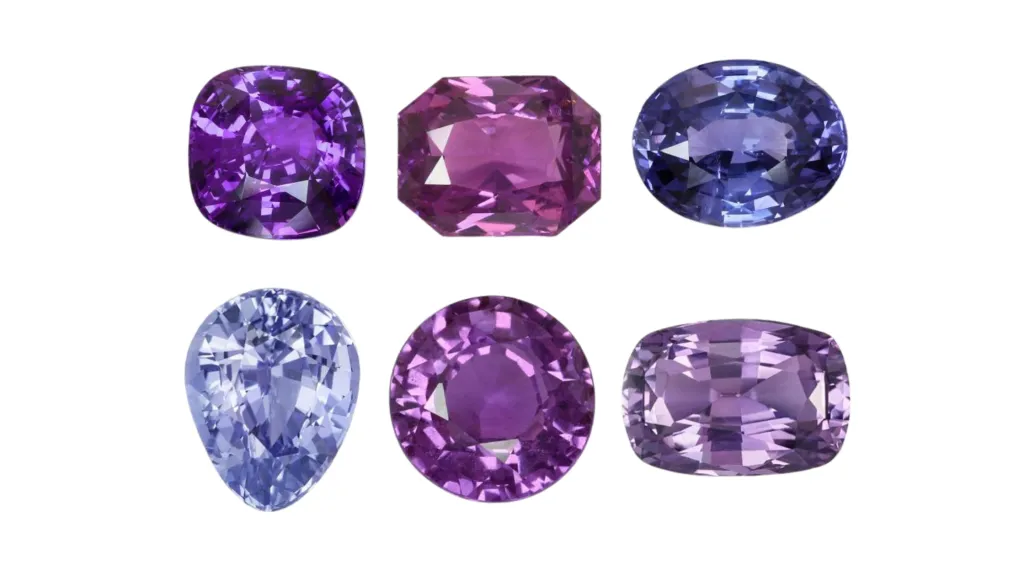
Sapphire comes in every color but red, according to GIA, and its hardness of 9 makes it one of the most durable gems for daily wear. Purple sapphires range from lilac to deep violet.
5. Iolite
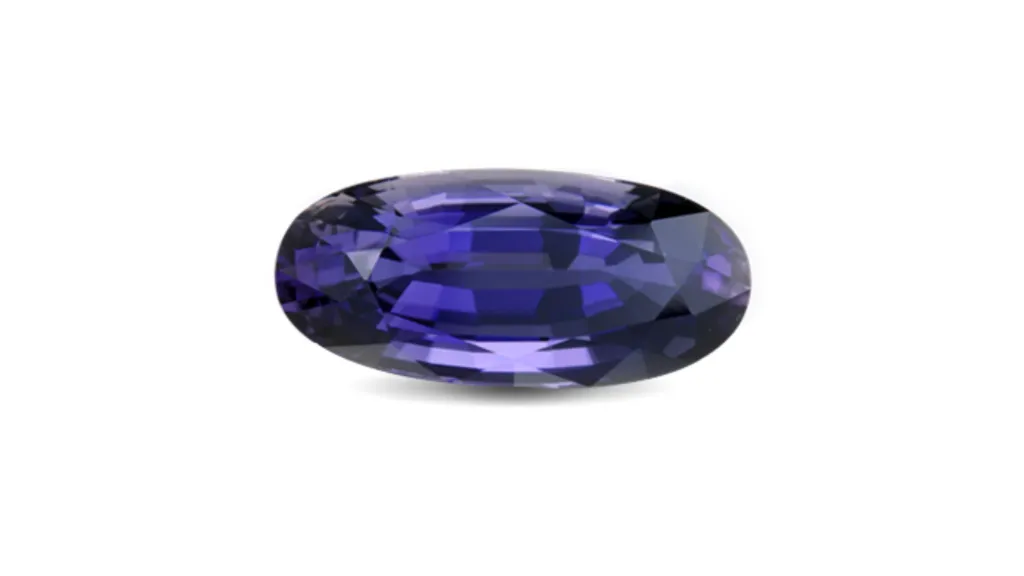
Iolite (the mineral cordierite) is strongly pleochroic, meaning it shows different colors from different angles. GIA describes it as blue to violet in one direction and pale yellow to colorless in another. Legend says Viking navigators used it to find the sun on cloudy days. It’s affordable, but cutters must orient it carefully to show the best color.
6. Purple chalcedony
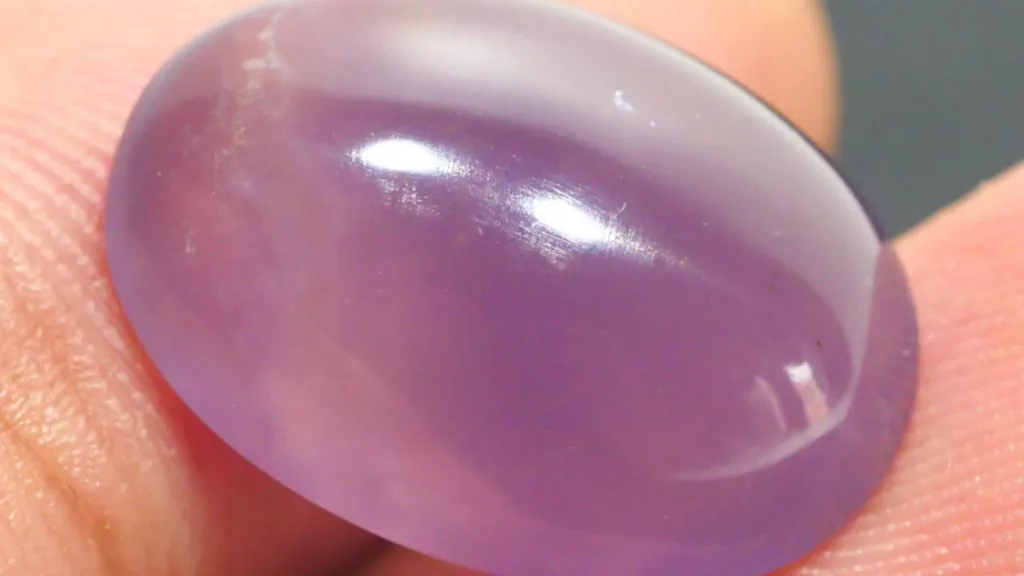
Chalcedony is quartz made of microscopic crystals. Purple and lavender chalcedony has a soft, glowing translucence and is usually cut as cabochons (smooth domes) or beads. Some is dyed, so ask the seller.
7. Lavender jade
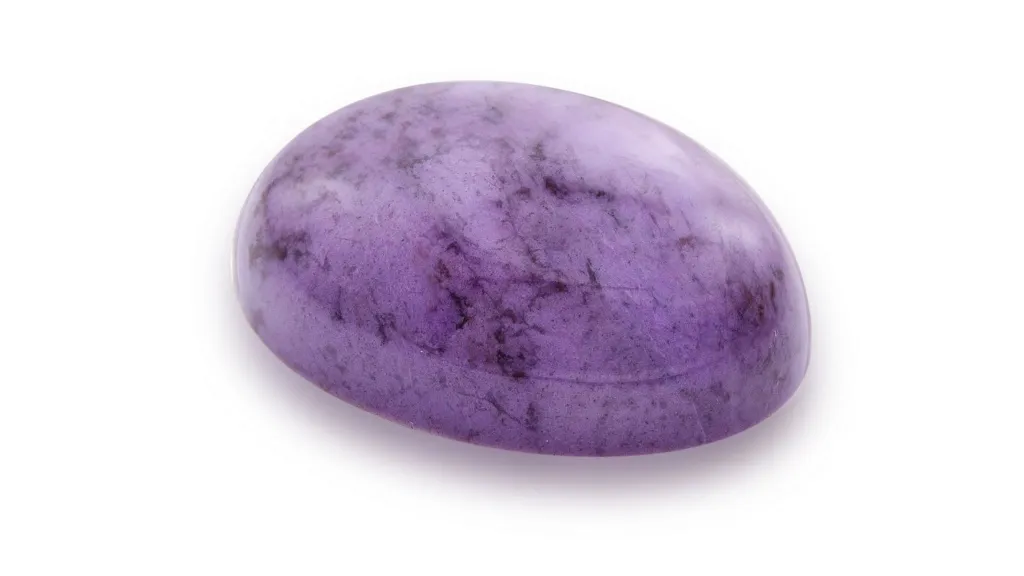
GIA notes that jadeite comes in many colors, including lavender, often a light purple or light grayish violet. Jadeite is made of interlocking crystals, which makes it exceptionally tough against chipping. Quality and price vary enormously. Read what jade is and how to tell if jade is real.
8. Kunzite
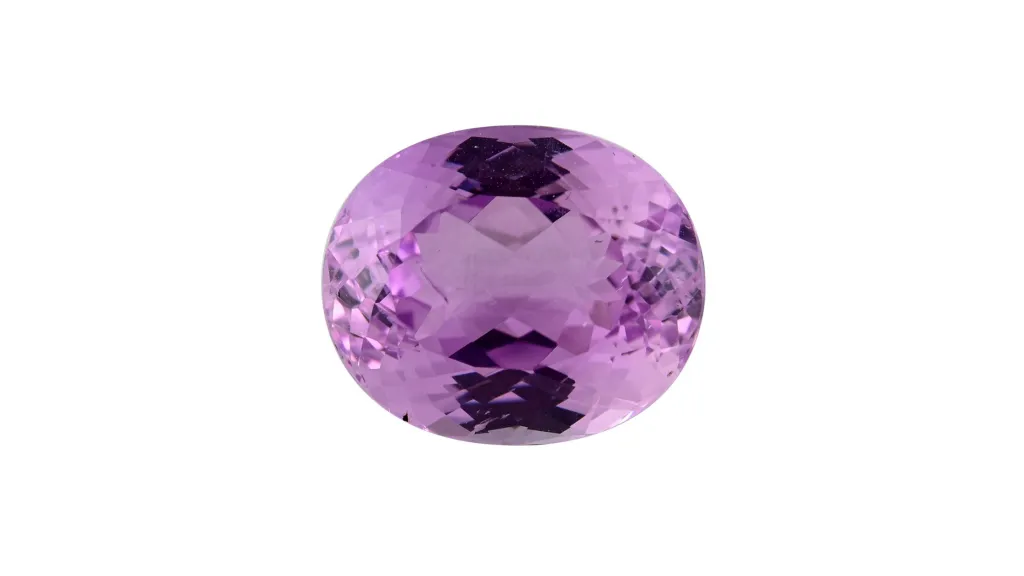
GIA describes kunzite as the light pink to violetish purple variety of spodumene, named after gemologist George Frederick Kunz. It often comes in large, clean crystals. It can split along certain directions, and its color may fade in strong light, so it suits pendants and evening jewelry best.
9. Purple jasper
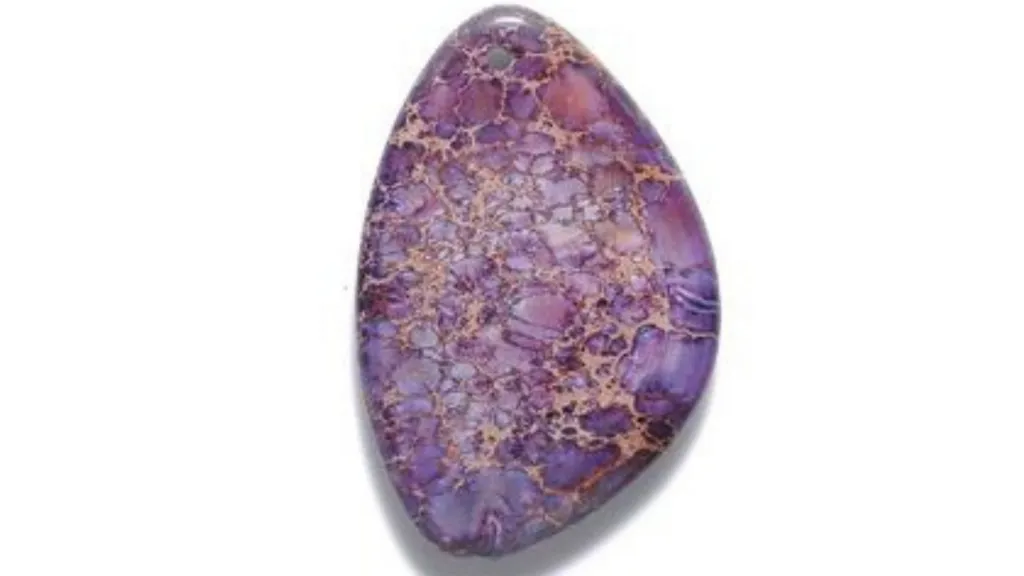
Jasper is an opaque, often patterned form of chalcedony. Purple varieties usually show mottled plum, grey and white tones. It’s inexpensive and durable, popular for beads and cabochons.
10. Purple agate
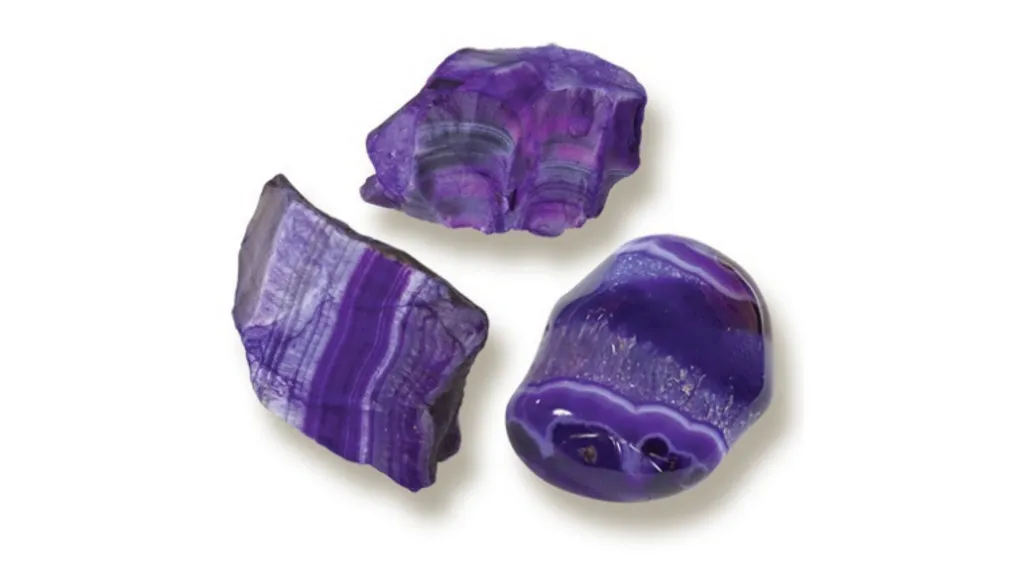
Agate is banded chalcedony. Naturally purple agate exists, but many vivid purple agate slices and beads are dyed. That’s fine for fashion jewelry, as long as it’s disclosed.
Honorable mention: tanzanite
Tanzanite is a violet-blue to bluish purple gem found commercially only in Tanzania. It’s a December birthstone and softer than sapphire. Compare it in tanzanite vs amethyst.
How to choose a purple gemstone
- Everyday ring: purple sapphire or spinel; amethyst if you’re on a budget.
- Big statement stone: amethyst or kunzite, which both come in large sizes.
- Unusual pick: iolite or lavender jade.
- Metal pairing: yellow gold warms purple up; white gold and platinum make it look cooler and brighter; rose gold flatters pinkish purples.
- Treatments: ask about dyeing (common in chalcedony and agate) and heat treatment.
Frequently asked questions
What is the most popular purple gemstone?
Amethyst. GIA calls it one of the world's most popular colored gems, and it's the February birthstone.
What is the best purple gemstone for an engagement ring?
Purple sapphire (Mohs 9) or purple spinel (Mohs 8). Both handle everyday wear better than amethyst, which is 7.
Is tanzanite purple?
Tanzanite is usually violet-blue to bluish purple. It's softer than sapphire, so it's better in pendants, earrings or protected ring settings. See our tanzanite vs amethyst comparison.
Do purple gemstones fade?
Some can. Kunzite and some amethyst can lighten with long exposure to strong sunlight or heat, so store them away from sunny windowsills.