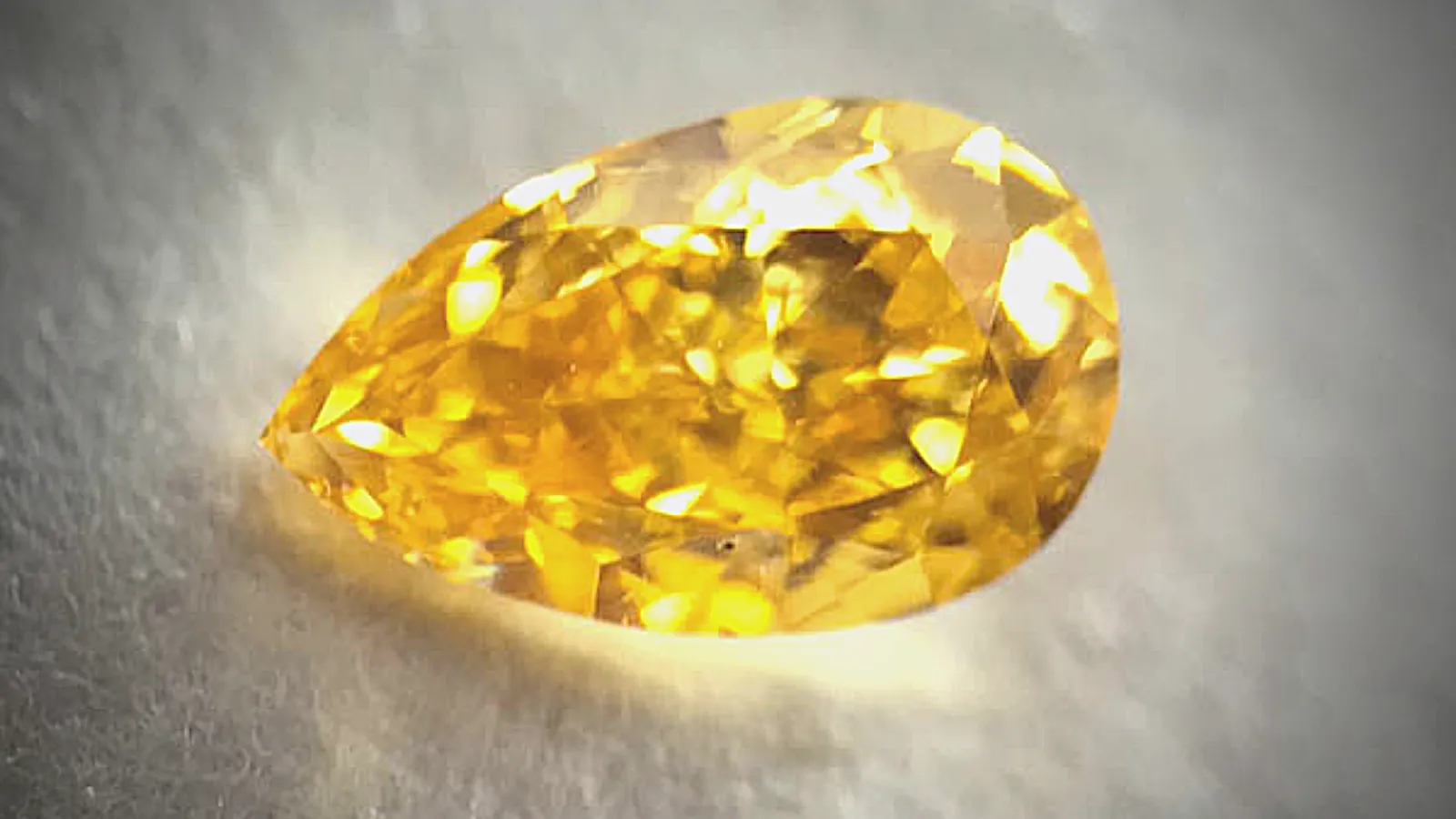
Short answer: a saffron diamond is a nickname for a diamond with a rich, intense yellow-to-orange color, like the spice saffron. It isn’t an official grade: a lab report will describe it in standard terms such as Fancy Intense Orangy Yellow or Fancy Vivid Yellow-Orange. The color comes mainly from nitrogen in the diamond, and the more orange it looks, the rarer it usually is.
At a glance
| Question | Answer |
|---|---|
| Official grade? | No, it’s a trade or marketing name |
| Typical report wording | Fancy Intense or Fancy Vivid, orangy yellow or yellow-orange hues |
| Cause of color | Mainly nitrogen in the crystal |
| Rarity | Strong orange tints are much rarer than pure yellow |
| Natural, treated or lab-grown? | All three exist; the report tells you which |
| Must-have when buying | A report from a major lab such as GIA |
What does “saffron” mean in diamonds?
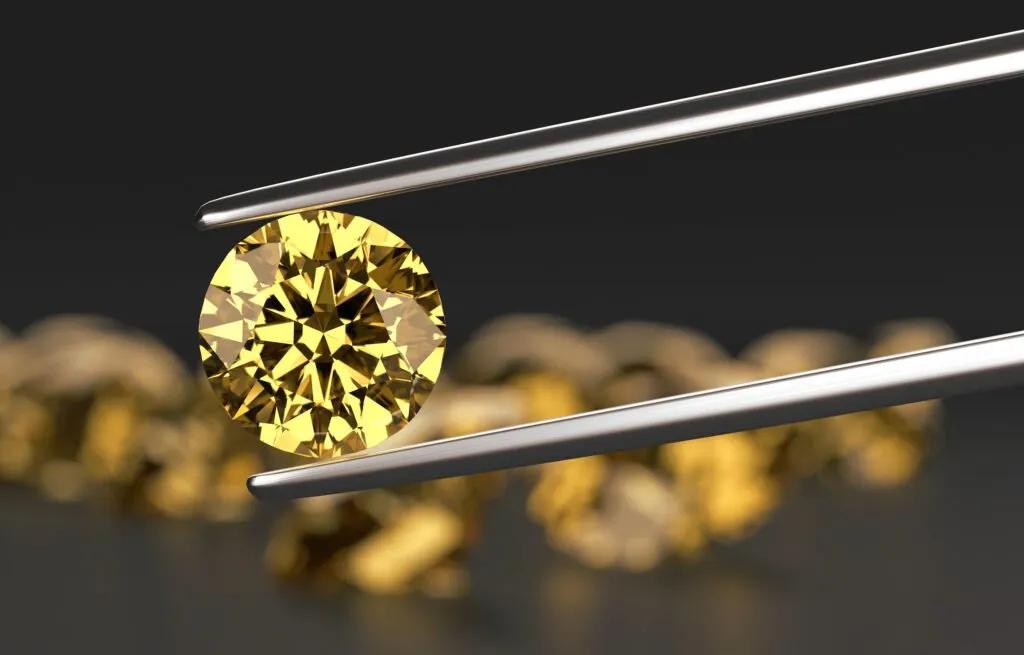
Jewelers use color nicknames to make fancy colored diamonds easier to picture: “canary” for bright yellow, “cognac” for deep brown, “champagne” for light brown. “Saffron” sits between canary yellow and orange: a warm, saturated yellow with a clear orange glow.
Because it’s a nickname, sellers use it loosely. One store’s saffron may be another’s “golden” or “sunset.” What counts is the wording on the grading report.
What causes the yellow-orange color?
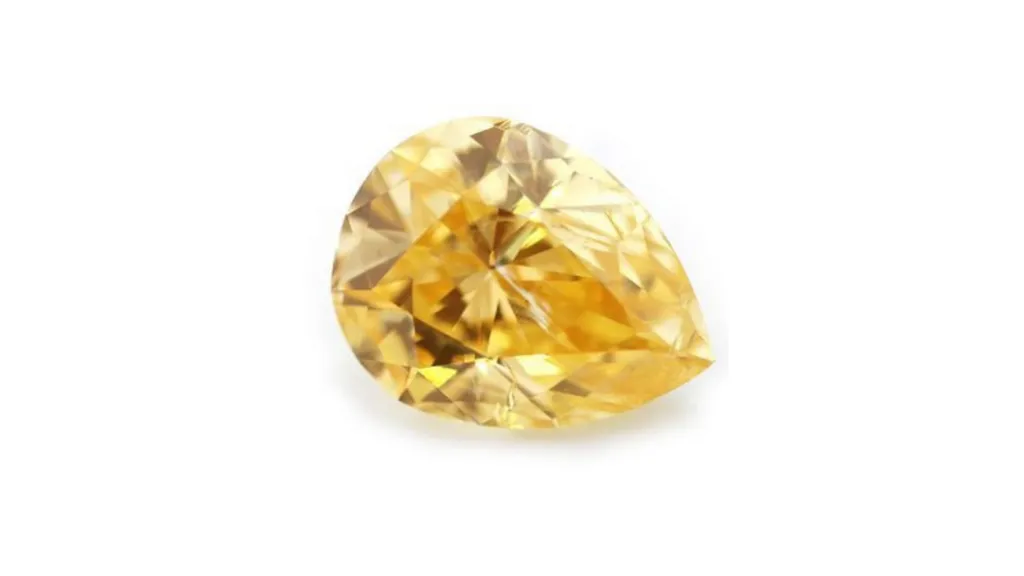
GIA’s large 2020 study of yellow and orange diamonds found their color comes mainly from nitrogen, an element trapped in the diamond as it formed. Different nitrogen arrangements absorb different parts of the light spectrum:
- When they absorb mostly blue and violet light, the diamond looks yellow.
- When the absorption stretches further toward green and yellow, the diamond looks orange.
That’s also why strong orange is so rare. In GIA’s data, more than two-thirds of the yellow and orange diamonds it examined over a decade were pure yellow, while pure orange made up less than a tenth of one percent.
How saffron diamonds are graded
Colored diamonds aren’t graded on the D-to-Z scale used for white diamonds. GIA describes them by:
- Hue: the color itself. The last word is the main color, so orangy yellow is mostly yellow, and yellowish orange is mostly orange.
- Strength: a grade combining how light or dark and how saturated the color is.
For yellow diamonds GIA’s grades run from Fancy Light through Fancy, Fancy Intense, Fancy Vivid, Fancy Deep and Fancy Dark. A stone sold as saffron should, in practice, be in the stronger grades (Fancy Intense or Fancy Vivid). A pale or brownish stone isn’t what most people mean by saffron.
| You see on the report | What it means |
|---|---|
| Fancy Intense Yellow | Strong pure yellow (often called canary) |
| Fancy Intense Orangy Yellow | Strong yellow with an orange tint |
| Fancy Vivid Yellow-Orange | Very saturated, roughly equal yellow and orange |
| Fancy Deep Orangy Yellow | Saturated but darker in tone |
| Brownish modifiers | Less lively; usually priced lower |
Where do they come from?
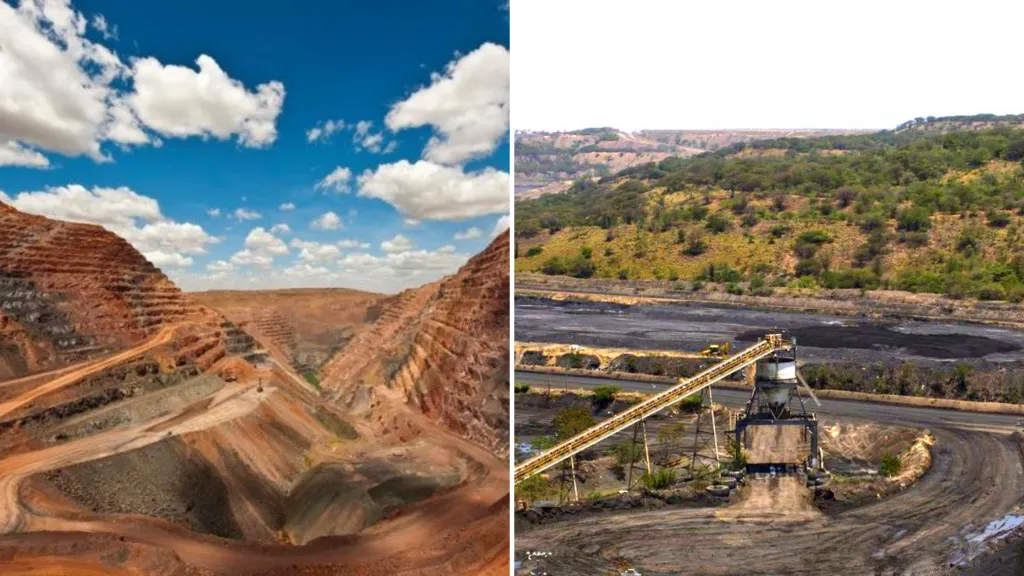
There’s no special “saffron mine.” Yellow and orange diamonds come out of the same kinds of mines as colorless diamonds, and only a tiny share of the output has a strong, attractive color. See where colored diamonds come from for more.
Natural, treated or lab-grown?
You’ll find three kinds of yellow-orange diamonds for sale:
- Natural color: the rarest and most expensive.
- Treated color: natural diamonds whose color was created or strengthened in a lab, for example by irradiation or high heat and pressure. Much cheaper, but should always be disclosed.
- Lab-grown: real diamond grown in a factory, then colored. Typically the most affordable.
All three can look similar. Only a lab report reliably tells them apart, so don’t buy an expensive saffron diamond without one. GIA’s colored diamond reports state whether the color is natural.
What to look for when buying
- The report. Read the full color description, not the seller’s nickname. Check whether the color origin is natural, treated or lab-grown.
- Strength over clarity. With fancy colors, the color drives most of the value. Many buyers accept lower clarity if inclusions aren’t visible.
- Even color. Look for color spread evenly across the face, without pale or brown patches.
- Shape. Radiant, cushion and pear shapes often intensify yellow and orange color. That’s one reason so many fancy colored diamonds are cut in these shapes.
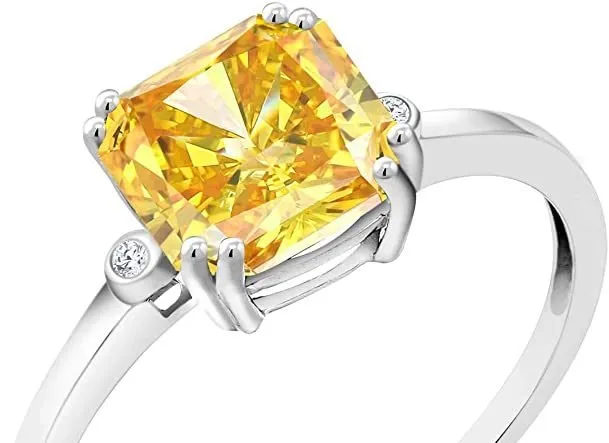
- Setting metal. Yellow gold prongs or a yellow-gold “cup” under the stone can make the color look richer. White metal around the band keeps the rest of the ring bright.
Not sure if a yellow stone is even a diamond? See how to tell a yellow diamond from a yellow sapphire.
How much is a saffron diamond worth?
There’s no fixed price list. Value depends on hue, strength, natural vs treated vs lab-grown origin, carat weight and clarity. As a rule:
- Natural Fancy Vivid stones with a strong orange component are the most valuable.
- Treated and lab-grown yellow-orange diamonds typically cost a small fraction of natural-color stones.
- Pure orange diamonds rank among the rarer colors, though red, blue and pink still top the price lists. See what color diamond is the most expensive.
Caring for a saffron diamond
Diamond is the hardest natural material, so a saffron diamond is fine for everyday wear. Clean it with warm water, a drop of mild dish soap and a soft brush. If your diamond’s color is treated, ask the seller whether repairs involving heat (like resizing with a torch nearby) need special care.
Frequently asked questions
Will my grading report say “saffron”?
No. Labs such as GIA describe color with standard hue and strength terms, for example Fancy Intense Orangy Yellow. “Saffron” is a sales description, so always check the actual report wording.
Is a saffron diamond the same as a canary diamond?
Not quite. “Canary” usually means a strong, pure yellow. “Saffron” suggests a richer yellow with an orange tint. Both are informal names rather than official grades.
Are saffron diamonds natural?
Some are. Others are lab-grown or natural diamonds whose color was created or boosted by treatment. A report from a major lab will state whether the color is natural, treated or lab-grown.
Are orange diamonds rarer than yellow ones?
Much rarer. In GIA’s study of several hundred thousand yellow and orange diamonds, stones with a pure orange hue made up less than a tenth of one percent.