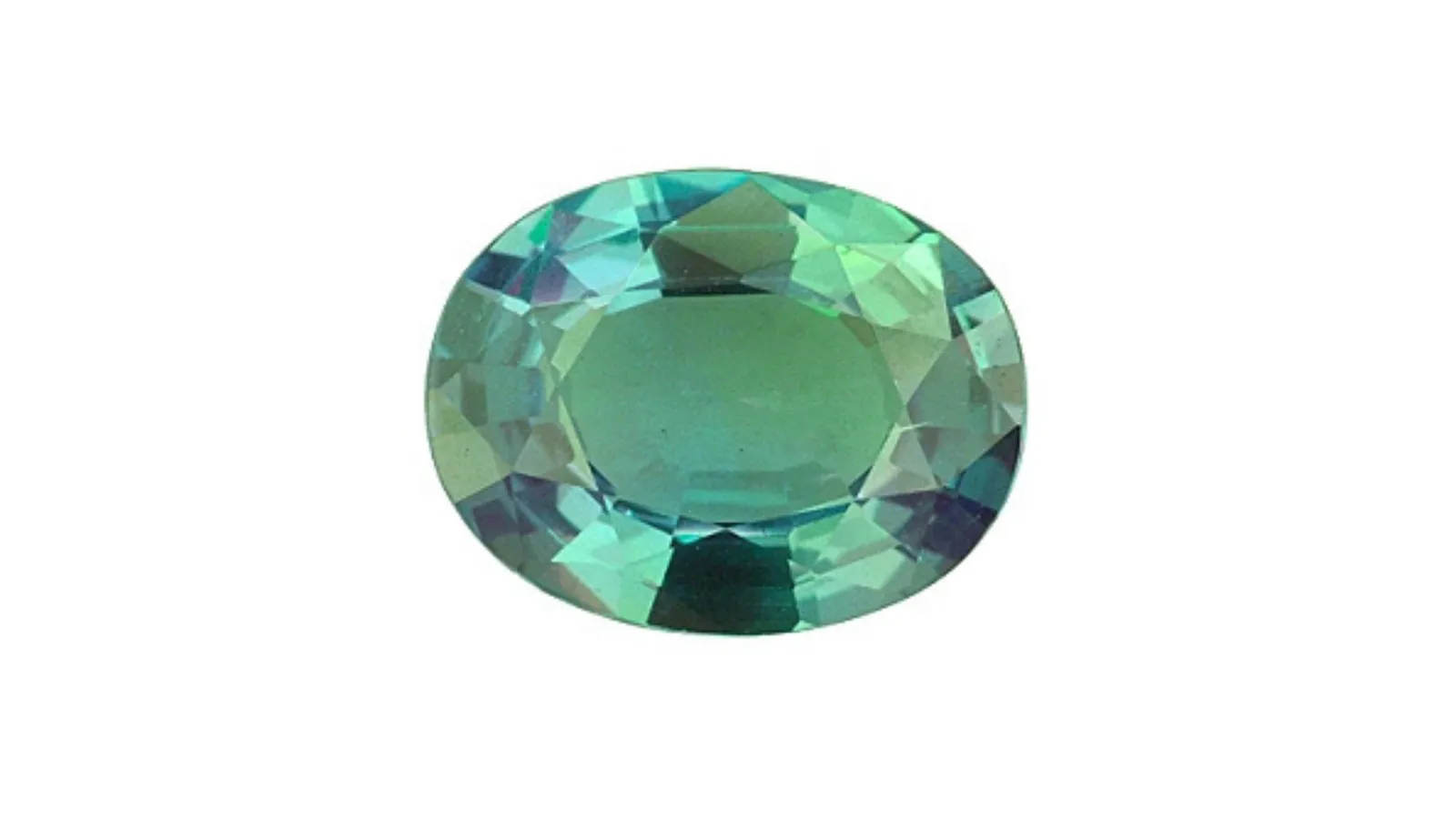
Short answer: “Orissa alexandrite” is the trade name for alexandrite mined in the Indian state of Odisha, which was called Orissa until 2011. It’s the same mineral as any other alexandrite: a color-change chrysoberyl that looks green to blue-green in daylight and red to purplish under warm light. Top stones from India can show an excellent color change, but origin should be confirmed by a lab rather than taken on trust.
At a glance
| What it is | Alexandrite (color-change chrysoberyl) from Odisha, India |
| Daylight color | Green to bluish green |
| Incandescent color | Red to purplish red |
| Hardness | 8.5 on the Mohs scale |
| How origin is proven | Lab testing of trace elements and inclusions |
Where does Orissa alexandrite come from?
According to GIA, chrysoberyl has been mined in five Indian states since the 1980s and ’90s: Kerala, Madhya Pradesh, Odisha (formerly Orissa), Andhra Pradesh and Tamil Nadu. Alexandrite is the color-change variety of that chrysoberyl.
GIA describes Indian alexandrite as occurring either in pegmatites (coarse-grained igneous rock) cutting through granite, or in mica-rich schists that formed where pegmatites came into contact with other rock types.
What does Orissa alexandrite look like?
Like all alexandrite, it changes color depending on the light. In GIA’s study, a top-quality Indian stone showed a saturated blue-green in daylight and a saturated red under incandescent light, comparable to fine Russian and Brazilian material.
That said, quality varies widely. Many stones from any source show a weaker or browner change, and those are far more common than top material.
How does it compare with other alexandrite?
| Origin | What GIA notes |
|---|---|
| Russia | The historic source; generally the most highly valued |
| Brazil | Strong color change, often better clarity and larger sizes |
| Sri Lanka | Many stones show a weaker change, with some fine exceptions |
| India (including Odisha) | Top stones can match fine Russian and Brazilian material |
GIA also notes that the market generally values Russian and Brazilian alexandrite more highly than stones from other origins. In practice, a strong color change and good clarity matter more to how a stone looks than where it was mined.
How to confirm a stone is from Orissa
Origin isn’t something you can see with your eye or a loupe. Labs determine it mainly by measuring trace elements with specialized instruments, together with the stone’s color-change behavior and inclusions.
Don’t pay an origin premium without a report
“Orissa,” “Russian” and “Brazilian” are claims. If origin affects the price, ask for a report from a gem lab that offers origin determination for alexandrite.
Buying tips
- Judge the color change in person or on video, under both daylight and warm light.
- Ask if it’s natural. Lab-grown alexandrite exists and must be disclosed.
- Check clarity. Eye-clean stones are worth more.
- Get paperwork for anything expensive.
For the full background on this gem, read what is alexandrite?
Frequently asked questions
Is Orissa the same as Odisha?
Yes. The Indian state of Orissa was officially renamed Odisha in 2011. The older name is still common in the gem trade.
Is Indian alexandrite as good as Russian alexandrite?
Top Indian stones can show a strong, attractive color change. On average, the market values Russian and Brazilian alexandrite more highly, but quality matters more than the label.
Can a seller just say a stone is from Orissa?
They can claim it, but origin can only be confirmed by a gem lab that offers origin reports. For an expensive stone, ask for one.