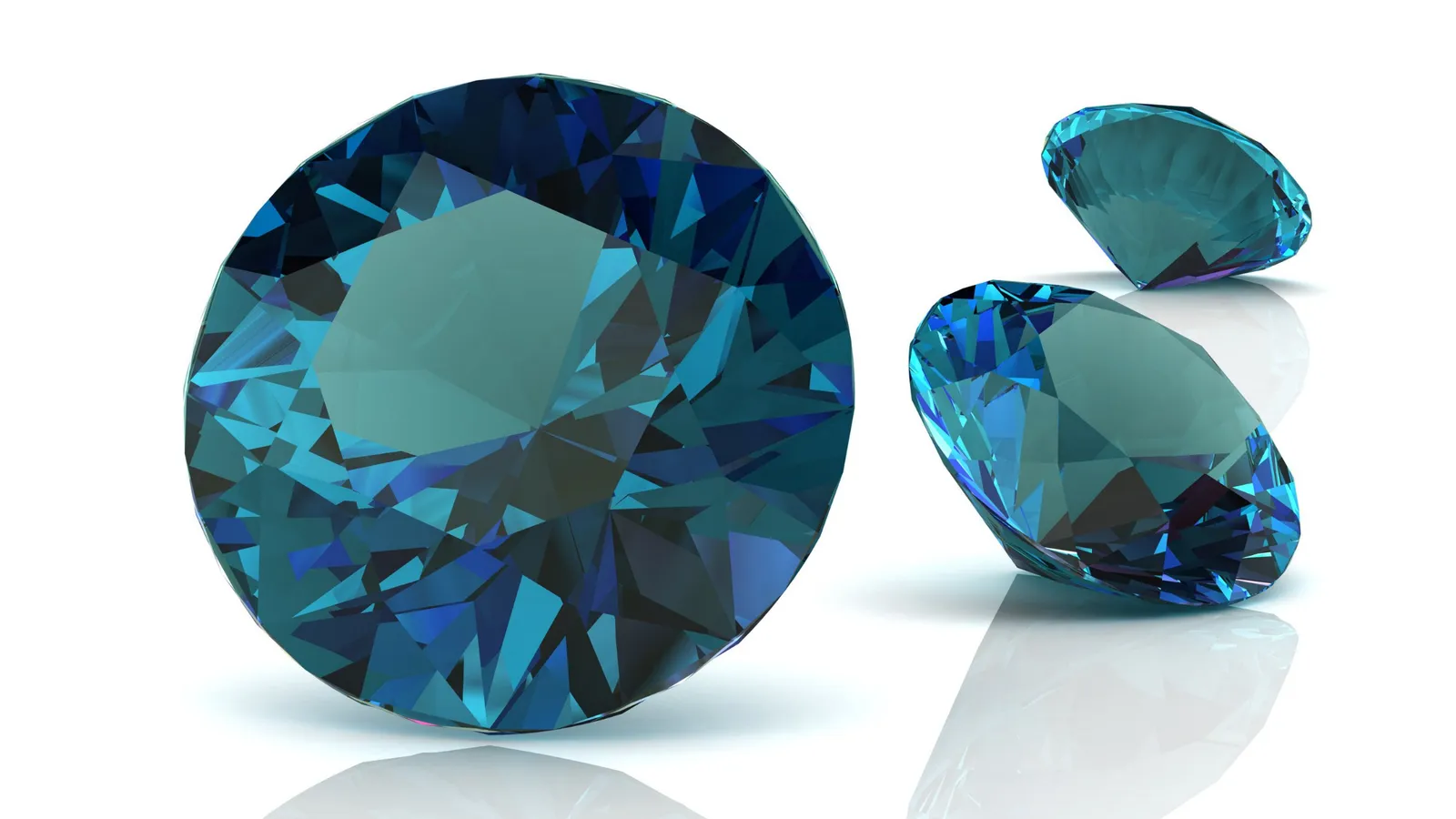
Short answer: alexandrite is a rare, color-change variety of the mineral chrysoberyl. Fine stones look green to bluish green in daylight and red to purplish red under warm incandescent light. It was discovered in Russia’s Ural Mountains in the 1830s and is now also found in Brazil, Sri Lanka, India and East Africa. Fine natural alexandrite is very rare, so most affordable “alexandrite” jewelry is lab-grown or an imitation.
At a glance
| Mineral | Chrysoberyl (beryllium aluminum oxide) |
| Hardness | 8.5 on the Mohs scale |
| Color in daylight | Green to bluish green |
| Color in incandescent light | Red to purplish red |
| Cause of color change | Trace chromium |
| Birthstone | June |
| Main sources | Russia (historic), Brazil, Sri Lanka, India, East Africa |
| Special effect | Rarely shows a cat’s-eye |
What makes alexandrite change color?
Alexandrite contains a small amount of chromium, the same element behind the red of ruby and the green of emerald. GIA explains that alexandrite absorbs light strongly in a narrow band in the yellow part of the spectrum, leaving green and red light roughly balanced.
So the color you see depends on the light:
- Daylight or fluorescent light has more blue-green, so the stone looks green.
- Incandescent or candle light has more red, so the stone looks red or purplish.
A strong, clear change from a good green to a good red is what makes a stone valuable. Weak changes (for example, brownish green to brownish pink) are much more common.
Where does alexandrite come from?
GIA’s research tells the story:
- Russia: discovered in the Urals in the early 1830s and named in 1834 in honor of the future Czar Alexander II.
- Brazil: produces stones with a strong change that can rival the best Russian material, often with better clarity and size.
- Sri Lanka: many stones show a weaker color change, though fine material exists.
- India: top-quality Indian stones can show a saturated blue-green in daylight and red under incandescent light. See what is Orissa alexandrite?
- East Africa: another modern source listed by GIA.
GIA notes that stones from Russia and Brazil are usually more highly valued than those from other origins, which is why labs offer origin reports for important alexandrites.
How is alexandrite valued?
The main factors are:
- Strength of the color change. The bigger the shift, the better.
- Quality of both colors. Pure green and pure red beat brownish tones.
- Clarity. Eye-clean stones are worth more.
- Size. Large stones with a fine color change are especially rare.
- Origin. Russian and Brazilian origins can add a premium.
Prices span an enormous range depending on these factors, so compare several stones and ask for a lab report on anything expensive.
Lab-grown alexandrite and imitations
Because fine natural alexandrite is so rare, you’ll see a lot of alternatives:
| Type | What it is | How it should be sold |
|---|---|---|
| Natural alexandrite | Mined chrysoberyl with color change | “Alexandrite” or “natural alexandrite” |
| Lab-grown alexandrite | Same chemistry, made in a lab | “Lab-created,” “lab-grown” or “synthetic” alexandrite |
| Imitations | Other color-change materials that aren’t chrysoberyl | Must not be called alexandrite without qualification |
The FTC’s Jewelry Guides say lab-created gems should be clearly disclosed as such. If a ring sold as “alexandrite” is very large and very cheap, it’s almost certainly lab-grown or an imitation. A gemologist can tell the difference.
Check the paperwork
For any alexandrite sold as natural at a high price, ask for a report from an independent gem lab confirming it’s natural chrysoberyl and, if claimed, its origin.
Is alexandrite durable?
Yes. With a hardness of 8.5, alexandrite is harder than most colored gemstones and suitable for rings. Clean it with warm, soapy water and a soft brush, and store it apart from diamonds and sapphires, which can scratch it.
Cat’s-eye alexandrite
GIA notes that, rarely, fine needle-like inclusions create a sharp line of light across the stone called a cat’s-eye. A stone that shows both color change and a cat’s-eye is a true collector’s gem.
Looking for other unusual colors? See our guides to purple gemstones and grey gemstones.
Frequently asked questions
Is alexandrite a June birthstone?
Yes. Alexandrite shares June with pearl and moonstone.
Why does alexandrite change color?
Trace chromium in the crystal absorbs light in a way that balances green and red. Daylight is rich in blue-green light, so the stone looks green; warm incandescent light is rich in red, so it looks red or purplish.
Is lab-grown alexandrite real alexandrite?
Lab-grown (synthetic) alexandrite has the same chemistry and properties as natural alexandrite, but it must be disclosed as lab-grown. It costs far less than fine natural stones.
Is alexandrite good for an everyday ring?
Yes. At 8.5 on the Mohs scale it is harder than most colored gems, though a protective setting is still wise for a ring worn every day.