Short answer: yes, citrine can go in water. It’s a variety of quartz, so water won’t dissolve, soften or discolor it, and warm soapy water is the safest way to clean it. The real risks are heat and sudden temperature changes, which can fade or crack the stone, so keep it away from boiling water, steam and hot tubs.
At a glance
| Situation | Safe for citrine? |
|---|---|
| Rinsing or washing in warm soapy water | Yes |
| Rain, hand-washing, a quick swim | Generally fine |
| Long soaks in plain water | Fine for the stone; watch glued or plated settings |
| Hot water, steam, sauna, hot tub | No |
| Ultrasonic cleaner | Usually, unless dyed, fracture-filled or cracked |
| Long hours in strong sunlight | Avoid |
What is citrine?
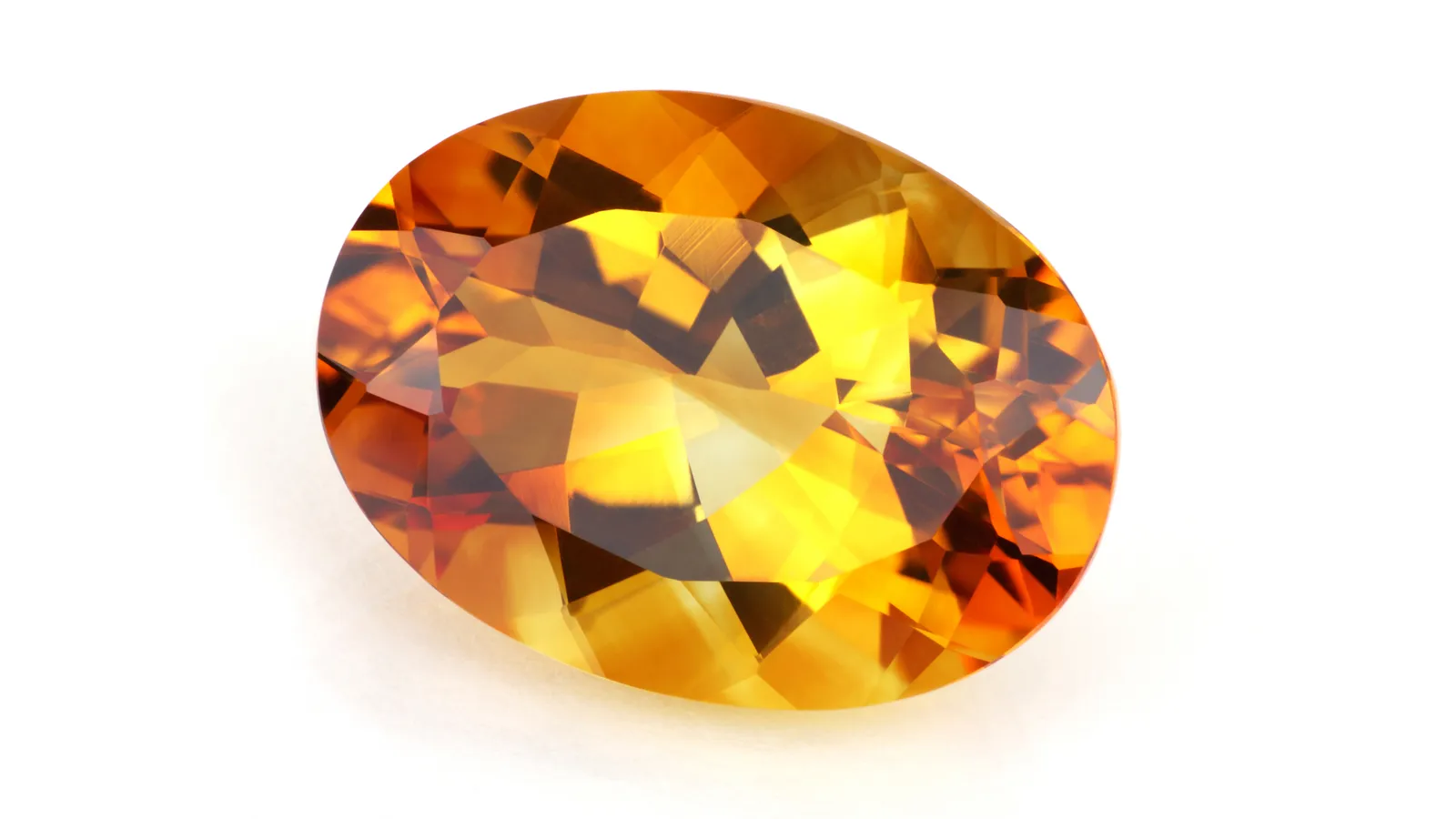
Citrine is the yellow to orange-brown variety of quartz. It’s about 7 on the Mohs hardness scale, which makes it durable enough for rings, earrings and pendants.
Natural citrine is fairly rare. According to GIA, most citrine on the market is heat-treated amethyst: heating turns pale purple quartz yellow or orange. That color is stable in normal wear. Learn more in our guide to what citrine is.
Why water is fine, but heat isn’t
Quartz doesn’t react with water and isn’t porous, so plain water can’t harm citrine. What GIA flags instead:
- Heat. Citrine shouldn’t be exposed to heat, which is why steam cleaning isn’t recommended.
- Sudden temperature changes. Moving a stone quickly from hot to cold can cause fractures.
- Strong light over time. Some citrine can fade with prolonged exposure to intense light.
- Certain chemicals. Citrine can be attacked by hydrofluoric acid, ammonium fluoride and alkaline solutions. You won’t meet the first two at home, but it’s a good reason to avoid strong household cleaners.
How to clean citrine
- Mix lukewarm water with a few drops of mild dish soap.
- Soak the piece for a few minutes to loosen lotion and skin oil.
- Brush gently with a soft toothbrush, especially behind the stone where grime collects.
- Rinse in lukewarm (not hot or cold) water.
- Dry with a soft, lint-free cloth.
Use the same temperature for washing and rinsing to avoid thermal shock.
Avoid these with citrine
- Boiling water and steam cleaners
- Hot tubs, saunas and leaving jewelry on a hot car dashboard
- Bleach, ammonia and harsh jewelry dips
- Ultrasonic cleaning if the stone has visible cracks or might be treated
Should you wear citrine in the bath or pool?
You don’t have to panic if your citrine ring gets wet, but it’s still smart to remove it:
- Baths and showers: soap film builds up behind the stone and dulls its sparkle, and hot water isn’t ideal.
- Pools: chlorine is hard on gold and silver settings, even though it won’t hurt the quartz much.
- Ocean: salt and sand can scratch metal and loosen settings over time.
Storing citrine
- Keep it in a fabric pouch or a lined jewelry box compartment.
- Store it away from harder gems like diamonds and sapphires, which can scratch it.
- Keep it out of direct sunlight to protect its color.
Related reading
Citrine is a close relative of amethyst, so the same rules mostly apply. See can amethyst go in water and can aventurine go in water. For other warm-toned stones, browse our guide to orange gemstones.
Frequently asked questions
Can I wear citrine in the shower?
The stone can handle shower water, but soap film dulls it and hot water is not ideal. It’s best to take citrine jewelry off, especially if it’s set in plated metal.
Can citrine go in a hot tub or sauna?
No. GIA advises keeping citrine away from heat, and sudden temperature changes can cause it to fracture. Hot tubs also add chlorine or bromine, which is hard on metal settings.
Will sunlight fade citrine?
GIA notes some citrine can fade with prolonged exposure to intense light. Everyday wear is fine, but don’t leave it on a sunny windowsill for weeks.
Can I use an ultrasonic cleaner on citrine?
GIA says ultrasonic cleaners are usually safe for citrine, except for rare dyed or fracture-filled stones. If your stone has visible cracks or you’re unsure about treatments, stick to soapy water.