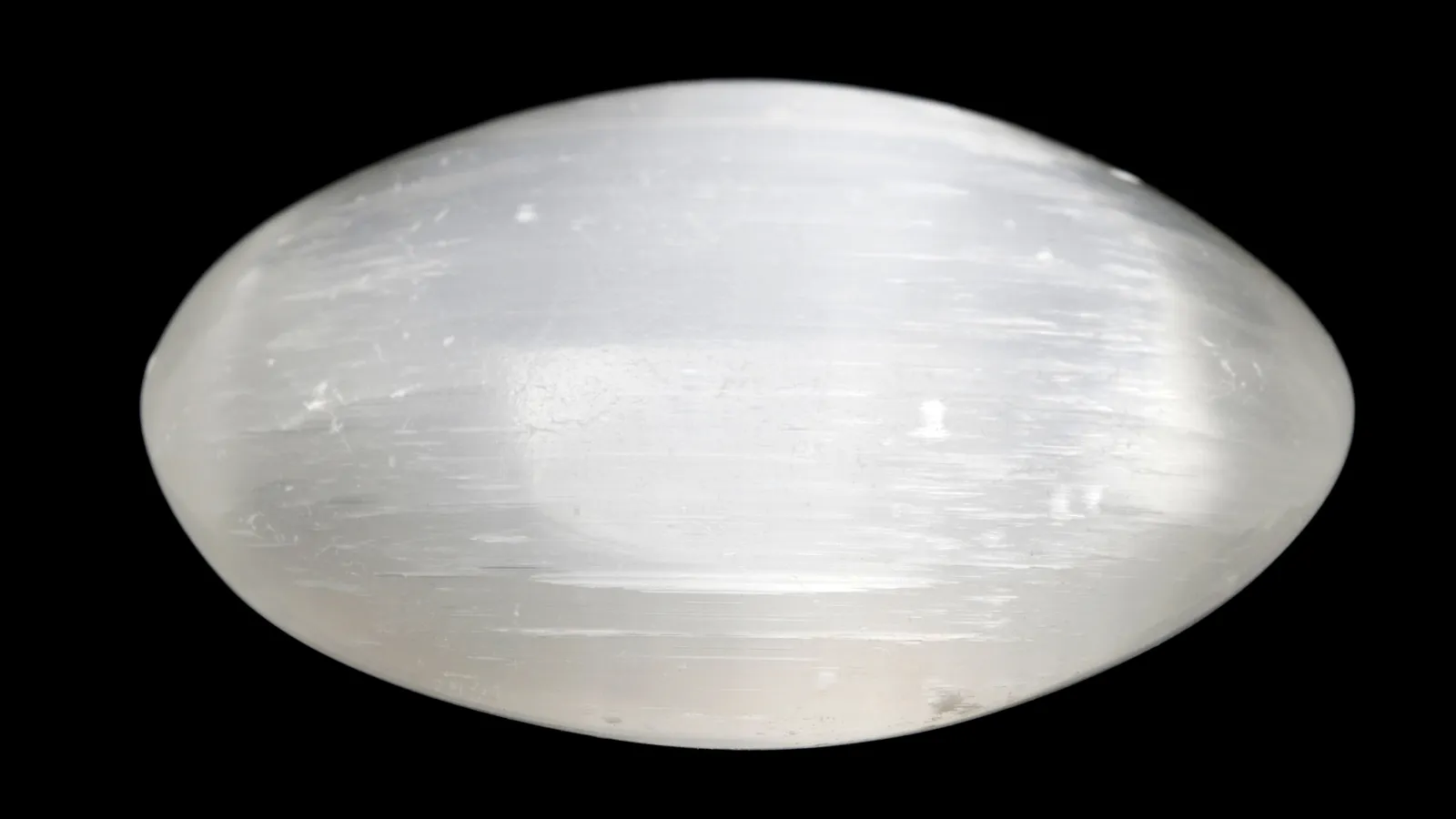
Short answer: selenite shouldn’t be soaked or left wet. It’s a crystal form of gypsum, a very soft mineral that dissolves slowly in water. A quick splash, dried off straight away, usually won’t do visible harm, but soaking it, washing it or wearing it in water will dull the surface, round off edges and eventually damage the piece. Clean selenite with a dry, soft cloth instead.
At a glance
| Question | Answer |
|---|---|
| What is it? | Gypsum (calcium sulfate with water in its structure) |
| Hardness | About 2 on the Mohs scale; a fingernail can scratch it |
| Water? | Slightly soluble; avoid soaking and repeated wetting |
| Safe cleaning | Dry soft cloth, soft brush or a puff of air |
| Avoid | Water, soap, salt, harsh chemicals, knocks and scratches |
What is selenite?
Selenite is a variety of gypsum, the same mineral used to make plaster and drywall. Chemically it’s calcium sulfate with water locked into its crystal structure. The name “selenite” traditionally refers to the clear, glassy crystals of gypsum.
Much of what’s sold as selenite in crystal shops, like white wands, towers and bracelet beads with a silky shimmer, is actually satin spar, the fibrous form of gypsum. Both are gypsum, so the care advice is the same.
Why can’t selenite get wet?
Two reasons:
- Gypsum dissolves slowly in water. It’s not like sugar disappearing in seconds, but it is slightly soluble. Water can etch and dissolve the surface over time, especially with repeated exposure.
- It’s extremely soft. At about 2 on the Mohs scale, selenite is soft enough to scratch with a fingernail. Once water has softened or roughened the surface, it scratches and wears even more easily.
Satin spar has a fibrous structure, so water can also work its way between the fibers and make the stone look cloudy or start to split.
What happens if selenite gets wet?
| Exposure | Likely result |
|---|---|
| Brief splash, dried right away | Usually no visible change |
| Short rinse | Possible slight loss of shine |
| Soaked for hours | Dull, chalky surface; softened edges |
| Repeated wetting over time | Pitting, cloudiness, cracking or splitting along fibers |
What to do if your selenite gets wet
- Take it out of the water right away.
- Pat it dry gently with a soft, lint-free cloth. Don’t rub hard.
- Let it air-dry fully at room temperature, away from heaters or direct sun.
- Check the surface. If it looks dull, a light buff with a dry soft cloth may help. Deep damage can’t be reversed at home.
How to clean selenite safely
- Dust it with a dry microfiber cloth or a soft makeup brush.
- Use air from a blower bulb for grooves and carvings.
- Spot-clean sticky marks with a barely damp cloth, then dry immediately. Use this rarely.
- Never use soap, glass cleaner, vinegar or jewelry dips.
How to care for selenite jewelry and crystals
- Take selenite jewelry off before washing hands, showering, swimming, exercising or applying lotion.
- Store it separately. Almost anything, including other crystals and metal clasps, can scratch it.
- Keep it dry. Avoid bathrooms, kitchens and humid windowsills.
- Handle it gently. It can chip or snap along its grain if dropped.
- Watch the temperature. Avoid heat sources and sudden temperature changes, which can stress the fibers.
Selenite bracelets need extra care
Bead bracelets touch your skin, sweat and hand soap all day. If you love wearing one, take it off whenever your hands will get wet, and expect the beads to lose some shine over time.
Which crystals can get wet?
Harder, non-porous stones handle water much better than selenite. For specific stones, see can amethyst go in water, can labradorite get wet and can opalite go in water.
Frequently asked questions
Will selenite dissolve if I drop it in water?
Not instantly. A quick splash won’t make it disappear, but gypsum is slightly soluble, so soaking it or getting it wet often will etch the surface, dull the shine and wear away detail over time.
Can I wear a selenite bracelet in the shower?
It’s best not to. Regular contact with water, soap and steam will slowly damage the beads. Take it off before showering, swimming or washing your hands.
Is my “selenite” actually selenite?
Often it’s satin spar, a fibrous, silky-looking form of gypsum that’s commonly sold as selenite. Both are gypsum and need the same care. True selenite is the clear, glassy crystal form.
Can selenite go in salt water or a salt bowl?
Avoid salt water; it’s still water. Dry salt can also scratch soft selenite, so if you use it, keep contact brief and gentle.